The Fall of South Korea’s “National License”: Broker Openings Stall as Property Transactions Dry Up

Niamh O’Sullivan is an Irish editor at The Economy, covering global policy and institutional reform. She studied sociology and European studies at Trinity College Dublin, and brings experience in translating academic and policy content for wider audiences. Her editorial work supports multilingual accessibility and contextual reporting.
Authored On
Modified
Rising cases of license holders abandoning plans to open offices
The brokerage downturn timeline begins in 2022
Market volatility deepens pressure on the industry
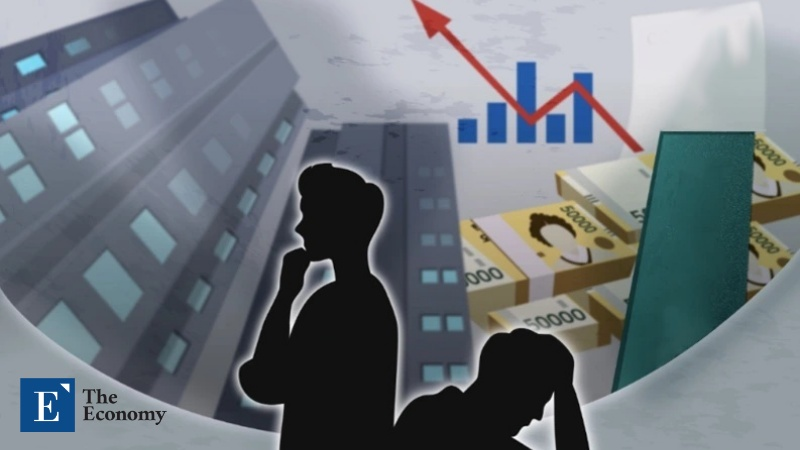
The number of newly opened real estate brokerage offices in South Korea fell to its lowest level since the early 2000s last year, underscoring the severity of the property market downturn. As closures and temporary suspensions continue to outnumber new openings over an extended period, the share of licensed brokers who actually open offices has dropped sharply. The prolonged slump in the real estate market is directly dampening incentives to enter the brokerage business. Accumulated transaction declines since 2022, combined with persistent uncertainty in market conditions, are further worsening the operating environment for brokers.
Only One in Five Licensed Brokers Operates an Office
According to the Korea Association of Realtors on the 22nd, the number of newly opened brokerage offices nationwide totaled 9,150 last year, the lowest level in 27 years since 1998, when 7,567 offices were launched. In contrast, 11,297 brokerage offices shut down during the same period, while 1,198 brokers reported business suspensions lasting longer than three months. As a result, the number of closures and suspensions exceeded new openings continuously for 35 months, from February 2023 through December last year.
As of December, the number of actively operating brokers stood at 109,320, down 2,474 from January of the same year, when the figure was 111,794. This marked the first time since 2020 that the number of active brokerage offices fell below 110,000. Given that 551,879 individuals held real estate broker licenses nationwide, four out of five license holders effectively chose not to open their own offices. While some work as affiliated brokers under corporations or existing offices, such arrangements remain limited due to the industry’s predominance of small, independent operations.
Industry participants attribute the deterioration largely to worsening market conditions. In particular, last year’s policy measures—including a cap on mortgage loan limits at about 408,000 dollars in the Seoul metropolitan area and expanded designation of regulated zones across all 25 districts of Seoul and 12 additional regions—sharply constrained borrowing and transaction volumes. Although later policies aimed at accelerating redevelopment and boosting supply were announced, the long lead time required for new supply to reach the market has left near-term business conditions largely unchanged.
Kim Jong-ho, president of the Korea Association of Realtors, said the decline in new brokerage openings reflects pessimistic expectations for transaction activity. He noted that even price stabilization or declines require a minimum level of trading volume to materialize. Kim added that government policy has focused almost exclusively on curbing price increases, sidelining the impact on end-users and industry participants such as brokers, and called for concrete, phased measures to restore normal market functioning.

Business Conditions Continue to Deteriorate
The downturn in the brokerage sector became pronounced in 2022, when home prices began a sustained decline. That year, new brokerage openings fell to 14,757, the lowest since 2013. The primary driver was a collapse in transaction volumes. According to the Korea Real Estate Board, annual apartment sales in Seoul dropped to 15,384 units, roughly one-third of the 49,751 transactions recorded the previous year. Nationwide, apartment transactions from January through November totaled 280,359 units, down 56.1% from 638,698 a year earlier.
The surge in jeonse fraud during this period further constrained brokerage activity. Jeonse, a distinctive South Korean lease structure based on large upfront deposits instead of monthly rent, became a source of systemic risk as fraud cases escalated. Data from the National Police Agency show that between July 2022 and the following 14 months, authorities arrested 5,568 individuals across 1,765 jeonse fraud cases, with 481 suspects detained. In response, the government tightened administrative responsibilities for brokers, requiring them to verify landlords’ tax arrears, disclose senior tenant claims, and explain tenant protection systems and information access rights. Violations can result in fines of up to about 3,400 dollars.
The fallout from jeonse fraud also accelerated a shift toward monthly rentals, further undermining brokers’ income. Brokerage commission rates for residential leases range from 0.3% to 0.8%. Under jeonse contracts, commissions are calculated directly based on the deposit amount. For monthly rentals, however, commissions are based on the sum of the deposit plus 100 times the monthly rent. In market practice, converting a deposit of about 68,000 dollars typically results in monthly rent of roughly 200 to 270 dollars. While a full jeonse contract at that deposit level would yield a commission of at least around 200 dollars, converting it entirely to monthly rent reduces the commission base to about 20,400 dollars, cutting the broker’s fee to roughly 60 dollars.
Some industry voices also point to structural oversupply of license holders. A brokerage office owner in Seoul said large-scale issuance of licenses in the past, aimed at boosting employment, entrenched an oversupply problem. With more than 500,000 licensed brokers but an office-opening rate of just around 20%, the mismatch has become evident. Second-stage exam passers rose slightly from 26,913 in 2021 to 27,916 in 2022, before plunging to 15,157 in 2023 and 14,850 in 2024 as closures accelerated, then rebounding to 18,901 last year.
Fears of a Japan-Style Bubble Collapse
Concerns are growing that these conditions will not improve in the near term. South Korea’s asset market increasingly shows signs associated with a pre-bubble-collapse phase driven by excessive concentration. According to central bank data, private credit reached 200.7% of GDP at the end of last year, up sharply from 177.2% in 2018. This trajectory closely mirrors Japan’s rise from 162% in 1985 to 208% just before its bubble burst in 1990. Household debt accounted for 45% of private credit, far exceeding Japan’s 32% on the eve of its collapse.
Loan composition data reveal similar distortions. Construction and real estate accounted for 28.8% of corporate lending last year, up from 20.5% a decade earlier, while manufacturing’s share fell from 34.6% to 24.9%. As capital increasingly concentrates in real estate rather than productive sectors, transaction structures become progressively distorted. President Lee Jae-myung’s recent warning that South Korea risks following Japan’s path reflects these concerns, as liquidity piling into limited assets can intensify price distortions while draining transaction volume.
Consumer sentiment may further amplify these dynamics. Just as Japan’s bubble era was fueled by the belief that land prices never fall, expectations of “ever-rising property prices” remain influential in South Korea. Some analysts point to modest rebounds in housing price outlook indices following policy measures as grounds for optimism, but the lack of a corresponding recovery in transaction volumes remains problematic. With sharp price gains concentrated in a handful of districts while most regions stagnate, industry participants warn that pressure across the broader real estate ecosystem is likely to persist.
Niamh O’Sullivan is an Irish editor at The Economy, covering global policy and institutional reform. She studied sociology and European studies at Trinity College Dublin, and brings experience in translating academic and policy content for wider audiences. Her editorial work supports multilingual accessibility and contextual reporting.
Similar Post