KKR’s Infrastructure Investment Gamble: Bid Reopened for South Korea’s Largest Solar Power Plant

Niamh O’Sullivan is an Irish editor at The Economy, covering global policy and institutional reform. She studied sociology and European studies at Trinity College Dublin, and brings experience in translating academic and policy content for wider audiences. Her editorial work supports multilingual accessibility and contextual reporting.
Authored On
Modified
Extending the push into green and energy assets
“Fire-sale” controversy and retail shareholder backlash remain variables
Despite prolonged conflict, acquisition burden remains limited
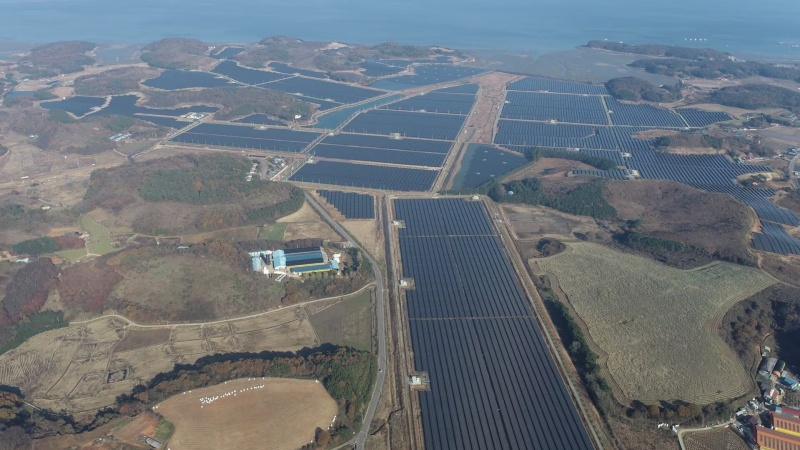
Global private equity firm Kohlberg Kravis Roberts (KKR) is once again moving to acquire South Korea’s largest solar power plant. In response to criticism over foreign capital targeting domestic infrastructure assets, KKR has shifted the acquisition vehicle to a South Korea–based asset manager and is pursuing a phased equity acquisition centered on senior debt. As the deal structure, capital flows, and long-term operating strategy become clearer, market attention is turning to ongoing shareholder disputes and the future of management control. While resistance from retail shareholders and regulatory uncertainties persist, the transaction is widely seen as having entered a new phase.
Expanding a Global Renewable Energy Portfolio
KKR has recently relaunched its bid for Taean Anmyeon Clean Energy (TACE), changing the acquisition entity to South Korea–based Create Asset Management. Previously, KKR had worked with external manager Lantern A&I to acquire TACE’s senior debt and secure equity through enforcement of collateral. That approach drew criticism that foreign capital was attempting to acquire a large South Korea–based infrastructure asset at a discounted valuation. KKR has since moved a locally established subsidiary to the forefront, emphasizing its experience in infrastructure and commercial real estate investment in South Korea as it accelerates the acquisition process.
At the core of the transaction is the acquisition of senior debt and the steps that follow. Most of TACE’s senior loans are held by South Korea–based financial institutions including KB Kookmin Bank, Woori Bank, and Shinhan Bank, with some loans already in events of default. If Create acquires the senior debt, it would gain the right to enforce collateral and compel the sale of pledged equity stakes. This effectively opens a path for KKR to emerge as the ultimate acquirer. Late last year, KKR completed the purchase—via Create—of loan claims held by Woori Bank and Bank of China, and is reportedly in talks with other lenders seeking to recover their investments.
KKR has consistently pursued an infrastructure investment strategy in South Korea focused on stable cash flows and long-term asset appreciation rather than short-term arbitrage. The approach centers on acquiring renewable energy and infrastructure-type assets and operating them over extended periods. TACE fits squarely within this framework. Located on 6.15 million square meters of former salt fields and pastureland in Anmyeon Island, Taean County, South Chungcheong Province, the project required approximately $341 million in total investment and currently generates 300 MW of power—enough to supply roughly 100,000 households. The asset is viewed as capable of delivering relatively stable long-term cash flows.
KKR has also been aggressively acquiring and operating renewable energy assets such as solar and wind power in North America and Europe. A notable example is its October acquisition of a 50% stake in a 1.4 GW solar portfolio operated by France’s TotalEnergies in North America. At the time, KKR said it had invested more than $23 billion in the energy transition and described renewables as a core infrastructure investment area. Against this backdrop, the renewed TACE bid appears aimed at positioning South Korea as another strategic hub within KKR’s global renewable energy portfolio.
Questions Over Equity Deal Terms
A key obstacle remains strong opposition from retail shareholders. TACE was structured from the outset to attract external investment, and just prior to its establishment in 2017, three retail shareholders invested a combined $682,000. As the project progressed, TACE received approximately $129.6 million in mezzanine and subordinated financing from KKR and Lantern. As part of that financing, all retail shareholders agreed to transfer their entire equity stakes to investors at a specified future date, at a fixed price of $6.82 million. The agreement was shared with and confirmed by senior lenders, and the retail shareholders’ equity was fully pledged as collateral.
In 2024, however, retail shareholders began to resist executing the agreement. While permitting delays and changes in external conditions were cited, the central dispute focused on valuation and transfer structure. Retail shareholders argued that fixing the equity value at $6.82 million—despite the project having entered commercial operation and its revenue structure becoming visible—no longer reflected the asset’s true worth. Given that the plant is expected to generate cash flows over several decades under long-term power purchase agreements, they contended that the gap between the original contract terms and current project value had become excessive.
Allegations of a “backdoor transfer of control” further fueled the dispute. Retail shareholders claimed that the transaction structure between investors and the controlling shareholder was designed not merely for capital recovery, but to enable indirect acquisition of management control by specific parties. They argued that the combination of convertible bonds, equity conversion options, and mezzanine financing terms effectively predetermined dilution of the existing controlling shareholder and a shift in control, regardless of the plant’s long-term profitability. From their perspective, the structure disproportionately favored investors with contractual leverage, rather than reflecting the project’s intrinsic value.
Investors and the company countered that the agreements were reached at the project’s inception and were essential to securing financing and completing construction. They warned that any refusal or delay in honoring the contracts could undermine the collateral framework and destabilize the entire financing structure. Retail shareholders, however, maintained that unforeseen factors—including permitting delays, external investigations, and shifts in the operating environment—necessitated a renegotiation, leading the dispute into a prolonged stalemate.

Failed Mediation Escalates Into a Control Dispute
South Korea’s Electricity Commission attempted to mediate but failed to resolve the conflict. Treating changes in a power producer’s controlling shareholder as subject to strict review under the Electricity Business Act, the commission separately assessed approval for share acquisition and the conversion of convertible bonds into equity. The approach reflected concerns not only over contractual compliance, but also over stable operation of a major power facility with regional economic significance. In practice, however, the procedural rigor kept the dispute entangled within regulatory processes for an extended period.
As reviews dragged on, the change in controlling shareholder remained unresolved, widening the gap between contractual arrangements and actual governance. Partial approvals and deferrals left both sides without a definitive outcome. The absence of a clear administrative resolution allowed conflicting legal interpretations to persist, prompting criticism that regulatory delays had effectively prolonged the dispute rather than containing it.
Compounding matters, the conflict evolved into a de facto battle for management control. With ownership status unsettled, key decisions were constrained, negatively affecting operations. Industry sources noted delays in settling construction balances, executing operations and maintenance spending, and fulfilling commitments to the local community—even long after commercial operations began in August 2023. Concerns over operational efficiency and financial stability increasingly framed the dispute as a material business risk.
KKR’s posture throughout has remained focused on long-term asset operation rather than near-term deal closure. Solar power plants generate value through decades of electricity production and sales, limiting the risk of abrupt value erosion even amid delays. Existing shareholders, by contrast, face mounting pressure from financing constraints and governance uncertainty. This asymmetry helps explain why KKR and Create retain relatively greater strategic flexibility as the conflict continues.
Niamh O’Sullivan is an Irish editor at The Economy, covering global policy and institutional reform. She studied sociology and European studies at Trinity College Dublin, and brings experience in translating academic and policy content for wider audiences. Her editorial work supports multilingual accessibility and contextual reporting.
Similar Post