World’s Largest Nuclear Plant Triggers Alarm on First Day Back Online, Japan’s Energy Shift Gets an Uneasy Start

Authored On
Modified
Shut down after abnormal signs just five hours into operation
Nuclear power revived amid mounting pressure over electricity shortages
Safety concerns collide with energy security logic
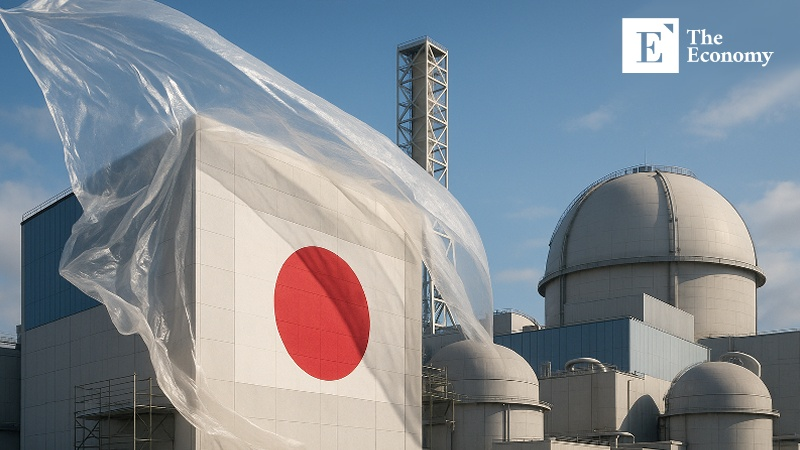
Japan’s Tokyo Electric Power Company (TEPCO) brought the world’s largest nuclear power plant, Kashiwazaki–Kariwa, back online for the first time in 15 years, only for it to shut down again within a day due to technical problems. The restart was meant to symbolize a turning point in Japan’s nuclear policy, which had effectively been frozen since the Fukushima disaster, but the technical issues that emerged simultaneously raised questions about the credibility and preparedness of that policy shift.
Failure to resolve control rod malfunction
According to Kyodo News on the 23rd, Kashiwazaki Unit 6 began restarting operations at around 7 p.m. on the 21st. Around midnight the same day, however, an alarm sounded during the process of withdrawing control rods. The reactor is equipped with 205 control rods designed to suppress nuclear fission, and the issue occurred while additional rods were being withdrawn after 52 had already been pulled out. TEPCO identified a malfunction in an electrical component used to operate the control rods and replaced it, but the alarm did not clear. As determining the precise cause was expected to take considerable time, the company ultimately decided to shut down the reactor.
Kashiwazaki–Kariwa has long been regarded as the most emblematic long-idled nuclear plant in Japan’s power system since the Fukushima Daiichi accident in 2011. Located in Niigata Prefecture on the island of Honshu, the complex consists of seven reactors and, based on installed capacity prior to shutdown, ranks as the largest nuclear power plant in the world. The mere return of a TEPCO reactor to commercial operation for the first time since 2011 made the restart a critical test case for Japan’s nuclear policy shift, drawing intense international scrutiny over the entire restart process.
That scrutiny only intensified when the plant shut down again just five hours after restarting, fueling debate over whether preparations following the long suspension had been sufficient. Unit 6 had already experienced problems on the 17th, when alarms failed to function properly during a control rod inspection, forcing a one-day delay to the original restart schedule. TEPCO explained the earlier incident as a configuration error, but the emergence of related abnormalities immediately after actual restart renewed doubts over the reliability of equipment inspections and operational readiness more broadly.
Japan’s Nuclear Regulation Authority moved to contain concerns, stating that “the reactor condition is stable and there has been no external release of radioactive materials, so there is no safety issue.” Even so, questions over the proficiency of operating personnel have continued to surface. In fact, TEPCO’s own internal review found that about 60% of operators at Kashiwazaki–Kariwa Units 6 and 7 lacked prior experience in nuclear plant operations. Against this backdrop, the post-restart shutdown has effectively become a test of both the preparedness and execution credibility of the nuclear revival policy promoted by the Japanese government and TEPCO.
Bleak medium- to long-term power supply outlook
Japan has deliberately scaled back nuclear power generation since the Fukushima explosions and core meltdowns triggered by the Great East Japan Earthquake in 2011. In 2010, before the accident, nuclear power accounted for roughly 25% of Japan’s total electricity generation. Afterward, as most reactors were gradually taken offline, the nuclear share remained below 10% for an extended period. Although some reactors have since restarted, Japan largely ruled out new construction and maintained a policy framework reliant on renewables and thermal power, steadily accumulating strain across the overall power supply structure.
The limits of those policy choices are starkly reflected in medium- and long-term supply forecasts. The Organization for Cross-regional Coordination of Transmission Operators (OCCTO), which brings together Japan’s power transmission operators, warned in a long-term outlook report released at the end of 2024 that Japan could face power shortages of up to 89 gigawatts by 2050. The figure represents the highest-demand case among 16 scenarios, assuming aging thermal plants are not replaced and all nuclear reactors more than 60 years old are retired. According to the report, Japan’s electricity demand is projected to rise by up to 25% by 2040 and as much as 42% by 2050 compared with 2019 levels.
OCCTO cited data centers, communications networks, semiconductor manufacturing, and the expansion of electric vehicles as key drivers of demand growth. Even under optimistic assumptions in which all generation facilities are replaced with new builds, the high-demand scenario still points to a potential shortfall of 23 gigawatts. Conversely, a scenario combining low demand with smooth replacement of power plants projects a surplus of 12 gigawatts. OCCTO cautioned, however, that such outcomes are based on extreme assumptions and carry a very low likelihood of materializing.
Under mounting supply pressure, the Japanese government has repositioned nuclear power as a strategic asset. In the “Basic Policy for Realizing GX (Green Transformation)” announced toward the end of former Prime Minister Fumio Kishida’s term, Japan explicitly designated nuclear energy—given its strong decarbonization effect—as a core pillar of energy policy. The plan revised earlier stances that effectively excluded new nuclear construction, aiming to secure stable power supplies while pursuing carbon neutrality. Even so, constraints remain formidable, including the aging of technical personnel and declining construction capabilities after new builds stalled throughout the 2010s, leaving the timeline for any expansion of nuclear policy highly uncertain.
Local opposition emerges as a key variable
Social consensus is another major hurdle Japan faces in advancing nuclear restarts, shaped by more than a decade of accumulated distrust since Fukushima. That reality is evident in sharply divided local opinion whenever restarts are proposed. In a public perception survey conducted by Niigata Prefecture last year, 60% of respondents answered negatively when asked whether conditions were in place to restart Kashiwazaki–Kariwa. Responses of “not at all” accounted for 29%, while “probably not” stood at 31%, underscoring how high the psychological barrier to acceptance remains.
Local governments and industry groups, by contrast, emphasize the need for restarts based on electricity costs and regional economic considerations. In Hokkaido, Governor Naomichi Suzuki has actively led efforts to restart Tomari Unit 3, arguing that nuclear utilization could lower household electricity bills by about 11% and industrial rates by 7%. Hokkaido, categorized as one of Japan’s highest electricity-cost regions, is also bracing for surging demand as government-backed semiconductor manufacturer Rapidus builds new facilities and AI data centers proliferate.
The problem is that economic logic advanced by political leaders does not guarantee social consensus. The central issue remains the disposal of spent nuclear fuel and high-level radioactive waste. At Tomari, restart efforts continue even though no final disposal site for high-level waste has been designated. While preliminary discussions at the village and town level have taken place, full-scale surveys involving on-site investigations have been blocked by gubernatorial opposition. As a result, a prevailing view within Japan holds that “accepting nuclear restarts while opposing waste disposal surveys represents a policy contradiction.”
Critical voices from experts with nuclear engineering backgrounds further complicate consensus-building. Masashi Goto, a former Toshiba nuclear plant designer who participated in the design of the Fukushima reactors, said, “There is no absolute guarantee that a reactor can always be shut down even if mechanical problems arise,” adding that “the Fukushima accident proved that.” He noted that the accident has yet to be fully resolved, with roughly 880 tons of nuclear fuel debris remaining and contaminated water continuing to increase as cooling efforts persist. Ultimately, critics argue, the path Japan must choose hinges on presenting a clear institutional answer to how responsibility for risk management will be defined and enforced.
Similar Post