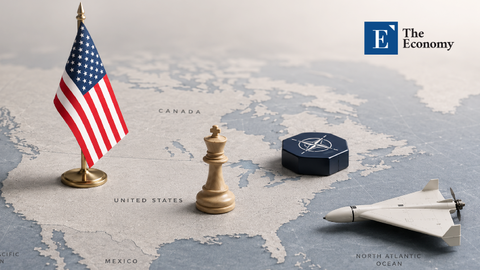
U.S. Pushes for Rare Earth Independence as China Slams the Semiconductor Gate, Setting the Stage for a Hardline Standoff Ahead of April Beijing Visit

Authored On
Modified
April U.S.–China Summit: A Trade of Technology for Food
China Blocks H200 Customs Clearance as the U.S. Rewires Rare Earth Supply Chains
Korean Firms Caught in Dual Supply-Chain Pressure While India Reaps ‘China Plus One’ Gains
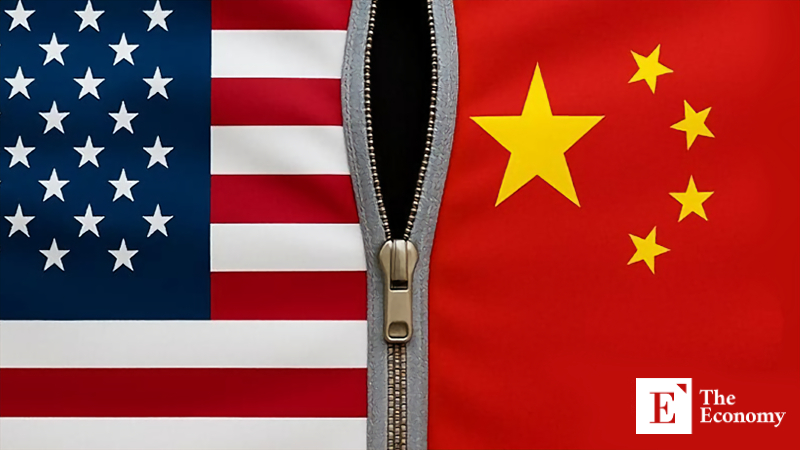
Ahead of a U.S.–China summit scheduled for April, speculation is mounting over the possibility of a grand bargain mediated by technology and food. On the ground, however, industrial supply chains are fragmenting at an accelerating pace. China has moved to block imports of Nvidia’s latest chips while pressing ahead with the construction of an indigenous ecosystem centered on Huawei, while the United States is countering by broadening its rare earth strategy into Central Asia in an effort to dilute dependence on China. In the process, Korean companies have been squeezed between competing sanctions regimes, effectively trapped in a strategic sandwich, while India has emerged as a clear beneficiary of supply-chain realignment, underscoring the divergent fortunes shaping the global economy.
U.S. and China Near the End of the ‘Busan Trade Truce,’ Eyeing a Technology–Food Deal at the April Summit
According to diplomatic sources on the 23rd, working-level negotiation channels between Washington and Beijing have become increasingly active ahead of U.S. President Donald Trump’s planned visit to China in April. At their summit in Busan on October 30 last year, the two sides agreed to a temporary truce that included tariff reductions related to fentanyl precursor chemicals, a partial suspension of China’s rare earth export controls, and the resumption of Chinese purchases of U.S. soybeans. With the agreement nearing expiration, tensions are once again rising.
Earlier, U.S. Trade Representative Jamieson Greer reiterated at the World Economic Forum in Davos on the 20th that the Busan agreement was never intended as a permanent settlement but rather as a provisional measure, formally confirming additional negotiations ahead of the April summit. At the same time, U.S. Treasury Secretary Scott Bessent and Chinese Vice Premier He Lifeng have exchanged positive assessments regarding the implementation of agreements on rare earth magnet supplies and soybean purchases, signaling parallel efforts to manage tensions and avert a breakdown.
The core agenda of the April summit is widely seen as a trade-off between technology and food. China, seeking economic stabilization, is prioritizing the easing of export controls and tariff reductions on cutting-edge AI semiconductors such as Nvidia’s Blackwell series. The United States, meanwhile, is pressing for expanded imports of agricultural products including soybeans and meat to secure political support in the farm belt ahead of the November midterm elections, while leveraging issues such as TikTok divestment and fentanyl enforcement as bargaining chips. Analysts expect Washington to explore selective relaxations for certain legacy chip models that do not undermine national security, seeking a compromise that delivers tangible economic gains.
Fundamental obstacles, however, remain firmly in place. Xu Tianchen, senior economist at the Economist Intelligence Unit, characterized the preliminary talks as largely mood-setting rather than substantive. Issues such as arms sales to Taiwan, concerns over security-related technology leakage, and deep mistrust over the weaponization of rare earth resources represent entrenched challenges that are unlikely to be resolved quickly. China’s demand for the lifting of restrictions on advanced chips directly conflicts with U.S. security strategy, while Washington’s insistence on TikTok divestment cuts to the core of China’s data sovereignty concerns. As a result, uncertainty looms over whether the April meeting in Beijing will yield a meaningful agreement or merely another limited truce. Beyond the negotiating table, industrial sectors are already witnessing retaliatory maneuvers using semiconductors and resources as strategic weapons.
China Pushes an Indigenous Chip Ecosystem While the U.S. Accelerates De-Chinaization of Rare Earths
On the industrial front, the contest over security and technological supremacy is intensifying. Despite Washington’s partial easing of export restrictions on Nvidia’s H200 chips, Chinese authorities have refused customs clearance, citing security concerns and the need to protect domestic industries. The move reflects Beijing’s intention to assert control through import restrictions rather than remain subject to U.S. export controls, underpinned by growing confidence in Huawei’s domestically developed AI chips. Huawei’s recently released Ascend 910C reportedly achieves roughly 60% of the inference performance of Nvidia’s H100, while the upcoming 910D is expected to approach parity with the H100.
Yet substantial technological and ecosystem gaps persist. Even with incremental progress, the Ascend 910C lags well behind Nvidia’s flagship H200, which integrates HBM3e high-bandwidth memory and delivers overwhelming advantages in large language model training efficiency. Software poses an even greater challenge. Replacing Nvidia’s CUDA platform, the global standard for AI developers, with Huawei’s proprietary CANN framework remains a formidable task given ongoing issues around compatibility and stability.
Meanwhile, the market has already shifted toward gray channels to circumvent controls. In Shenzhen’s Huaqiangbei district, smuggled H200 chips are reportedly trading at prices exceeding standard levels by more than 50%, with servers selling for approximately $350,000 per unit, illustrating how regulatory constraints have merely inflated premiums. Compounding the challenge, Chinese chipmakers remain dependent on lower-yield domestic manufacturing processes at SMIC, as U.S. sanctions continue to bar access to advanced foundries such as TSMC.
In response, the United States has launched an aggressive drive to restructure rare earth supply chains and curb China’s leverage. China currently controls over 90% of global rare earth processing capacity and as much as 94% of rare earth magnet production, a dominance it has repeatedly wielded as a negotiating tool. President Trump has cited past instances in which steep tariffs swiftly compelled China back to the negotiating table, underscoring his administration’s determination to establish a robust domestic supply base. Washington has eased environmental regulations to incentivize domestic production while pressing allies to participate through frameworks such as the Minerals Security Partnership.
Concrete resource diplomacy is also accelerating. The United States recently agreed to invest approximately $435 million in strengthening mineral supply chains in Uzbekistan following talks with leaders from five Central Asian nations. U.S.–Australian joint mining ventures are moving to develop large-scale tungsten resources in Kazakhstan, while the U.S. Geological Survey has expanded its official list of critical minerals to 60, reinforcing federal oversight. These steps signal a strategic push to neutralize China’s resource leverage, with repercussions already rippling through third-country supply chains.

U.S.–China Trade Frictions Spill Over to Neighbors, Diverging Fortunes for Korea and India
As U.S.–China rivalry radiates outward, South Korea finds itself mired in a dual-pressure dilemma. In October last year, China’s Ministry of Commerce designated five U.S. subsidiaries of Hanwha Ocean as sanction targets, citing their cooperation with U.S. investigations into China’s maritime, logistics, and shipbuilding sectors as actions that undermined China’s sovereignty, security, and development interests. Analysts view the move as a clear warning to third-country firms aligning with Washington’s containment strategy, highlighting the shrinking space for strategic ambiguity and the growing exposure of Korean companies to retaliatory measures.
U.S.-driven trade risks are further compounding uncertainty. In the shipping sector, new U.S. port fees on foreign-built vessels have placed Korean firms directly in the firing line. Hyundai Glovis, for example, is expected to incur additional annual costs amounting to tens of millions of dollars due to fees levied on car carriers calling at U.S. ports. Washington has shown little inclination to grant exemptions even to allied firms, while Beijing has treated cooperation with U.S. measures as hostile acts, leaving Korean companies trapped between competing trade barriers.
By contrast, India has emerged as a clear beneficiary of U.S.–China tensions. As a central pillar of the “China Plus One” strategy, India has attracted expanding production footprints from global firms such as Apple, reinforcing its manufacturing competitiveness. The International Monetary Fund recently revised India’s growth forecast upward to 7.3%, projecting the country as a new engine of global economic expansion. The United States, eager to counterbalance China, has also pledged support through semiconductor and defense technology transfers. While Korea’s deep integration into intermediate supply chains has amplified its vulnerability, India has leveraged its vast domestic market and geopolitical appeal to maximize spillover gains, increasingly shaping the contours of a shifting global economic landscape.
Similar Post