Virginia, America’s Largest Data Center Hub, Faces an AI-Driven Power Shock

Oliver Griffin is a policy and tech reporter at The Economy, focusing on the intersection of artificial intelligence, government regulation, and macroeconomic strategy. Based in Dublin, Oliver has reported extensively on European Union policy shifts and their ripple effects across global markets. Prior to joining The Economy, he covered technology policy for an international think tank, producing research cited by major institutions, including the OECD and IMF. Oliver studied political economy at Trinity College Dublin and later completed a master’s in data journalism at Columbia University. His reporting blends field interviews with rigorous statistical analysis, offering readers a nuanced understanding of how policy decisions shape industries and everyday lives. Beyond his newsroom work, Oliver contributes op-eds on ethics in AI and has been a guest commentator on BBC World and CNBC Europe.
Authored On
Modified
AI Data Centers Trigger Emergency Power Shortages
Virginia, the Nation’s Most Concentrated Data Center Region
Power Procurement Emerges as a Critical Test Amid Fears of an Electricity Shock
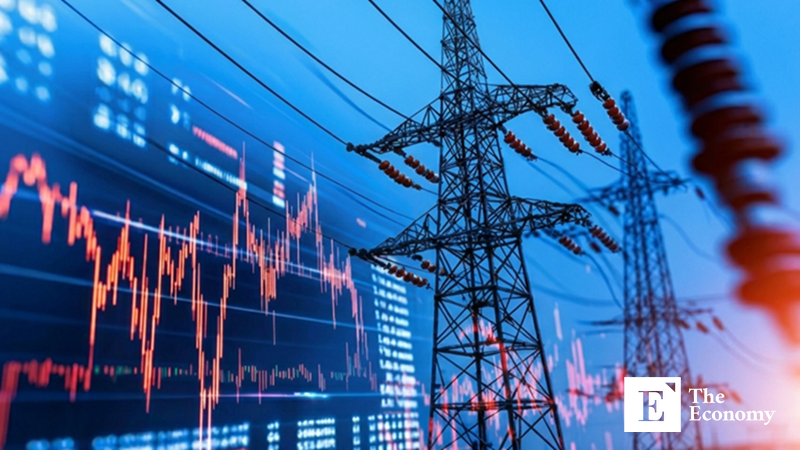
As Big Tech companies pour tens of billions of dollars into data center construction in a bid to secure the upper hand in the global artificial intelligence (AI) race, an unintended consequence is rapidly surfacing: a looming “electricity price shock.” Massive hyperscale data centers built at breakneck speed are consuming public resources at an alarming pace, with the resulting infrastructure costs increasingly being passed on to local communities. With power supply infrastructure struggling to keep up with surging demand, concerns are mounting that some data centers could ultimately become “ghost facilities,” unable to operate due to insufficient electricity. Power procurement capacity is now emerging as a decisive factor in determining the long-term sustainability of regional industrial ecosystems.
Virginia Wholesale Power Prices Surge Past $1,800 per MWh
According to U.S. media outlets including CNBC on the 25th (local time), wholesale electricity prices in the Dominion Energy service area of Virginia—home to the world’s largest cluster of data centers—surpassed $1,800 per megawatt-hour (MWh) in the morning hours. Meanwhile, the cost of securing power capacity from June last year through May this year jumped to $269.92 per megawatt (MW), nearly ten times higher than the $28.92 per MW recorded a year earlier.
This extreme price spike reflects the unprecedented baseload imposed by AI data centers operating around the clock. Data from PJM Interconnection, which manages the eastern U.S. power grid, show that electricity demand in the Dominion zone reached 23 gigawatts (GW) as of 10 a.m. on the 25th, exceeding initial forecasts by more than 5%. PJM expects total system demand to climb to 147.2 GW on the 27th, surpassing the previous winter peak of 143.7 GW recorded in January last year.
Virginia has become the most densely concentrated data center region in the United States, a status underpinned by distinctive competitive advantages. Adjacent to Northern Virginia, Research Triangle Park (RTP) is anchored by a powerful academic corridor formed by Duke University, North Carolina State University, and the University of North Carolina at Chapel Hill. Established in 1959, RTP spans approximately 7,000 acres and hosts a vast array of global corporations and research institutions.
The highly skilled workforce produced by RTP supplies the technical expertise essential for data center operations and maintenance, transforming the region into a top-priority hub for global technology companies. Proximity to Washington, D.C. further enhances efficiency in government-linked projects, cementing the area’s role as a strategic data nexus bridging public and private sectors. This combination of intellectual capital and administrative advantages has drawn aggressive investment from Big Tech, accelerating exponential growth in data center capacity. The refined living environment typical of university towns continues to attract elite technical talent, reinforcing a virtuous cycle that bolsters industry credibility.
Virginia Electricity Rates Soar 267% in Five Years
More than 600 data centers are currently operating in Virginia, accounting for roughly 13% of global computing capacity and about 25% of total U.S. data center electricity consumption. AI workloads require vast computational power to process and train massive datasets, tasks carried out primarily in data centers where high-performance chips such as GPUs and TPUs run continuously. Compared with conventional data storage and transmission, AI computing demands exponentially higher energy input.
In practice, AI consumes several dozen times more electricity than standard internet search. A conventional Google search uses about 0.3 watt-hours (Wh), while GPT-based AI queries consume between 2.9 Wh and 7.5 Wh. Training the GPT-3 model alone required 1.3 gigawatt-hours (GWh) of electricity, exceeding the daily power consumption of 100,000 four-person households. Cooling systems compound the burden, accounting for roughly 40% of total data center electricity use, as air, liquid, and immersion cooling technologies are deployed to manage high-temperature, high-load environments.
According to the U.S. Energy Information Administration (EIA), average residential electricity prices nationwide rose 13% year on year as of last August. Virginia’s increases far outpaced the national average, with electricity rates surging approximately 267% compared with five years earlier. Aging grid infrastructure has struggled to accommodate exploding demand, shifting additional costs onto households. Public resentment is growing, with residents questioning why families should bear the cost of the AI revolution. Political resistance has followed, including legislation introduced in the Virginia General Assembly last January aimed at restricting new data center construction.
Without Power, Data Centers Risk Becoming ‘Ghost Facilities’
The challenge is set to intensify as AI-driven electricity demand continues to rise. Goldman Sachs estimates that AI will increase global data center power demand by 165% by 2030. The International Energy Agency projects that worldwide data center electricity consumption will reach 945 terawatt-hours (TWh) by 2030, nearly double last year’s 485.4 TWh.
Investment in AI-supporting data centers is expected to accelerate further. Morgan Stanley estimates that $3 trillion will be spent globally on AI-related data centers between the first quarter of this year and 2029—comparable to the annual U.S. federal budget and roughly equivalent to France’s GDP last year. This scale of investment threatens to further strain already overloaded power grids and push electricity prices higher. Given the substantial time and capital required to expand grid infrastructure, experts caution that the current energy shortfall cannot be resolved through short-term measures.
Some analysts warn of an outright power supply crisis. In July 2024, Virginia narrowly avoided a blackout when dozens of data centers automatically disconnected from the grid. Federal regulators and utility executives later revealed that PJM and Dominion Energy averted the outage only through emergency output adjustments. John Moura, Director of Reliability Assessment and System Analysis at the North American Electric Reliability Corporation (NERC), noted that Virginia’s power grid was not designed to withstand the simultaneous loss of 1,500 MW of data center load.
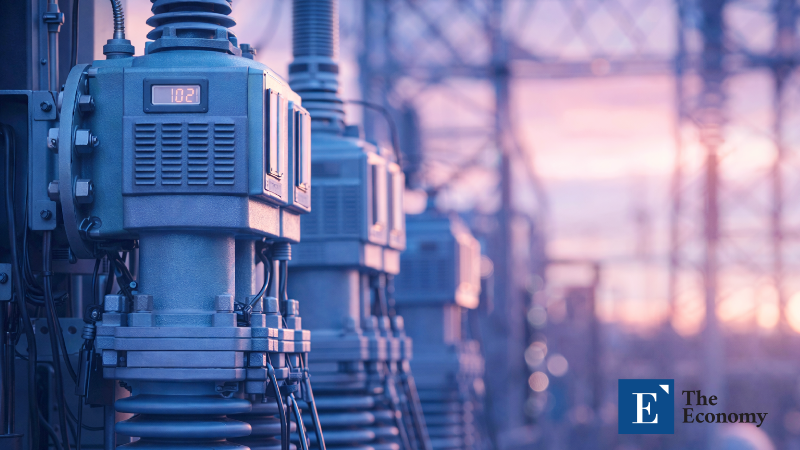
If sufficient electricity cannot be secured, Virginia could face the prospect of becoming a city of “ghost data centers.” California’s Santa Clara offers a cautionary example. Bloomberg reports that Digital Realty’s SJC37 facility and Stack Infrastructure’s SVY02A campus have remained idle for years despite being designed to handle 48 MW each. Both have stood empty since 2019 due to delayed power supply. Bringing them online would require 100 MW of electricity, with no clear timeline for delivery. Virginia is already experiencing similar delays in new grid connections. A Microsoft executive warned that AI infrastructure expansion is far outpacing grid upgrades, adding that the phenomenon of completed but non-operational data centers is likely to spread across the United States.
Oliver Griffin is a policy and tech reporter at The Economy, focusing on the intersection of artificial intelligence, government regulation, and macroeconomic strategy. Based in Dublin, Oliver has reported extensively on European Union policy shifts and their ripple effects across global markets. Prior to joining The Economy, he covered technology policy for an international think tank, producing research cited by major institutions, including the OECD and IMF. Oliver studied political economy at Trinity College Dublin and later completed a master’s in data journalism at Columbia University. His reporting blends field interviews with rigorous statistical analysis, offering readers a nuanced understanding of how policy decisions shape industries and everyday lives. Beyond his newsroom work, Oliver contributes op-eds on ethics in AI and has been a guest commentator on BBC World and CNBC Europe.
Similar Post