K-Beauty Accelerates Global Market Diversification, Growth Gaining Pace Across Europe, the Middle East, and Latin America

Authored On
Modified
Cosmetics exports reached a record high last year, spanning 202 countries
Major players including Amorepacific and APR step up local channel strategies
Influencer marketing and indie brands drive global expansion
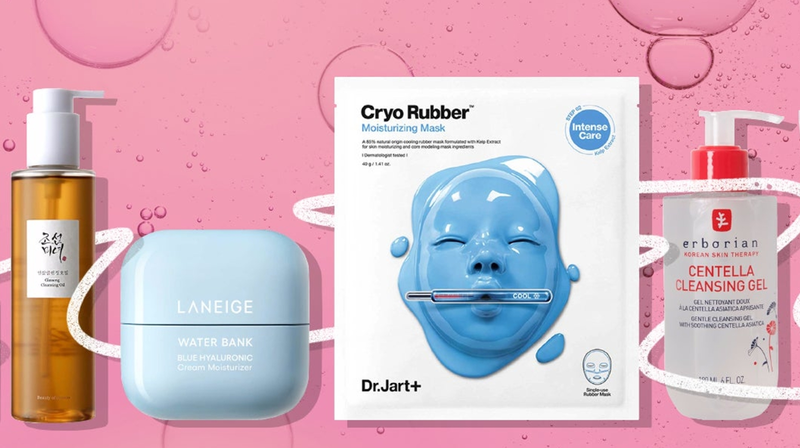
South Korea’s cosmetics industry, which posted an all-time high in exports last year, is accelerating its global expansion as it moves decisively toward market diversification. An export structure once heavily concentrated on the United States and China is now broadening to Europe, the Middle East, and Latin America, as indie and niche brands alongside K-beauty-focused distributors aggressively penetrate local offline and online channels to expand their global footprint. Strategies leveraging vegan and halal-certified products, social media platforms, and overseas influencer marketing are emerging as key drivers of K-beauty’s growth momentum in emerging markets.
Export Share Outside the US and China Expands to 63.3%
According to the cosmetics industry on the 26th, signs of clear market diversification are emerging as South Korea’s cosmetics sector records its highest-ever export performance. Data from the Ministry of Food and Drug Safety show that the number of destination countries for Korean cosmetics exports rose to 202 last year, up by 30 from 172 a year earlier. By country, exports to the United States totaled $2.2 billion, the largest share, followed by China at $2.0 billion and Japan at $1.1 billion. The combined export share to the United States and China declined steadily—from 46.9% in 2023 to 43.1% in 2024 and 36.7% in 2025—while the share to other regions, including Europe, the Middle East, Southwest Asia, and Latin America, expanded from 53.1% in 2023 to 63.3% in 2025.
This year, the diversification trend is expected to continue as Korean cosmetics companies step up their push into Europe. Amorepacific’s luxury brand Sulwhasoo recently entered the UK online beauty platform Cult Beauty and plans to gradually expand partnerships with offline retail channels across the country. APR, which entered Europe early last year, is broadening its sales channels by adding major online marketplaces. Its products are currently sold through leading retailers including Samaritaine in Paris, Boots in the UK, and DM in Italy. In October last year, APR also opened official Medicube stores on TikTok Shop UK and Amazon UK, marking a sequential rollout across major European e-commerce platforms.
Indie and niche brands are likewise positioning Europe as a new growth opportunity. D’Alba Global, which began preparations for European expansion last year, is set to enter local drugstore chains such as Rossmann in Germany and Boots in the UK this year. Rather than prioritizing large platforms, the company aims to establish brand awareness through highly accessible offline distribution networks to secure a phased market entry. Shifts are also evident at the distribution level. CJ Olive Young, South Korea’s leading beauty retailer, is expanding its global operations to support K-beauty’s overseas growth. Through collaboration with global beauty distribution powerhouse Sephora, Olive Young plans to broaden overseas distribution touchpoints for K-beauty brands and strengthen its role in helping small and indie Korean brands enter global markets.
Middle East and Latin America Emerge as the Next Growth Frontiers
Following Europe, the Middle East and Latin America are rapidly gaining traction as new growth engines. In the Middle East and North Africa, K-beauty is emerging as a major trend anchored in Muslim consumer culture. The region’s beauty market reached $60 billion last year and is projected to grow at a double-digit annual rate of around 12% through 2027, far outpacing the global average. The outlook remains strong, with roughly 55% of the population under the age of 30, led by a digitally savvy, brand-conscious Generation Z. Since the pandemic, demand for skincare and wellness products has surged, while beauty tourism—centered on the United Arab Emirates and Saudi Arabia—has further fueled rapid growth in the premium segment.
Korean cosmetics companies are strengthening their competitive edge in the Middle East through vegan and halal-certified products. Export volumes of basic skincare items such as sunscreens and essences are rising particularly fast. Companies including Amorepacific, Skin1004, D’Alba Global, and Neopharm, along with medical aesthetics and device firms such as Medytox and Hugel, are expanding both online and offline presence through partnerships in the UAE, Saudi Arabia, and Kuwait. As brand awareness grows, conditions are also being put in place to expand proprietary distribution networks across the region. Silicon2, a K-beauty-focused distribution and platform company, is already delivering tangible results in the Middle East. After establishing a Dubai subsidiary and securing logistics facilities last year, the company is set to intensify its local market push this year.
Export growth is also becoming more pronounced in Latin America. Cosmetics exports to Mexico, Brazil, and Argentina rose from $34.8 million in 2023 to $57.2 million in 2024, reaching a record $91.9 million in 2025 as of October. The region offers relatively low barriers to entry, sharing linguistic ties with Spain and tending to move in tandem with, or slightly behind, North American market trends. Capitalizing on these characteristics, Cosmax—the world’s largest cosmetics original development and manufacturing (ODM) company—has opened a sales office in Mexico to strengthen its ODM-led expansion, while Silicon2 is playing a local distribution role through its Mexican subsidiary.
Beyond Amazon: Expansion of Local Sales Channels
One of the most notable features of K-beauty’s global expansion is the diversification of distribution channels. While Amazon offers the advantage of large-scale global sales, its low-price positioning exerts downward pressure on pricing and margins. As a result, K-beauty brands have invested heavily in securing alternative sales channels. Boots, for example, operates more than 2,000 stores across the UK. After onboarding 10 K-beauty brands last year, it plans to increase the number to more than 20 this year. K-beauty is also gaining traction at major retailers including Sephora in France, Douglas in Germany, Notino in Poland, and Gold Apple in Russia.
The performance of innovation-driven indie and niche brands has been particularly striking. D’Alba Global, which successfully listed on the KOSPI last year, reported year-on-year sales growth of 508% in Europe and 366% in Japan. Gudai Global’s Joseon Beauty has also emerged as a flagship export brand. Leveraging differentiated formulations based on traditional Korean herbal ingredients such as rice, ginseng, camellia, and mung beans, the brand has captured strong consumer interest. Riding the global clean beauty trend, Joseon Beauty generated approximately $220 million in standalone revenue last year. Anua entered 120 Boots stores in October last year and expanded to more than 650 locations by year-end.
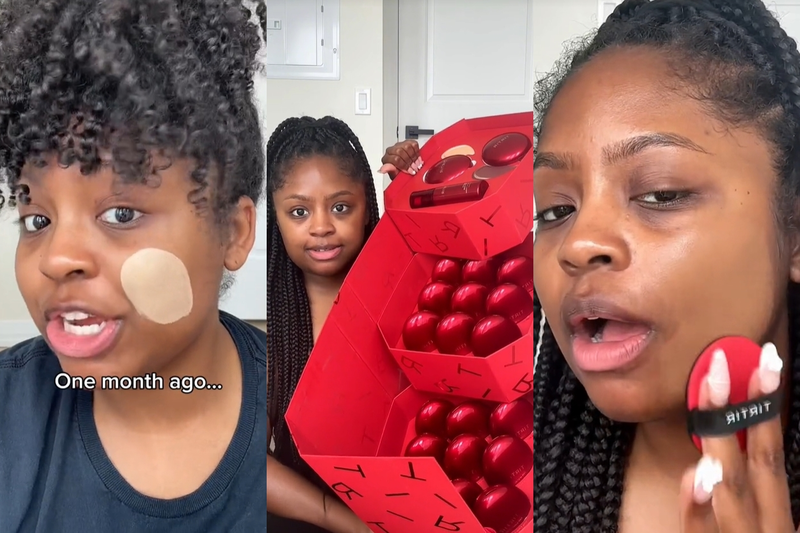
Social media platforms and overseas influencers have played a decisive role in elevating Korea’s indie brands. TIRTIR’s Mask Fit Cushion gained viral traction through beauty influencer Darcei, who featured the product while searching for a foundation cushion that matched her skin tone. After TIRTIR sent her a customized Mask Fit Red Cushion, the product gained widespread attention as suitable for all skin tones, triggering explosive sales. Medicube’s gel mask also drew global attention after Hollywood star Hailey Bieber posted photos of herself using the product on social media, with consumers particularly captivated by how the mask adhered smoothly to the skin over time.
Similar Post