“Primary Responsibility for Deterring North Korea Lies With South Korea”: U.S. Defense Strategy Lays Out an Alliance Rebalancing Scenario

Authored On
Modified
Expanded role for South Korea, reduced U.S. presence in the region
Reordering priorities away from denuclearization-centered North Korea policy
Defense spending to rise under South Korea’s goal of becoming a major arms power
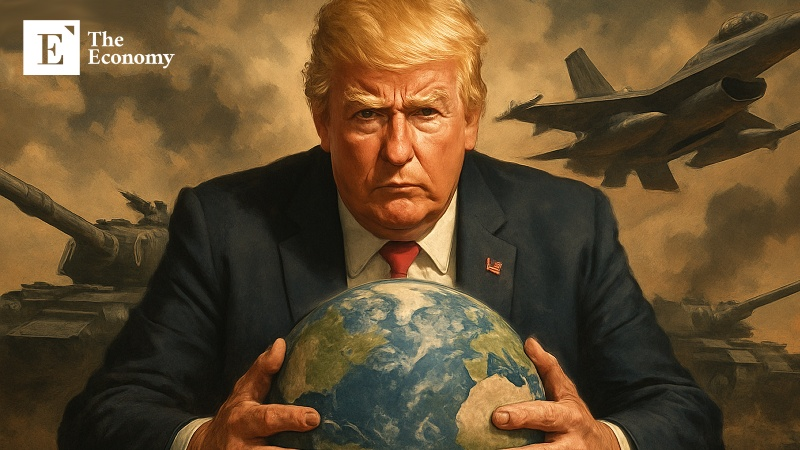
With the release of a new National Defense Strategy, the U.S. government has defined the core principle of defending the Korean Peninsula as a “South Korea–led, U.S.-limited support” framework. Citing South Korea’s strong military capabilities, high defense spending, developed defense-industrial base, and conscription system, the strategy places primary responsibility for deterring North Korea on Seoul. The United States, by contrast, is described as providing “critical but more limited” support. The move is widely read as a document-level reordering of alliance roles, standing in clear contrast to the extended deterrence framework emphasized in the Washington Declaration.
“South Korea has sufficient military, institutional, and industrial foundations”
The U.S. Department of Defense’s 2026 National Defense Strategy (NDS), released on the 23rd, explicitly delineates responsibility for defense of the Korean Peninsula and deterrence of North Korea. The document states that “South Korea bears the primary responsibility for deterring North Korea, while the United States should provide critical but more limited support,” presenting this allocation as a foundational principle for future U.S. military strategy and resource decisions.
The strategy outlines the grounds on which South Korea can assume this role, citing military, institutional, and industrial conditions. It notes that South Korea possesses “robust conventional military forces, high levels of defense spending, a mature defense-industrial base, and a manpower mobilization system including mandatory service,” adding that, taken together, these factors enable Seoul to manage deterrence even in the absence of full-scale U.S. intervention. The document also emphasizes that South Korea is constantly exposed to direct and explicit military threats from North Korea, concluding that its political and military will to shoulder defense responsibilities is sufficient.
Notably, the NDS separates and defines the U.S. role. While describing U.S. support as “critical,” it stresses that the level and scope of involvement should remain “limited.” This is widely interpreted as maintaining U.S. roles in intelligence, assets, and strategic capabilities, while reducing direct responsibility and standing burdens for full-scale defense on the peninsula. The strategy frames this adjustment as consistent with U.S. defense priorities and resource allocation, arguing that a structure in which allies take on larger roles aligns with the mutual interests of both countries.
The NDS also includes Washington’s assessment of the North Korean threat. Pyongyang is defined as a state possessing nuclear capabilities capable of directly targeting South Korea and Japan, with missile forces assessed to have reached the level necessary to strike allied targets. Based on this analysis, the United States characterizes North Korea’s nuclear arsenal as a “clear and present danger” to the U.S. homeland. Even so, the strategy separates threat perception from responsibility allocation, signaling an intent to place primary deterrence responsibility squarely on South Korea.
Signs of change in the operation of the alliance
This vision contrasts sharply with the Washington Declaration jointly announced in 2023 by South Korea under the Yoon Suk-yeol administration and the U.S. government led by then-President Joe Biden. The declaration affirmed a shared commitment to strengthening extended deterrence as a unified framework in response to an advancing North Korean nuclear threat. It made clear that the United States would be the principal actor in deterring and responding to North Korean nuclear use, while South Korea’s role was framed around reinforcing conventional forces and response capabilities within a combined defense structure.
A central mechanism underpinning the Washington Declaration was the creation of the Nuclear Consultative Group (NCG), institutionalizing joint consultations, planning, and exercises related to U.S. nuclear operations in response to North Korea’s growing nuclear threat. The initiative aimed to regularize discussions over how U.S. nuclear assets would be employed in contingencies on the peninsula, while reaffirming South Korea’s commitment to the Nuclear Non-Proliferation Treaty and foreclosing independent nuclear armament. The division of roles was clear: the United States as the provider of deterrence, South Korea as a partner enhancing its credibility.
The new NDS, however, signals a fundamental departure from that framework. Whereas the Washington Declaration centered on reinforcing a U.S.-led extended deterrence posture, the latest strategy repeatedly emphasizes the premise that South Korea can directly deter North Korea. U.S. nuclear forces and strategic assets remain described as important variables, but any notion of automatic intervention is absent. This shift carries implications for the future posture of U.S. forces in Korea, South Korea’s defense cost-sharing, and ongoing discussions over the transfer of wartime operational control, potentially reshaping the overall operation of the alliance.

Defense budget expansion scenarios move closer to reality
The shift partially aligns with South Korea’s stated objective of accelerating the realization of autonomous national defense. In a parliamentary address in November 2024, President Lee Jae-myung said the 2026 defense budget had been set at $46.1 billion, an 8.2% increase from the previous year, pledging to reorganize conventional weapons systems into advanced, AI-era platforms and rapidly transform the armed forces into an elite, smart military. He also outlined plans to expand research and development investment and foster defense technology startups, with the stated goal of becoming one of the world’s four leading arms producers.
A closer look at budget details highlights the expanding defense burden. According to the government’s budget proposal, spending on force enhancement—including weapons procurement—was set at $14.0 billion, a 13% increase year on year, aimed at supporting the transfer of wartime operational control and upgrading missile defense and retaliatory systems against North Korean threats. Funding for the development and mass production of the Korean fighter jet KF-21 rose from $903 million to $1.67 billion, while operating expenses increased by $1.88 billion. The plan also raised per-soldier meal costs, signaling an effort to improve both force capabilities and personnel conditions simultaneously.
In September last year, the U.S. government announced that it had reached an understanding with South Korea to gradually raise defense spending to 3.5% of gross domestic product. While this matches the level NATO has pledged to reach by 2035, it remains below the alliance’s broader 5% benchmark that includes indirect security costs such as cyber defense. Even so, the additional burden is substantial. With South Korea’s defense budget currently at 2.42% of GDP, reaching 3.5% would require allocating an additional $20.8 billion.
Higher defense spending is also tied to arms procurement. The government is reportedly in discussions to purchase $25 billion worth of U.S.-made weapons by 2030. At an August summit last year, U.S. officials publicly cited the B-2 stealth bomber as a system under consideration, noting expectations for further South Korean purchases. While some have raised the possibility of reductions in U.S. Forces Korea, diplomatic sources view this as unlikely after the U.S. included provisions in the Fiscal Year 2026 National Defense Authorization Act barring the use of funds to reduce troop levels below 28,500.
Similar Post