[Bio Supremacy War] China’s Biotech Surge Reshapes Global Market; U.S. Moves to Contain the Challenge

Authored On
Modified
China’s Biotech Industry Tightens Its Grip on the Global New-Drug Market
State Backing and Lighter Regulation Power a Challenge to Western Heavyweights
U.S. Steps Up Curbs and Enforcement as Warnings Grow of China Catching Up Within Years
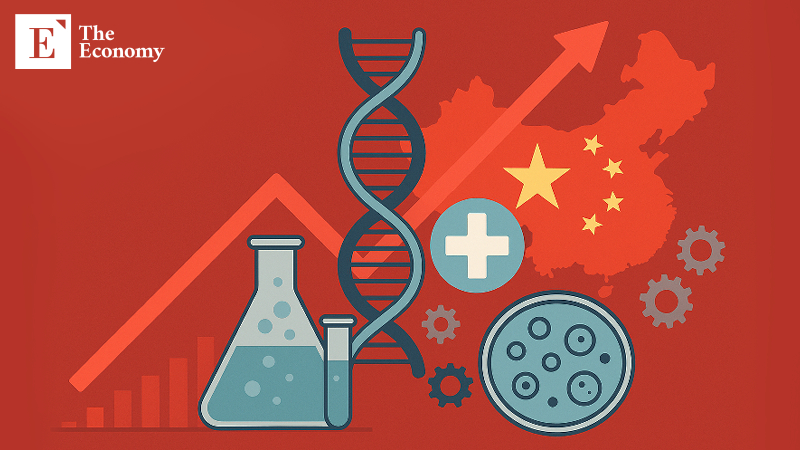
Chinese biotech startups are rapidly seizing the initiative in the global new-drug market. Backed by aggressive state support and a business-friendly domestic environment, they are accelerating growth in both scale and sophistication. The United States, long seen as a biotech powerhouse, is now turning to regulatory curbs and other constraints to push back against China’s fast-advancing industry.
China’s Biotech Industry on a Tear
On the 26th (local time), the Financial Times reported that China has moved beyond simple imitation and is now pushing Western companies aside in areas such as next-generation cancer drugs and genomic therapies, emerging as a key partner for global pharmaceutical companies. The report argued this is not a passing fad but a structural shift that could reshape the global drug-development ecosystem.
Chinese biotech companies are rapidly expanding their influence in the global market. More than 8,000 biotech firms are now active in China, with over 70 listed in Hong Kong. The gains are not just in scale but in capability. China’s biotech sector has earned global recognition in high-barrier technologies such as antibody-drug conjugates (ADCs) and small interfering RNA (siRNA). According to McKinsey, Chinese companies account for more than half of all new ADC candidates worldwide that have entered early-stage clinical development.
A major driver behind this surge has been aggressive government support. Beijing has consistently funded the sector through initiatives such as Made in China 2025 in 2015 and Healthy China 2030 in 2016. It has also built out institutional tailwinds through policy-led innovation, including fast-track review pathways, incentives for biotech clusters, IPO reforms, and the adoption of tacit approval procedures. The result is a business-friendly system with lower barriers to entry and faster decision-making. Some Western companies are even considering using China’s clinical trial infrastructure as a way to stay competitive against Chinese rivals.
U.S. Biotech Hegemony on Alert
As China’s biotech ecosystem gains momentum, global pharma giants are increasingly looking to China—not the West—to bolster their drug pipelines. Over the past year, Chinese companies signed more than 100 licensing deals, with total deal value reaching $85 billion. In one example, Novartis signed a $5.2 billion licensing agreement last September with China’s Argo to secure siRNA capabilities. UK-based GSK, meanwhile, signed a partnership on the 14th with Jiangsu Hengrui Pharmaceuticals worth up to $12 billion, covering 12 drug candidates including treatments for chronic obstructive pulmonary disease (COPD).
The United States, long the dominant force in biotech, increasingly sees this as a clear crisis. Last month, the National Security Commission on Emerging Biotechnology (NSCEB), a U.S. congressional advisory body, released a comprehensive report projecting that Chinese-made drugs could account for 35% of FDA approvals by 2040. It warned that unless Washington adopts the policies needed to accelerate domestic biotech growth, China’s edge could soon widen into a gap the U.S. cannot close. The report argued that China is tightening its grip across the global biotech value chain, and that the timeline for China to catch up to the United States has shortened to as little as three years.
On the 13th, NSCEB also published an analytical report calling for modernization of biotechnology regulation across the federal government and faster review processes, along with 83 policy recommendations. These include 30 cross-government tasks and 53 product-specific measures. In the medical-products arena, the FDA’s regulatory system was singled out as the central target for reform. The report said current rules remain rooted in an older framework built around small-molecule drugs and are failing to keep pace with newer technologies such as cell and gene therapies.
The NSCEB’s recommendations also laid out detailed proposals for agricultural and industrial biotechnology. For plants, it called for streamlining overlapping, multi-agency regulation to reduce administrative burdens on developers of niche and specialty crops. For microbes, it urged a more predictable oversight regime for gene-edited microorganisms by reducing uncertainty created by fragmented review systems. In animal biotechnology, the report pointed to regulatory processes that do not match real-world industry conditions, arguing that they risk pushing companies to relocate operations overseas.
Trump Administration’s Biotech Curbs on China
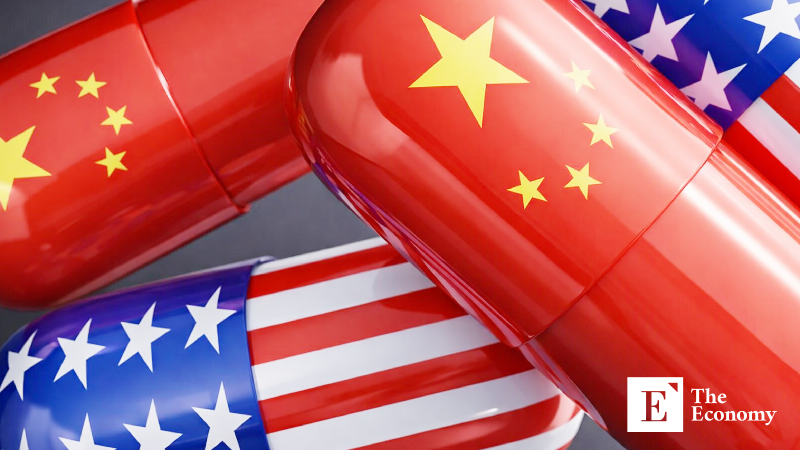
Efforts to rein in China at the executive level are also continuing. In February last year, the Trump administration unveiled the America First Investment Policy memorandum, formally laying out restrictions on cross-border investment in selected strategic industries on national and economic security grounds. The document targets “foreign adversaries” and brings both inbound investment into the United States and outbound investment by U.S. companies under regulatory scrutiny. Healthcare and biotechnology are explicitly listed, widening regulatory pressure across pharmaceuticals and drug development.
In September, President Trump went a step further, arguing that China and other adversarial states had exploited loopholes in the United States’ open scientific and regulatory system. His administration circulated a draft executive order calling for tighter controls on drug approvals and licensing deals. The draft included measures such as national-security reviews for U.S. drugmakers seeking approvals tied to Chinese biotech firms, higher regulatory fees for companies submitting Chinese clinical trial data, tougher FDA scrutiny of such data, incentives to boost domestic production of drugs heavily dependent on China—such as acetaminophen—and preferential government procurement for U.S.-made products.
China-focused provisions with a “biosecurity” thrust were also folded into the National Defense Authorization Act (NDAA) passed by Congress last month. The original Biosecure Act was introduced to protect Americans’ personal health and genetic data from companies deemed a concern, with a core provision barring U.S. operations by China’s largest genomics firm, BGI Group, and its affiliates. While the bill was introduced in January 2024 and cleared the House that September, it failed to pass the Senate by the end of the year.
Unlike the standalone Biosecure Act, the NDAA stops short of singling out specific Chinese companies. Instead, it limits contracts with so-called “biotechnology providers of concern.” Industry watchers see this as a signal that Washington is opting for a phased approach—reducing structural dependence on Chinese biotech firms over time rather than forcing an abrupt break. Reflecting that stance, the law includes a grace period of up to five years, allowing global drugmakers to gradually reconfigure supply chains instead of cutting ties overnight.
- Previous “Primary Responsibility for Deterring North Korea Lies With South Korea”: U.S. Defense Strategy Lays Out an Alliance Rebalancing Scenario
- Next [PC kills Games] Western Game Developers Sinking Under “Political Correctness” and the Rise of China, as Even Blockbuster IPs Collapse One After Another
Similar Post