[PC kills Games] Western Game Developers Sinking Under “Political Correctness” and the Rise of China, as Even Blockbuster IPs Collapse One After Another

Authored On
Modified
Ubisoft Cancels and Delays New Titles, Undertakes Organizational Overhaul
Uninspired Games and New Releases Suffer Consecutive Commercial Failures
Lack of Compelling Characters and PC Enforcement Exhaust Gamers
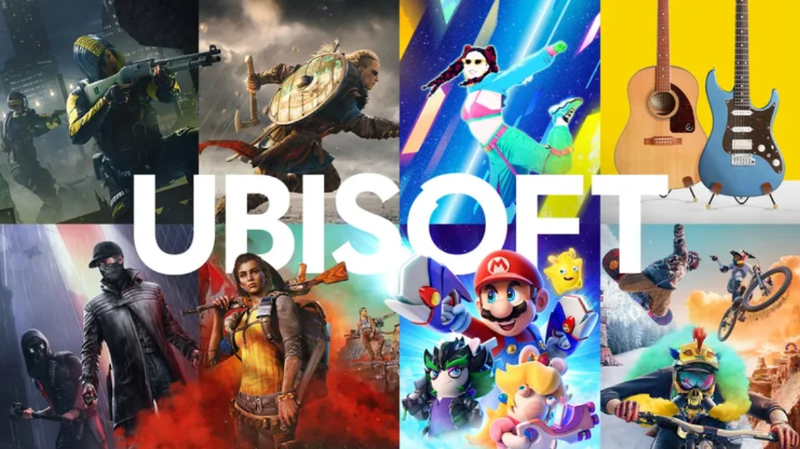
The prolonged downturn facing Western game developers, once regarded as the industry’s mainstream, shows no signs of abating. The embrace of so-called Political Correctness (PC)—aimed at countering appearance-based bias as well as racial and sexual orientation discrimination—has increasingly alienated the core consumer base of male gamers. Compounding the problem, a string of high-profile new releases built on flagship IPs has failed in succession, accelerating the transfer of industry leadership toward Asian developers.
Ubisoft Begins Restructuring as Shares Fall Below $4 for the First Time in 15 Years
According to French gaming outlet JeuxVideo on the 26th (local time), Ubisoft shares listed on Euronext Paris fell to $3.99 as of the 22nd. This marks a plunge of roughly 40% from the previous closing price of $6.63 and represents the first time since September 2011—15 years and four months ago—that Ubisoft’s stock has fallen below the $4 threshold.
The immediate trigger for the selloff was Ubisoft’s declaration of austerity-driven management reforms. On the 21st, the company announced plans to restore creative leadership and agility through three pillars: the establishment of a new operating model, portfolio realignment, and organizational downsizing. Ubisoft CEO Yves Guillemot stated that the company would “selectively shut down several studios and undertake group-wide restructuring.”
Specifically, Ubisoft plans to close Ubisoft Stockholm, which developed Avatar: Frontiers of Pandora, as well as its Halifax studio responsible for the mobile title Assassin’s Creed: Rebellion. A senior Ubisoft executive explained that the company conducted an exhaustive review of its content pipeline between December and January, leading to strategic decisions to overhaul the portfolio, reallocate resources, and comprehensively revise its three-year roadmap.
As a result, development of the highly anticipated Prince of Persia: The Sands of Time Remake has been officially canceled. In addition, three new intellectual properties (IPs), one mobile title, and one undisclosed project have been shelved. The release schedules of seven additional titles have been postponed, with some delayed from the first quarter of this year to next year. These delays reportedly include entries from Ubisoft’s flagship Assassin’s Creed franchise.
Ubisoft’s rapid decline stems from multiple factors. Chief among them is the lack of overall game quality. New IPs such as Immortals Fenyx Rising (2020), Skull and Bones (2024), and XDefiant were widely criticized for lacking creative originality and technical polish, and all failed commercially. Players who experienced Skull and Bones cited weak naval combat mechanics and underdeveloped content, despite its pirate-themed premise, as key shortcomings.
Ultimately, Skull and Bones, which launched at $70, saw its price slashed to $29.99 just three months after release, effectively conceding its commercial failure. Star Wars Outlaws, developed as a AAA open-world title leveraging the Star Wars IP, also fell short. Poor artificial intelligence, numerous bugs, and a lack of detail fueled harsh criticism. Ubisoft acknowledged in its September financial update that Star Wars Outlaws underperformed expectations. A subsequent Steam PC release on November 21 recorded concurrent user counts hovering around 3,000—figures widely regarded as inadequate for a AAA release from a major publisher.

Slump Triggered by Excessive PC Enforcement
The overemphasis on Political Correctness has further exacerbated the downturn. Many recent titles prioritized PC messaging over core gameplay enjoyment and programming excellence. Historically, Ubisoft made efforts to integrate PC sensibilities thoughtfully. For example, Rainbow Six Siege features a Korean operator, Vigil (Hwa Cheol-kyung), portrayed as a defector who suffered family losses during his escape and now lives with trauma. Such social commentary, when paired with solid game quality, occasionally enhanced critical reception.
More recently, however, Western developers have gone beyond thematic inclusion, embedding PC ideology in ways perceived as prescriptive. Ubisoft followed this trend, fueling a broader backlash among gamers. The most common grievance centers on the erosion of visually appealing and charismatic characters, as the push against appearance-based standards and the emphasis on diversity became dominant. The commercial success of Korean developer Shift Up’s hardcore action-adventure title Stellar Blade illustrates this contrast. Western gamers praised the title upon release, with comments such as, “I haven’t seen action this stylish in years,” “It’s refreshing to have a compelling female protagonist,” and “The visuals alone are addictive.” These reactions underscore how rare such character design has become in Western-developed games.
Indeed, since the mid-2010s, the frequency of conventionally attractive or overtly stylized characters in games developed by U.S. and European studios has declined sharply. Their place has increasingly been taken by characters emphasizing racial diversity, realistic appearances, and LGBTQ+ representation. Ubisoft’s attempted turnaround vehicle, Assassin’s Creed: Shadows, became embroiled in controversy for precisely this reason. Set in Japan’s Sengoku period, the game features a Black samurai protagonist. While Yasuke did historically serve under Oda Nobunaga, critics argued that the game distorted historical records and source materials by forcefully centering a Black protagonist within an East Asian historical narrative. The controversy ultimately led to Ubisoft withdrawing from the Tokyo Game Show, effectively casting doubt over the game’s prospects in East Asia—a critical market given Japan’s influence in the global gaming ecosystem.
China’s Global Gaming Surge Puts Western Developers Further Under Pressure
At the same time, Chinese game developers have surged onto the global stage. The inflection point came with the 2020 release of HoYoverse’s Genshin Impact. Widely credited with redefining the open-world RPG genre, the title dismantled preconceived biases against Chinese games and neutralized nationality-based skepticism. Industry observers regard it as the first instance in which “trust capital” toward Chinese games was established. Subsequent successes such as Arknights, Wuthering Waves, and Black Myth: Wukong further showcased China’s development capabilities. More important than individual hits is the emergence of an expectation that major Chinese releases will be fundamentally well-made.
Amid mounting controversies and consecutive commercial failures, Ubisoft now faces its most severe liquidity crunch to date. As of the latest figures, the company’s net debt under international accounting standards stands at approximately $1.5 billion, an increase of about $880 million from 2023. Tencent was once rumored to be a potential white knight acquirer, but negotiations stalled over disagreements regarding voting rights for the Guillemot family and the prospect of taking the company private.
Other Western developers face similar challenges. Rocksteady’s Suicide Squad: Kill the Justice League in the UK and Daedalic Entertainment’s The Lord of the Rings: Gollum in Germany both failed to meet expectations. In the United States, Activision Blizzard’s Call of Duty franchise continues to encounter criticism over technical shortcomings with each release. These repeated failures have translated into financial distress and restructuring across the industry. According to Game Industry Layoffs, a site that aggregates workforce reduction data, at least 14,500 game industry employees lost their jobs in 2024 alone—an average of roughly 1,208 layoffs per month. Against this backdrop, pessimistic assessments are gaining traction, with some observers warning of a “self-reinforcing downward spiral in Western gaming” and even predicting the imminent decline of Europe’s AAA game sector.
Similar Post