Canada Rules Out China FTA Under U.S. Tariff Threats—Is Its Post-U.S. Strategy Still Intact?

As one of the youngest members of the team, Tyler Hansbrough is a rising star in financial journalism. His fresh perspective and analytical approach bring a modern edge to business reporting. Whether he’s covering stock market trends or dissecting corporate earnings, his sharp insights resonate with the new generation of investors.
Authored On
Modified
Canada Rules Out a China FTA as Trump’s Tariff Pressure Mounts
After Easing Trade Frictions, Canada and China Take Friendlier Steps, Including Lower Tariffs
Canada’s Prime Minister Signals Resolve to Push Back at the U.S.
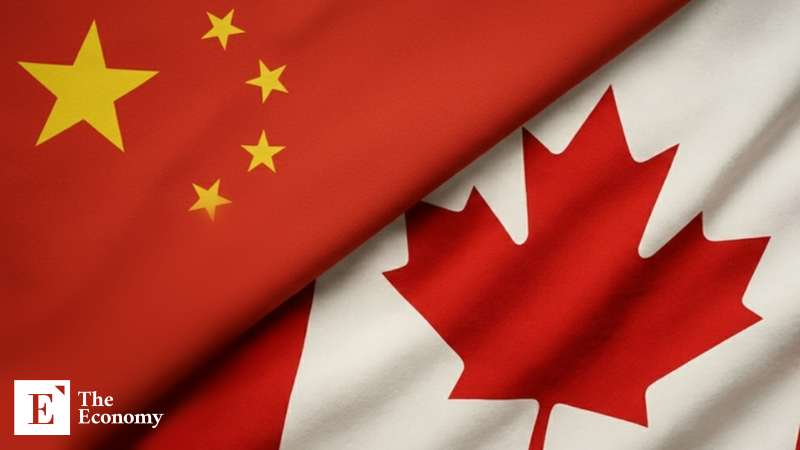
Canada has flatly ruled out pursuing a free trade agreement with China. Even as ties between Ottawa and Beijing have shown clear signs of thawing after a prolonged trade dispute, the Trump administration has moved to put the brakes on deeper cooperation by wielding tariff pressure. Still, with Prime Minister Mark Carney making it clear he intends to push back against Washington’s hard-line trade stance, Canada’s broader push to diversify away from the United States is expected to continue.
Canada–China FTA Scenario Collapses
According to CNBC on the 26th (local time), Prime Minister Mark Carney told reporters the previous day that Canada is honoring its obligations under the United States–Mexico–Canada Agreement (USMCA). He said Canada is also complying with the rule requiring prior notification to the U.S. and Mexico if it pursues a free trade deal with a non-market economy. He stressed that Canada has no plans to seek a free trade agreement with China or any other non-market economy.
The remarks are widely seen as a response to tariff pressure from President Donald Trump. On the 24th, Trump wrote on Truth Social that anyone who thinks Canada can become a “transshipment port” for Chinese goods into the United States is “greatly mistaken.” He warned that if Canada signs an agreement with China, the U.S. would immediately impose a 100% tariff on all Canadian goods and products entering the United States. U.S. Treasury Secretary Scott Bessent also pressed Ottawa on the 25th on ABC’s “This Week,” saying the U.S. cannot allow Canada to become a channel for cheap Chinese goods flooding into the American market.
Trump followed up on the 25th with another Truth Social post, claiming Canada is “systematically self-destructing” and that a trade deal with China would be “a disaster” for the country. He argued such an agreement would go down as one of the worst trade deals in history. He also shared what he called a “must-watch video,” attaching footage of a press conference by the head of the Canadian Vehicle Manufacturers’ Association. The video argued that with more than 90% of Canada’s auto output exported to the United States, securing trade ties with Washington is crucial, and that Canada’s decision to open its market to Chinese-made electric vehicles is misguided.
Beyond Trade Frictions, Toward Cooperation
Washington has stepped up pressure on Canada in part because Ottawa has been moving to reset ties with Beijing. The two countries have been locked in political disputes for years, and trade tensions escalated further after Canada imposed tariffs on Chinese-made electric vehicles, steel, and aluminum in October 2024. China retaliated with steep duties on Canadian agricultural and food products, and the standoff dragged on. In July last year, Canada raised the stakes again—slapping an additional 25% tariff on all steel imports containing steel previously smelted in China, and cutting tariff-free quotas for countries without a free trade agreement with Canada, including China, from 100% of the prior year’s import volume to 50%.
In recent weeks, however, the dispute has noticeably cooled. On the 16th, Chinese President Xi Jinping and Prime Minister Mark Carney met at the Great Hall of the People in Beijing and agreed to reset bilateral ties as a “strategic partnership.” It was the first visit to China by a Canadian prime minister in nine years, since former Prime Minister Justin Trudeau’s trip in 2017. Xi said the two countries had endured “storms and twists” over 55 years of diplomatic relations and should move into a new era by respecting each other’s core interests. Carney echoed the point, saying it was important to launch a new strategic partnership in a time of division.
The two sides also agreed to ease trade barriers. Canada will apply a 6.1% most-favored-nation tariff rate to up to 49,000 Chinese-made EVs per year, down from the previous 100% tariff. In step, China will cut its tariff on Canadian canola seed from 84% to 15% and waive duties on Canadian canola meal, lobster, and peas. China will also allow visa-free entry for Canadian citizens. In addition, the two countries signed an MOU covering cooperation on LNG exports and expanded trade in agricultural and livestock products.
Canada’s Push to Diversify Away From the U.S.
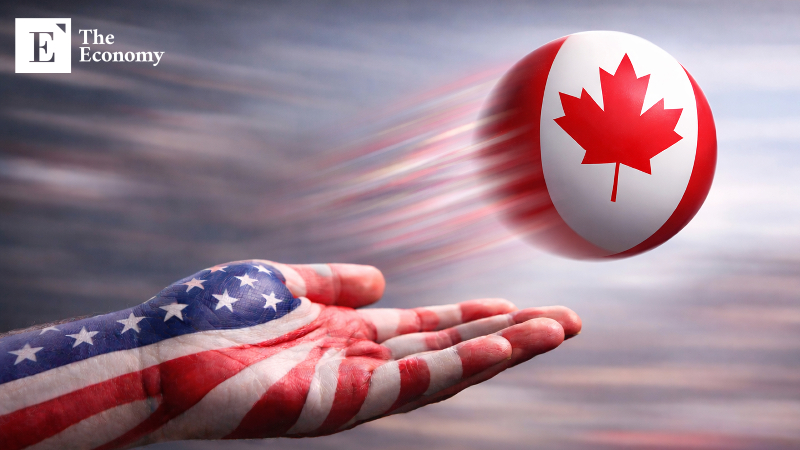
A major driver behind the thaw between Ottawa and Beijing is mounting trade pressure from the United States. With roughly 75% of its exports tied to the U.S. market, Canada is under growing urgency to diversify, and Prime Minister Mark Carney has kept a critical view of Washington’s trade approach. In a speech at the Davos forum on the 20th, he said the rules-based international order has “collapsed,” arguing that major powers are using tariffs as leverage, financial infrastructure as a coercive tool, and supply chains as vulnerabilities to be exploited—remarks widely read as a pointed swipe at the Trump administration.
Carney said Canada and other countries have little choice but to build new alliances to withstand pressure and threats from great powers. He noted that when faced with coercion, many countries tend to go along to get along, believing that avoiding friction and complying can buy safety. “But it doesn’t,” he argued, adding that middle powers must act together—and that “if you’re not at the negotiating table, you’re on the menu.” It was an unusually explicit statement of intent to push back against a U.S. agenda that is shaking up market rules through protectionism.
Under that approach, Carney has pledged to double Canada’s non-U.S. exports within the next decade. Trade experts and economists, however, warn that doing so could push Canada into heavier reliance on China, its second-largest trading partner. They caution that Chinese firms could gain dominance in the Canadian market on the back of price competitiveness. One market specialist said that if Canada simply expands trade with China to cut U.S. dependence, it risks undermining domestic market order—and inviting sharp retaliation from Washington. The expert argued Canada will need a careful balancing act: reducing exposure to the U.S. while protecting domestic industry and avoiding steps that would provoke the Trump administration.
As one of the youngest members of the team, Tyler Hansbrough is a rising star in financial journalism. His fresh perspective and analytical approach bring a modern edge to business reporting. Whether he’s covering stock market trends or dissecting corporate earnings, his sharp insights resonate with the new generation of investors.
Similar Post