China Promotes AI-Upgraded Fifth-Generation Stealth Fighter, but Assessments Remain Mixed Despite Bigger Numbers and Concepts

Stefan Schneider brings a dynamic energy to The Economy’s tech desk. With a background in data science, he covers AI, blockchain, and emerging technologies with a skeptical yet open mind. His investigative pieces expose the reality behind tech hype, making him a must-read for business leaders navigating the digital landscape.
Authored On
Modified
Gap between “next-generation stealth” branding and real-world performance
Production-driven strategy strengthened despite operational and reliability concerns
Parallel push to foster civil air mobility policy
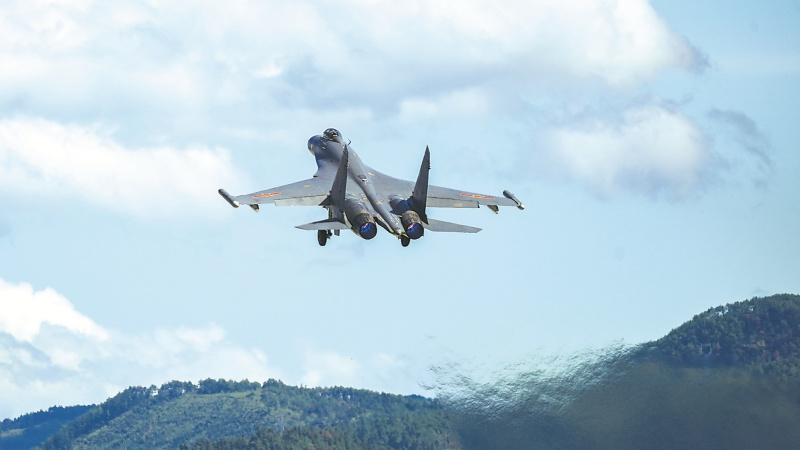
China has placed its fifth-generation stealth fighter, the J-20, at the center of its narrative on a qualitative leap in air power. The J-20 family, combining artificial intelligence (AI) upgrades with cooperative drone operations, has been introduced as a new variable in the Pacific security environment. Assessments, however, remain divided over how accurately Beijing’s portrayal reflects actual combat capability. Even as debates over technological reliability persist, China has rapidly expanded fighter production to secure numerical superiority, while simultaneously channeling substantial capital into civil aviation mobility—including flying cars—presenting a dual-track aviation strategy.
Repeated claims of technological shortcomings
According to the South China Morning Post on the 26th (local time), China has begun applying AI-based upgrades to its mainstay fifth-generation stealth fighter, the J-20, to enhance avionics performance across the board. The Chinese air force has previously described the J-20 as a core asset developed to counter the U.S. F-22 Raptor, positioning it as a platform combining stealth, supersonic cruise, and high maneuverability. In particular, the twin-seat J-20S has been framed as a key asset in an anti-access/area-denial (A2/AD) strategy aimed at countering carrier strike groups and other maritime forces.
Yet evaluations of the J-20’s performance—even within China—converge on the need for further improvement. Military commentator Zhang Xuefeng noted that while AI integration could give the aircraft “information-processing capacity equivalent to having an additional co-pilot,” significant enhancements are still required across avionics systems such as radar and infrared search-and-track. Only with substantial upgrades, he argued, can tactical efficiency improve in beyond-visual-range and medium-to-long-range engagements.
From a development standpoint, the J-20 has achieved rapid quantitative expansion. Produced by Chengdu Aircraft Corporation, the J-20 first flew in January 2011 and entered operational service in March 2017. Early variants used Russian AL-31 engines, but these were replaced in 2021 with China’s domestically designed WS-10C. Subsequent adoption of the WS-15 further improved supersonic cruise and maneuverability. In terms of armament, the aircraft is believed to carry four PL-15 long-range air-to-air missiles with ranges exceeding 200 kilometers, along with two PL-10 short-range missiles, in its internal bays.
Despite periodic upgrades, external military analyses remain cautious about the J-20’s qualitative maturity. Regarding the J-20S, analysts point to both conceptual progress and technical concerns. These include potential degradation of stealth due to an enlarged canopy and increased thrust requirements stemming from added weight. The WS-15 engine, meanwhile, is still criticized for having yet to fully prove its reliability in mass production and long-term operation. As a result, assessments outside China often converge on the view that while the J-20 possesses the outward form of a fifth-generation stealth fighter, a significant gap remains between it and top-tier Western platforms such as the F-22 in terms of actual combat capability.
China expects to offset these limitations through joint operations linking the J-20 with the J-16D electronic-warfare aircraft and the GJ-11 stealth drone. In this network-centric concept, the J-16D would disrupt enemy electronic systems while the GJ-11 conducts strikes, with the J-20S rear-seat crew envisioned as controlling drone formations. Military experts note, however, that because manned-unmanned teaming depends heavily on AI autonomy and integrated data links, the current structure—still reliant on significant human input—inevitably faces constraints in response speed and tactical flexibility.
Quantity prioritized over qualitative maturity
Despite ongoing debates over performance, China is further intensifying an expansion strategy centered on production scale and delivery speed. As of August last year, the Chinese air force was estimated to operate nearly 400 J-20s, with more than 100 additional aircraft in production or slated for deployment. This places the J-20 well ahead of the U.S. Air Force’s F-22 in numerical terms. In parallel, the J-35—being developed for both naval and air force use—entered operational deployment in late July last year, with projections indicating that more than 500 fighters could be fielded before 2030.
This volume-driven strategy extends to exports. The JF-17 lightweight fighter, jointly developed by China and Pakistan, has expanded its presence in the global arms market on the strength of price competitiveness. The aircraft’s unit price is about $30 million, significantly lower than platforms such as France’s Rafale or Sweden’s Gripen while occupying a similar operational category. Pakistan already operates 150 JF-17s, and Myanmar, Nigeria, and Azerbaijan have signed acquisition contracts. Indonesia has expressed intent to purchase 40 units, while Iraq and Libya are also reportedly exploring procurement.
Operational feedback from buyer countries, however, has been mixed. Issues cited include maintenance efficiency, avionics reliability, and weapons integration during real-world use. Still, repeat purchases and additional contracts continue, reflecting the lack of viable alternatives. For countries constrained by political considerations or prohibitive costs associated with Western fighters, Chinese aircraft offering acceptable performance at lower prices often emerge as the only realistic option. China’s strategy is to exploit this niche through overwhelming supply capacity and aggressive pricing.
Chinese media have also stepped up promotion of “future technologies” such as quantum radar, stealth detection, and next-generation reconnaissance capabilities. Most of these technologies, however, remain conceptual, with neither operational deployment nor reliability fully verified. In effect, the core of China’s current fighter strength lies less in the qualitative maturity of individual platforms than in sustained force expansion through mass production and price-driven diffusion—a strategy that can generate short-term numerical power but risks long-term limitations without corresponding advances in technological maturity and operational reliability.
Limits of technological experimentation in eVTOL
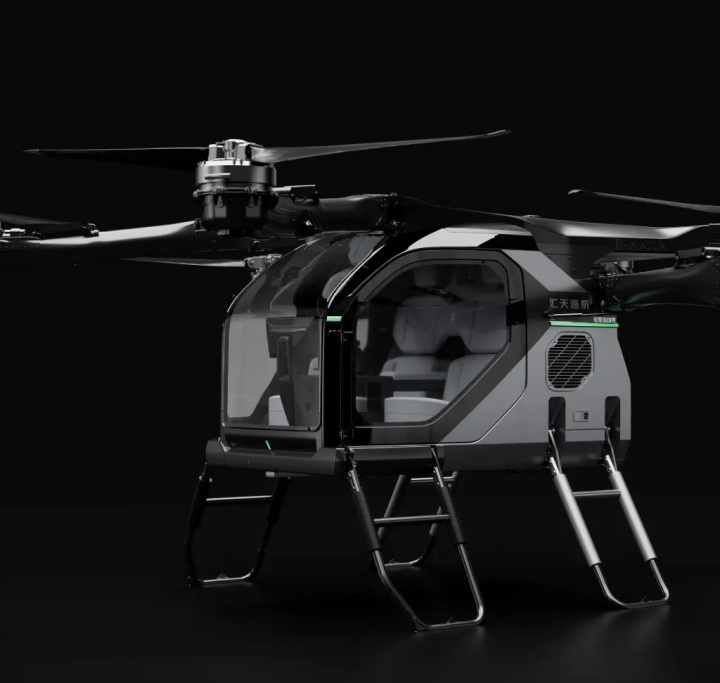
Alongside its quantity-focused fighter strategy, China has committed large-scale investment to the electric vertical takeoff and landing (eVTOL) sector, establishing a dual aviation structure. According to SCMP and industry analysts, China completed concept demonstrations for eVTOL aircraft in March last year, backed by strong policy support and accumulated technical expertise, with commercial operations carrying paying passengers seen as approaching. This reflects a parallel choice to cultivate civil air mobility as a next-generation growth industry, distinct from the high-complexity trajectory of military aircraft development.
China-based CCID Consulting projects that at least seven eVTOL manufacturers will begin deliveries by year-end, with traditional automakers playing a prominent role. XPeng’s flying-car subsidiary, Aridge, has launched a dedicated 120,000-square-meter facility in Guangzhou and plans to release a modular flying vehicle—dubbed a “land aircraft carrier”—priced below $280,000. Guangzhou Automobile Group’s flying-car brand, GOVY, has secured more than 2,000 orders and aims to complete aviation authority certification and begin mass production within the year.
Policy conditions further reinforce this trend. China has eased low-altitude airspace restrictions below 1,000 meters across major cities such as Shanghai, Shenzhen, and Chongqing, formally opening what it calls the “low-altitude economy.” Initial applications are limited to corporate transport, tourism, emergency logistics, and disaster response, with a phased roadmap toward everyday passenger transport. Recently, Autoflight—a subsidiary of battery giant CATL—announced plans to introduce amphibious “water vertiports,” signaling parallel development of dedicated infrastructure for flying cars. Together, these moves are widely interpreted as an attempt to transplant an automotive-style ecosystem into the aviation sector.
The technological nature of eVTOL, however, differs fundamentally from that of military fighter development. eVTOL platforms share strong continuity with the electric vehicle industry in areas such as electric motors, battery packs, composite materials, and automated manufacturing. With BYD and CATL accounting for more than 70% of global EV battery supply, accumulated electrification and mass-production capabilities naturally extend into flying vehicles. Yet this productivity does not directly address core aerospace engineering challenges such as energy density, endurance, adverse-weather operation, and air traffic management.
As a result, technology transfer to military aviation remains limited. While eVTOL emphasizes safety and cost efficiency as a civilian transport mode, fifth-generation stealth fighters demand sustained supersonic flight, extreme maneuverability, and survivability in intense electronic-warfare environments. Bottlenecks in fighter development—high-performance engines, sensor fusion, low-observable airframe design, and the accumulation of combat data—are not readily resolved through progress in flying cars alone. XPeng Aero HT’s “land aircraft carrier,” for instance, entered type certification and production approval processes after its debut at the 2024 Zhuhai Airshow, but later suffered a mid-air collision during test flights, underscoring lingering technical shortcomings.
Stefan Schneider brings a dynamic energy to The Economy’s tech desk. With a background in data science, he covers AI, blockchain, and emerging technologies with a skeptical yet open mind. His investigative pieces expose the reality behind tech hype, making him a must-read for business leaders navigating the digital landscape.
Similar Post