Hyundai Motor Pushes Humanoid Robots; Cost Savings and Competition Outweigh Union Opposition

As one of the youngest members of the team, Tyler Hansbrough is a rising star in financial journalism. His fresh perspective and analytical approach bring a modern edge to business reporting. Whether he’s covering stock market trends or dissecting corporate earnings, his sharp insights resonate with the new generation of investors.
Authored On
Modified
Hyundai Motor Union Strongly Opposes Plan to Deploy ‘Atlas’ Humanoid Robots
Cost Cuts and Reduced Tariff Risk Expected, With Hyundai Likely to Push Ahead
Global Automakers’ Robot Race Intensifies as Hyundai Motor Seeks to Cement Its Position
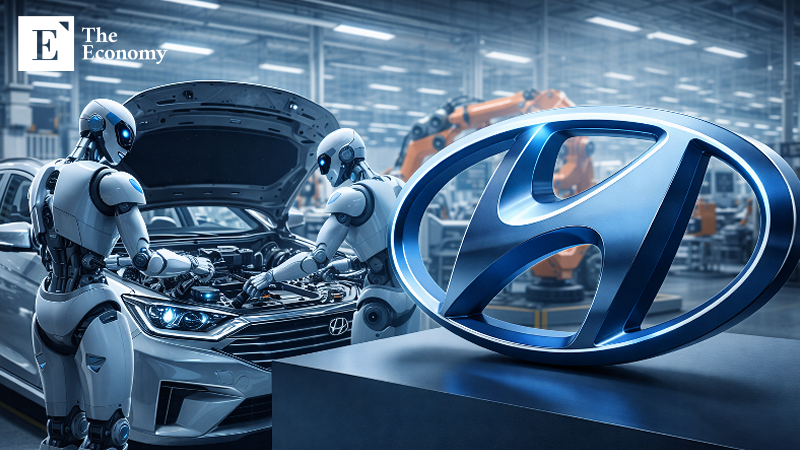
The Hyundai Motor chapter of the Korean Metal Workers’ Union is pushing back hard against plans to deploy humanoid robots on production lines, arguing that the company is pursuing new technology to cut labor costs without a labor-management agreement. Market observers, however, say the union’s demands are unlikely to gain traction, given the potential cost savings from humanoid automation and the competitive pressures in the global auto industry.
Hyundai Motor’s Humanoid Robot Rollout Plan
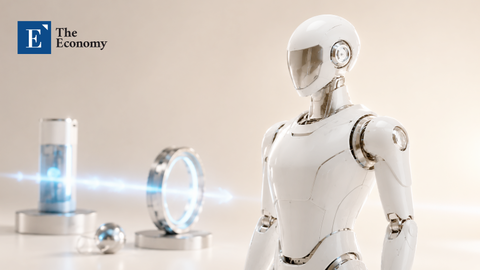
According to the automaker industry on the 28th, Hyundai Motor demonstrated a scenario at CES 2026 in Las Vegas, held from the 6th to the 9th (local time), in which the research version of Atlas moves parts along a vehicle production process, and also unveiled a development model intended for mass production. Atlas is a humanoid robot developed since 2013 by Boston Dynamics, the U.S. robotics manufacturer acquired by Hyundai Motor Group in 2020. Shaped like a human, it is designed to rotate multiple joints—such as the neck, shoulders, waist, and wrists—through 360 degrees to perform tasks more efficiently in industrial settings.
Boston Dynamics says Atlas can lift and carry objects weighing up to 50 kilograms and reach up to 2.3 meters. When the battery runs low, it can move to a charging station on its own, swap the battery, and resume work, and it is built to deliver full performance in environments ranging from minus 20°C to 40°C. Hyundai Motor plans to deploy Atlas first from 2028 at Hyundai Motor Group Metaplant America (HMGMA) in Ellabell, Georgia, initially in processes where safety and effectiveness are clearly verified—such as parts sorting and transport—and then expand its use from 2030 to include parts assembly. To support this, Boston Dynamics plans to mass-produce 30,000 Atlas units by 2028.
The Hyundai Motor union is strongly opposing the plan. In a bulletin published on the 22nd, the union said, “Shifting production overseas and adopting new technology (robot automation) is a one-way push without labor-management agreement,” adding that it “will never be tolerated.” It continued, “Based on an average annual salary of about $70,000, running 24 hours requires three workers whose labor costs total about $210,000 a year, but robots only incur maintenance costs after the initial purchase, giving capital an attractive pretext,” and claimed that “the deployment of AI robots to cut labor costs is becoming a reality at Hyundai Motor.”
Cost Savings and Lower Tariff Risk Expected
It remains unclear whether the union’s objections will be accepted, as the cost-saving effect of deploying Atlas is expected to be significant. Major brokerages including Samsung Securities estimate Atlas’s initial unit price at roughly $130,000 to $140,000—about the equivalent of two years of wages for a production-line worker. The upfront cost is higher than a typical annual salary, but unlike human workers, Atlas can operate around the clock. In effect, Hyundai would secure a form of “low-wage labor” with a far lower operating cost per hour than a human workforce.
The potential savings from automating final assembly—often seen as the last major hurdle in vehicle manufacturing automation—are also difficult to ignore. Final assembly is the stage where roughly 30,000 parts, including doors, seats, interior materials, electronic components, and wiring, are put together. The number of part combinations required in final assembly can run into the tens of thousands depending on model and options, and the size and shape of parts, as well as the order of assembly, vary widely, demanding highly refined judgment and delicate manual skills from workers. That is why humanoid robots capable of “thinking” through tasks and handling small parts are drawing attention as a key enabler of final-assembly automation. If final assembly is fully automated, automakers could reduce labor costs that account for as much as 10% of manufacturing cost.
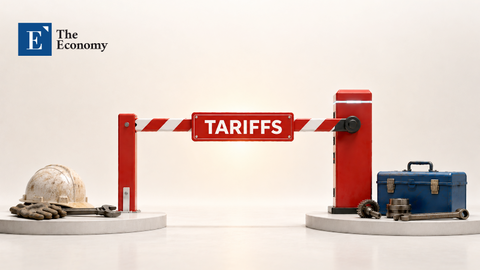
Robots could also prove to be a key tool for reducing tariff risk. Until now, global automakers have built production bases in emerging markets largely to cut labor costs. But as the Donald Trump administration in the United States embraces protectionism and escalates a global tariff war, that traditional strategy is starting to lose traction. If the adoption of humanoid robots accelerates under these conditions, automakers may no longer need to build factories in emerging markets. Instead, an era could open in which local production—reducing logistics and shipping costs—becomes the more cost-efficient option.
Global Automakers Double Down on Robots
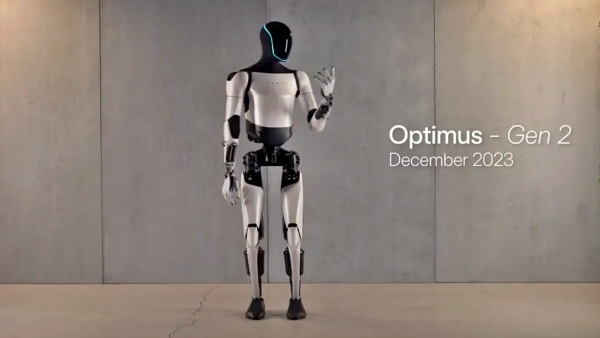
Competition in the global humanoid robotics market is also seen as a major driver behind expanded adoption. Tesla, one of Hyundai Motor’s key rivals in robotics, has spent more than a year collecting data and training its humanoid robot Optimus at its Fremont, California plant, and has begun rolling out Optimus in stages at its Austin, Texas facility from this year. BMW is testing the feasibility of deploying Figure 02, a humanoid robot developed by U.S. startup Figure AI, at its U.S. plants, while Mercedes-Benz is running pilot trials of humanoid robots built by U.S. robotics company Apptronik at its digital factory in Germany and at a plant in Hungary.
Chinese automakers are moving even more aggressively. Guangzhou Automobile Group (GAC) unveiled its intelligent humanoid robot GoMate last year and has been applying it across multiple industries since this year. Geely has partnered with Chinese humanoid specialist UBTECH to deploy the Walker S series at factories for its premium brand Zeekr, and XPeng has been operating its in-house humanoid robot Iron on EV production lines since 2024. The argument is that Hyundai Motor now needs to respond in kind if it hopes to compete for market leadership.
Preparations for smoother automation are already underway. According to a lobbying transparency report submitted to the U.S. Senate, Hyundai Motor Group spent a total of $3.425 million on lobbying in the United States last year. In particular, in the fourth quarter it added a new lobbying item aimed at advancing a “National Framework to Advance Robotics.” The lobbying targets included the U.S. Senate and House of Representatives, as well as the Department of Transportation (DOT). The move is being read as a preemptive effort to shape the institutional and regulatory environment for future factory automation and the deployment of humanoid robots.
As one of the youngest members of the team, Tyler Hansbrough is a rising star in financial journalism. His fresh perspective and analytical approach bring a modern edge to business reporting. Whether he’s covering stock market trends or dissecting corporate earnings, his sharp insights resonate with the new generation of investors.
Similar Post