Hanwha’s Philly Shipyard, Forward Base for a ‘U.S.–Korea Nuclear Submarine Alliance,’ Faces a 20-Year Climb Just to Build Capability

Matthew Reuter is a senior economic correspondent at The Economy, where he covers global financial markets, emerging technologies, and cross-border trade dynamics. With over a decade of experience reporting from major financial hubs—including London, New York, and Hong Kong—Matthew has developed a reputation for breaking complex economic stories into sharp, accessible narratives. Before joining The Economy, he worked at a leading European financial daily, where his investigative reporting on post-crisis banking reforms earned him recognition from the European Press Association. A graduate of the London School of Economics, Matthew holds dual degrees in economics and international relations. He is particularly interested in how data science and AI are reshaping market analysis and policymaking, often blending quantitative insights into his articles. Outside journalism, Matthew frequently moderates panels at global finance summits and guest lectures on financial journalism at top universities.
Authored On
Modified
Philly Shipyard’s nuclear submarine feasibility questioned
A “steep hill” that could take decades to scale
U.S. concerns over leakage of core technologies add another hurdle
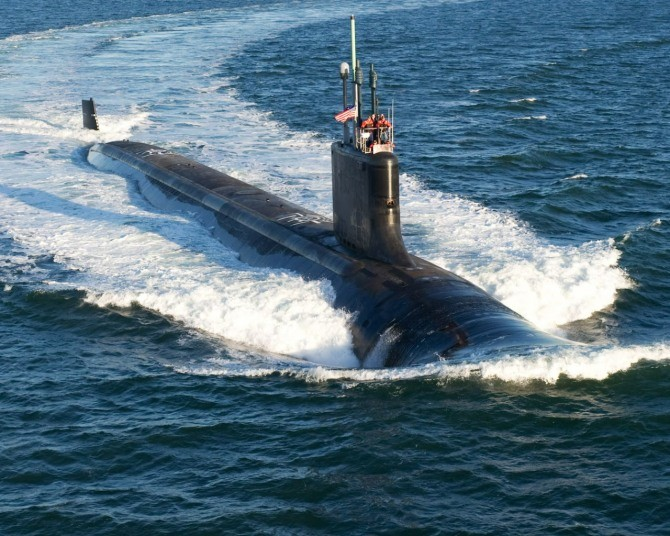
As U.S. President Donald Trump has floated the idea of jointly building nuclear-powered submarines with South Korea, expectations have risen around the Philadelphia shipyard acquired by Hanwha Ocean, now touted as a potential forward base. Yet skepticism is mounting over the plan’s feasibility. Experts argue that, irrespective of South Korea’s shipbuilding prowess, formidable U.S. protectionist barriers and a closed system that treats nuclear technology as an inviolable national-security domain will pose decisive obstacles. Compounding these constraints are the Philly Shipyard’s inadequate infrastructure and shortage of skilled labor, with pessimistic forecasts suggesting it could take as long as 20 years merely to establish the capabilities required for nuclear submarine construction.
Severe Infrastructure and Labor Shortfalls
According to the shipbuilding industry on the 28th, Lyle Goldstein, a professor at Defense Priorities, a U.S. foreign-policy think tank, raised doubts about U.S.–Korea joint construction of nuclear-powered submarines in a recent contribution to Proceedings, the military journal published by the U.S. Naval Institute (USNI). He identified the most fundamental issue as the “absence of infrastructure and certification,” noting that “Philly Shipyard is optimized for commercial vessels and lacks even the certification required to handle nuclear materials.”
Previously, following a summit with South Korean President Lee Jae-myung late last year, President Trump unveiled the “Golden Fleet” initiative—centered on reviving a so-called “Trump-class” warship—and named Hanwha Ocean as a partner for frigate construction. On the same day, Philly Shipyard, acquired by Hanwha Ocean, declared that it had “already begun preparatory work for the construction of U.S. Navy nuclear-powered submarines.” The statement signaled an intent to deepen bilateral cooperation in shipbuilding around Philly Shipyard.
The backdrop to the Golden Fleet plan is a severe submarine production bottleneck confronting the U.S. Navy. To counter China’s maritime expansion, the United States needs to build at least two Virginia-class attack submarines annually. Yet labor shortages and facility constraints at existing yards—such as Electric Boat and Newport News—have capped output at an average of just 1.2 boats per year. Hanwha Ocean has positioned Philly Shipyard, acquired last year for $100 million, as an alternative production hub to help fill the gap. The company has reportedly argued that the shipyard, currently undergoing modernization, could provide additional construction and process capacity to alleviate delays in U.S. Navy submarine production.
Goldstein, however, countered that “it could take up to 20 years simply to acquire the capability to build nuclear submarines,” calling it a “steep hill to climb.” In his view, the industrial foundation required to translate President Trump’s declaration into reality remains profoundly inadequate. Security concerns present another formidable barrier. Nuclear submarine technology is regarded as the “crown jewels” of U.S. naval power, and unlike fellow AUKUS partners the United Kingdom and Australia, South Korea faces language barriers and lingering apprehension within the U.S. military over technology transfers to non-Anglo-Saxon countries.
The collapse of the U.S. shipbuilding industry further complicates matters. American shipyards are already “struggling mightily” to secure labor even to fulfill existing contracts. With no surplus capital or workforce, they have little capacity to absorb a joint construction project with South Korea. Indeed, delays of several months in the delivery of a U.S. training vessel currently under construction at Philly Shipyard reflect structural weaknesses across the U.S. shipbuilding sector. Years of declining naval and commercial orders have depleted the skilled workforce, eroding quality-control processes in the process.
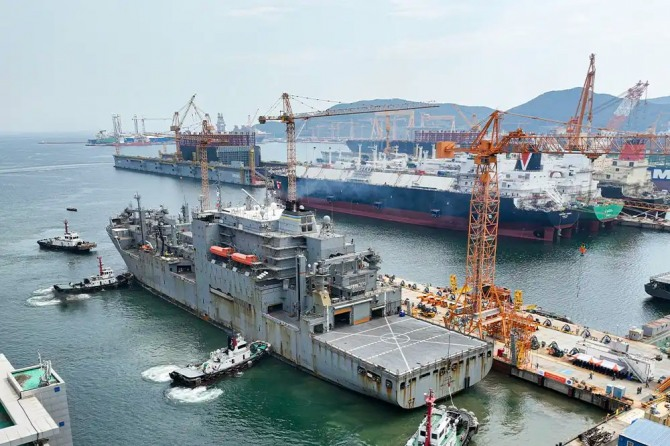
A Commercial Shipyard and a Broken Supply Chain
Other experts have also voiced pessimism about the Golden Fleet initiative. Chris Cavas, a veteran naval correspondent formerly with Defense News, pointed to U.S. regulations as the single greatest obstacle. “Warship construction requires a vast array of components—radars, sensors, weapons, engines—all produced by different suppliers,” he said. “Shipyards cannot control the delivery of these systems. Managing America’s broken supply chain, which has deteriorated further since the COVID-19 pandemic, will be a massive challenge for Hanwha Ocean.”
Cavas cited the Buy American Act, which mandates that 60–75% of components in federally procured items be domestically sourced. “If Korean components are more readily available, members of Congress will still insist that those parts be purchased from companies in their own districts,” he noted. “As everyone knows, shipyards have no authority to refuse.” While South Korea’s shipbuilding competitiveness rests on assembling vessels with affordable, high-quality domestic steel, engines, and equipment, supplying U.S. Navy warships would require the use of slower and more expensive U.S.-made steel, engines, and radar systems under the Buy American framework.
Skeptics also argue that a commercial-ship-focused yard with no experience in naval construction cannot quickly overcome shortages of skilled labor and a fractured supply chain. Eric Labs, senior analyst for naval forces and weapons at the Congressional Budget Office (CBO), observed that “Hanwha Ocean’s modern management practices may partially improve U.S. shipbuilding, but it remains unclear whether foreign management can resolve America’s high wage structure, overhead costs, and the expense of domestically sourced components.”
He added that “South Korean wages are about 60% of U.S. levels, and China’s are far lower still. With labor accounting for roughly 40% of shipbuilding costs, relying on expensive U.S. labor represents an enormous burden that will be extremely difficult to overcome.” Labs further questioned whether Philly Shipyard is familiar with frigate designs and equipped with the machinery needed to commence construction rapidly, adding that it is also unclear whether the yard can secure a workforce with the scale and diverse skill sets required for building warships rather than commercial vessels.
Hanwha’s Nuclear Submarine Ambitions Constrained by a Security Red Line
Skepticism also surrounds Hanwha Ocean’s declared ambition to enter the U.S. nuclear submarine business. James Holmes, the J.C. Wylie Chair of Maritime Strategy at the U.S. Naval War College, noted that “even U.S. citizens struggle to obtain nuclear-related security clearances,” invoking the Cold War-era Toshiba scandal, in which the Japanese electronics firm transferred manufacturing technologies that reduced submarine noise to the Soviet Navy, making Soviet submarines harder to detect.
Holmes explained that the episode elevated export controls to a central pillar of U.S. foreign policy and left a deep trauma within the defense community regarding espionage and illicit technology transfers. “Granting security clearances even to close allies remains a subject of suspicion,” he said. In practice, NAVSEA 08—the U.S. Navy’s Nuclear Propulsion Directorate, which oversees core nuclear submarine technologies—maintains a strict “NOFORN” policy that bars even allied access. This raises the possibility that Korean engineers could be excluded from key processes involving nuclear propulsion or combat systems, even at a Korean-owned shipyard on U.S. soil.
Holmes also doubted that, even if South Korea were to pursue its own nuclear-powered submarines following a bilateral summit agreement, construction at Philly Shipyard would be feasible. “It is extremely difficult to imagine nuclear submarines for the Republic of Korea Navy being built in Philadelphia,” he said. “Philly Shipyard has never undertaken work related to naval nuclear propulsion. Taking both technical and political factors into account, if South Korea does build nuclear submarines, they will be built in Korea.”
Matthew Reuter is a senior economic correspondent at The Economy, where he covers global financial markets, emerging technologies, and cross-border trade dynamics. With over a decade of experience reporting from major financial hubs—including London, New York, and Hong Kong—Matthew has developed a reputation for breaking complex economic stories into sharp, accessible narratives. Before joining The Economy, he worked at a leading European financial daily, where his investigative reporting on post-crisis banking reforms earned him recognition from the European Press Association. A graduate of the London School of Economics, Matthew holds dual degrees in economics and international relations. He is particularly interested in how data science and AI are reshaping market analysis and policymaking, often blending quantitative insights into his articles. Outside journalism, Matthew frequently moderates panels at global finance summits and guest lectures on financial journalism at top universities.
Similar Post