Why the “Checkout-Free Future” Stalled: The End Point of Amazon Go and Fresh Experiments

Stefan Schneider brings a dynamic energy to The Economy’s tech desk. With a background in data science, he covers AI, blockchain, and emerging technologies with a skeptical yet open mind. His investigative pieces expose the reality behind tech hype, making him a must-read for business leaders navigating the digital landscape.
Authored On
Modified
A Decision Prioritizing Sustainability Over Innovation
Withdrawal and downsizing speculation since 2023
The illusion of “unmanned” retail: hype versus reality
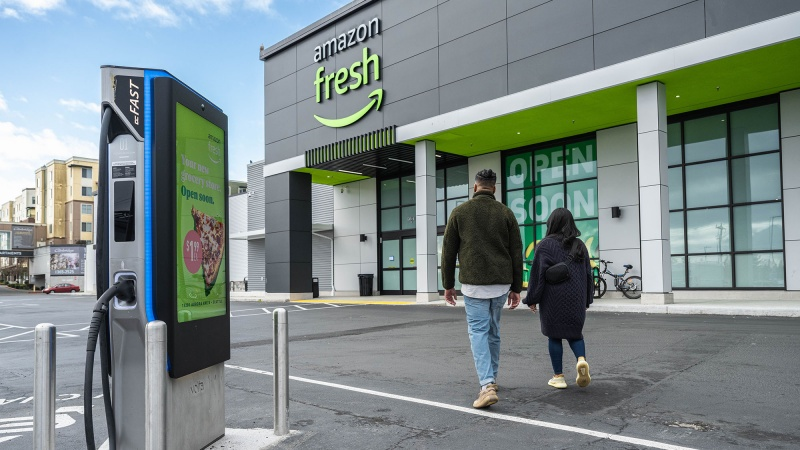
Amazon, the world’s largest e-commerce company, has shut down its cashierless stores Amazon Go and Amazon Fresh, drawing a line under its ambitious foray into offline retail. The stores drew attention for their automatic payment systems, which charged customers as they walked out with items, but the business ultimately failed to secure the economic viability required for large-scale expansion. While the bold experiment of stores without checkout counters or cashiers is now winding down, observers note that the question of how to bridge the gap between technological innovation and business sustainability has only become clearer.
Official End to the Experiment, Retreat from Cashierless Retail
On the 27th, Amazon announced on its blog that it would close its Amazon Go and Amazon Fresh offline stores, with some locations to be converted into Whole Foods Market outlets. Acknowledging the failure, Amazon said it “was unable to build the economic model required for large-scale expansion,” adding that it would “focus resources on online delivery services going forward.” Amazon currently operates 14 Amazon Go stores and more than 50 Fresh stores worldwide, most of which are set to cease operations as early as this month. In California, however, closures may be delayed due to state advance-notice requirements.
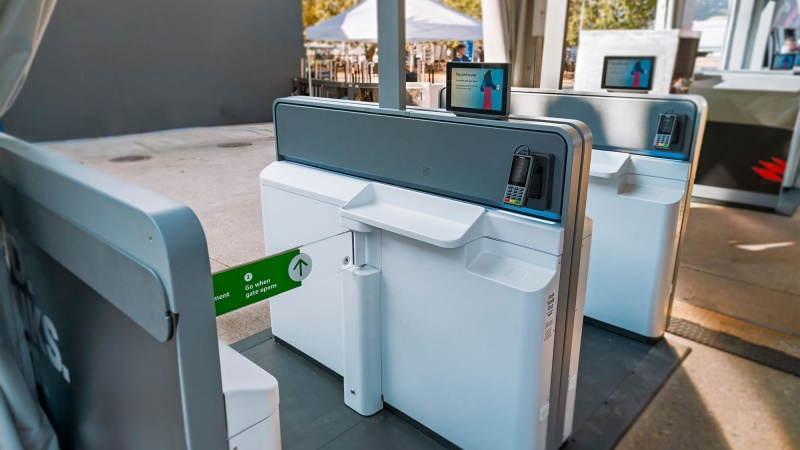
Launched in 2018, Amazon Go was introduced as a symbol of the future of offline retail, featuring a “just walk out” system that automatically completed payment when customers exited the store. The concept of eliminating checkout counters and cashiers was hailed as an innovative case combining artificial intelligence, computer vision, and sensors, reinforcing Amazon’s image as a technology leader. In full-scale operation, however, both technical and cost constraints became apparent.
Implementing cashierless checkout required installing numerous cameras and weight sensors throughout each store, making it difficult to flexibly change layouts. In grocery retail, where product assortments and shelving frequently change with the seasons, these constraints reduced operational efficiency. As technology became more advanced, initial build-out and maintenance costs also rose, and the burden compounded as store counts increased. Market observers pointed to “unit economics that were difficult to make profitable at the store level” as the biggest obstacle to the Amazon Go experiment.
Amazon Fresh revealed similar limitations. While it introduced barcode scanning by customers, fresh items without barcodes still required weighing and manual input, leaving friction in the process. After 2022, accelerating inflation led consumers to favor established discount retailers such as Walmart and Aldi, which offered stronger price competitiveness. Although Amazon envisioned Fresh and Go as platforms for differentiated grocery experiences, it failed to fundamentally change consumer behavior on price and convenience.
Halted Openings and a Gradual Retreat
Industry observers largely view Amazon’s decision as a change long in the making. At one point, Amazon had aimed to expand Amazon Go to as many as 3,000 locations, but reality moved in the opposite direction. In March 2023, Amazon closed eight Go stores at once in major cities including New York, Seattle, and San Francisco, widely seen as the first signal that internal assessments of the cashierless model had shifted. Around the same time, new store openings were effectively halted, and reports emerged that operating intensity at existing locations was being scaled back.
The slowdown was equally evident at Amazon Fresh. The company had planned aggressive expansion in the UK, with as many as 260 additional stores, but the plan was scrapped ahead of 2024. As noted earlier, Amazon struggled to close gaps with established grocers on pricing and efficiency. Even attempts to revamp store concepts failed to prevent closures across multiple locations, including Southern California.
As a result, Amazon Go and Fresh came to be classified as businesses that “remain open but do not grow.” The COVID-19 pandemic in the early 2020s further exposed these limits. Many Go stores were located in office-dense urban centers, and the sharp drop in commuters and tourists during the pandemic led to steep declines in foot traffic. Even after urban activity recovered, sales failed to return to previous levels, leaving stores with limited returns relative to maintenance costs.
This period also coincided with Amazon’s broader reassessment of its offline strategy. While cashierless and mass-market supermarket experiments faltered, Whole Foods Market—acquired in 2017 for $13.7 billion—saw sales rise by more than 40%, delivering comparatively stable performance. Industry consensus holds that this contrast had a decisive influence on management decisions. The post-pandemic pullback from Go and Fresh reflects accumulated performance data and strategic recalibration, with the latest announcement merely formalizing a retreat already under way.
The Gap Between Tech Image and Operational Reality
Experts argue that Amazon overestimated its own technological readiness, accelerating the retreat from Amazon Go. The image of a fully unmanned store held strong symbolic appeal early on, but critics say consumers largely bought into the impression of innovation rather than its operational substance. Automatic product recognition required extremely high accuracy and proved sensitive to even minor environmental changes. Ensuring stable performance demanded strict conditions, translating into higher costs and management burdens.
The very notion of an “unmanned” store also clashed with reality. A core issue lay in post-transaction processing. Reports repeatedly surfaced of receipts taking one to two hours to arrive, due to human review of transaction data. Amazon acknowledged that as of 2022, roughly 70% of cashierless transactions underwent human verification, underscoring the system’s reliance on manual intervention.
This reliance highlighted the disconnect between technological branding and operations. In early 2024, The Information reported that Amazon employed around 1,000 remote workers, largely based in India, to review transaction footage. Critics noted that while visible cashiers disappeared, hidden labor replaced them, leaving labor costs largely intact. Once camera and sensor installation costs were factored in, the anticipated savings from automation effectively vanished.
Ultimately, the Amazon Go and Fresh cases illustrate what is required for technological experiments to translate into sustainable business models. The central question is whether the technology can absorb the costs and risks of store operations. Amazon achieved partial success in automating purchase recognition and payments, but could not offset rising capital expenditures, maintenance costs, and error-management resources as store networks expanded. The gap between implementing a feature and building a durable business around it proved decisive.
Stefan Schneider brings a dynamic energy to The Economy’s tech desk. With a background in data science, he covers AI, blockchain, and emerging technologies with a skeptical yet open mind. His investigative pieces expose the reality behind tech hype, making him a must-read for business leaders navigating the digital landscape.
Similar Post