Tesla, Weakened by Fading EV Competitiveness, Bets on Humanoid Robot Optimus After Ending Model S and X

Authored On
Modified
Tesla Decides to Discontinue Model S and X, Retools Production Facilities for Optimus
With EV Growth Slowing, Tesla Bets on Robotics and AI for a Performance Rebound
Competition Likely to Come Down to Execution of Core Technologies Such as “Robot Hands”
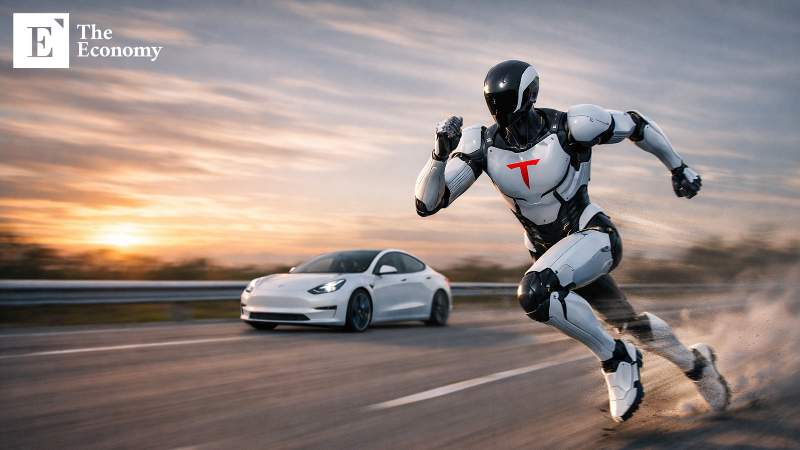
Tesla is converting production facilities for its flagship electric vehicles, the Model S and Model X, into manufacturing lines for humanoid robots. As intensifying competition and the scaling back of government subsidies across countries sap the growth momentum of its EV business, the company is shifting its center of gravity toward robotics and artificial intelligence to find a new path forward. Markets are now watching closely to see whether Tesla can overcome technological constraints and establish a meaningful presence in an increasingly competitive landscape.
Tesla Shifts Its Growth Strategy
On the 28th (local time), Tesla CEO Elon Musk said on an earnings conference call for investors, “It’s not necessarily bad news, but it’s time to honorably wrap up the Model S and Model X program,” adding, “If you’re interested in buying a Model S or Model X, now is the right time to order.” The Model S is Tesla’s luxury sedan launched in 2012, and the Model X is a premium SUV that has been sold since 2015. While the two models are widely credited with driving Tesla’s early growth, their sales have steadily declined since the more popular Model 3 and Model Y arrived. Of Tesla’s 1.59 million vehicle deliveries last year, the Model S and Model X accounted for just 3%.
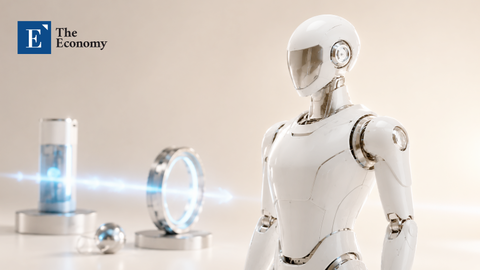
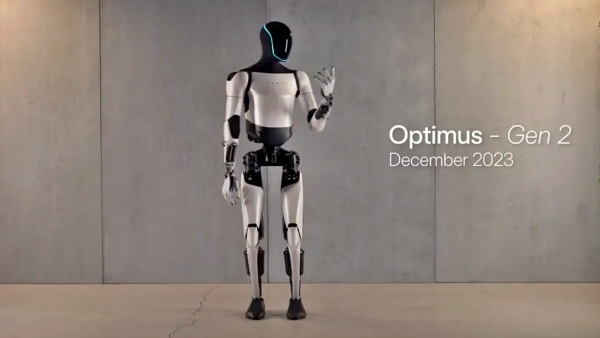
Musk said Tesla will halt production of the two models at its Fremont plant in California to secure space for Optimus production. “We plan to convert the Model S and Model X production area at the Fremont factory into an Optimus factory,” he said, adding that “the long-term goal is to produce 1 million Optimus robots a year in that space.” Optimus is Tesla’s humanoid robot under development, expected to be a bipedal intelligent product capable of performing tasks ranging from factory work to everyday assistance. Tesla has been collecting data and training Optimus for more than a year at its Fremont facility, and plans to deploy Optimus step-by-step at its Austin plant in Texas starting this year. It also plans to unveil the third-generation Optimus in the first quarter, begin mass production by the end of this year, and start selling it to consumers before the end of next year.
EV Business Crushed by a Confluence of Headwinds
Tesla’s push to expand its robotics business is widely seen as a high-stakes bet by CEO Elon Musk to break out of a deteriorating earnings cycle. In 2025, Tesla’s annual revenue fell 3% year on year to $94.83 billion, marking the first annual revenue decline since the company’s founding. Net profit also plunged 46% from a year earlier to $3.79 billion, just 30% of the record $12.6 billion posted in 2022.
The weakening competitiveness of Tesla’s EV business is cited as the core driver of the downturn. Over the past several years, the EV market has been flooded with legacy automakers and Chinese EV manufacturers, driving competition to extreme levels. As rivals steadily upgraded product quality and expanded their lineups, Tesla’s technological edge gradually eroded, bringing the era of Tesla’s dominance to an end. In response, Musk adopted aggressive price cuts, but the strategy proved to be a double-edged sword, sacrificing profitability and Tesla’s premium brand image in exchange for short-term volume.
An aging lineup caused by the absence of new model launches also weighed on Tesla’s position. In November 2023, as competition with BYD for market share intensified, Tesla was expected to introduce a low-priced EV to boost sales. Instead, it rolled out the high-priced Cybertruck and unveiled ambitions to sell 250,000 units in 2025. The plan failed badly, and Tesla’s U.S. market share slid to its lowest level in eight years.
Adding to the strain, the EV market itself entered a downturn. Demand cooled rapidly as governments around the world slashed or scrapped subsidies that had propped up the market. The decisive blow came in the second half of last year, when the United States finalized the One Big Beautiful Bill Act, bringing an early end to the $7,500 federal EV tax credit. Amid these headwinds, Tesla’s 2025 EV deliveries fell 8.6% year on year to 1.64 million vehicles, the largest annual drop in its history. Automotive revenue declined 11% from a year earlier to $69.53 billion.
Optimistic Market Outlook, but What Will Decide the Race?
In this crisis, humanoid robots could become the key lever for an earnings rebound. Across the market, expectations are building that humanoid robots will trigger a broad “tectonic shift” throughout industry. Brian Hopkins, an analyst at market research firm Forrester, said, “New use cases are increasing rapidly, from warehouses and restaurants to elder care and security,” adding that “if the current trend holds, humanoid robots will significantly reshape the physical services industry by 2030.” Morgan Stanley has also projected that the humanoid robot industry could grow into a $5 trillion market by 2050, with cumulative supply reaching as many as 1 billion units.
Musk has likewise maintained an optimistic view of the humanoid market. On an earnings call for last year’s third quarter, he said, “Optimus Gen 3 won’t look like a robot; it will look realistic, like a person wearing a robot suit,” and claimed that “Optimus can be more than five times as productive as a human, and as an intelligent labor force that runs 24/7, it will change the structure of the human economy.” Musk has described humanoids as an “infinite money glitch,” and said the long-term goal is production on the order of 10 million to 100 million units. He also assessed Optimus as a project with the potential to become the biggest product in the company’s history, while adding, “This is not an easy thing.”
The real test will be whether Tesla can break through technical hurdles and secure meaningful competitiveness in the market. Skepticism across the industry about Tesla’s robotics capabilities has not faded. Earlier this month, footage leaked from a Miami “autonomous driving visualization” show showing an Optimus robot handing out water bottles to guests, knocking a bottle over, and then falling backward. Some observers speculated that as the robot fell, its lack of a visible motion to brace near the face reflected the actions of an unseen operator removing a virtual reality headset. Tesla has previously used remote operators in Optimus demonstrations, including at an event in October 2024.
Another critical bottleneck, and a deciding factor in competitiveness, is the development of “robot hands” that must move with human-like precision. Musk has said, “Making hands that are as dexterous and capable as human hands is the hardest engineering problem,” adding that “the hand and arm are a more complex electromechanical system than the rest of the robot.” The view is that Optimus will only achieve true productivity and versatility as a general-purpose robot if the quality of its robot hands approaches a human level.
Similar Post