EU Puts Europe First, Pushes China Out of Supply Chains—Manufacturing Buckles Under High Costs

Authored On
Modified
EU Steps Up Efforts to Push China Out, Tightening Trade Barriers and Regulation Across the Board
Europe’s Manufacturing Slump Deepens, With Limited Capacity to Replace Chinese Production
EU Turns to “Home-First” Policies to Break the Deadlock, but Energy and Labor Cost Pressures Persist
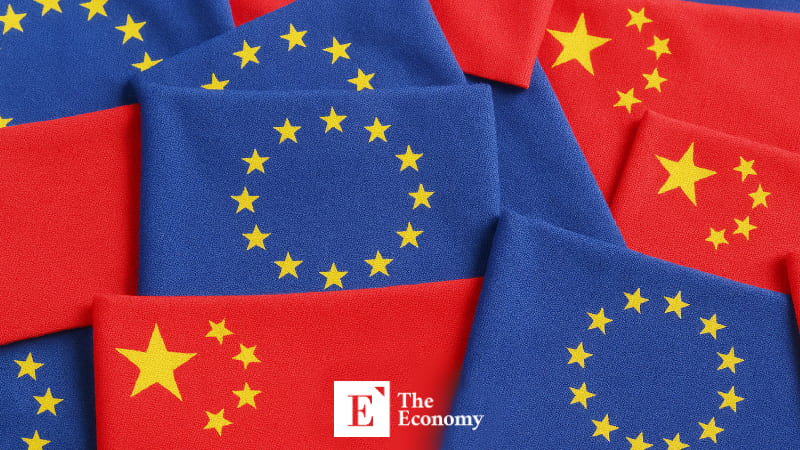
The European Union is stepping up efforts to exclude China from its supply chains. Across industries from telecommunications and steel to renewable energy, supply-chain self-reliance strategies are gaining traction across the bloc. Markets, however, increasingly doubt that Europe’s manufacturing base—already weakened and facing the risk of broader breakdown—can realistically fill the void left by China.
EU Raises Trade Barriers Against China
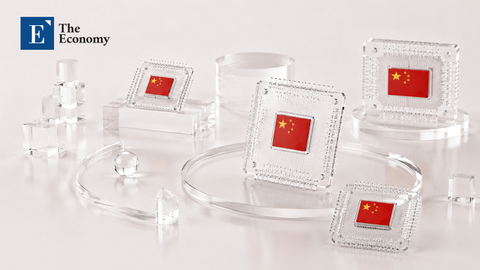
According to foreign media reports compiled on the 3rd, the EU has been steadily raising trade barriers targeting Chinese companies and products. The European Commission unveiled a new Cybersecurity Act last month, effectively pushing Chinese telecom vendors out of critical infrastructure in Europe. The proposal would codify the “5G cybersecurity toolbox,” which centers on phasing out equipment from “high-risk suppliers,” and would extend the scope of equipment restrictions beyond 5G. With Huawei and ZTE named as high-risk suppliers, member states would be required to remove their equipment from telecom networks in stages.
The EU’s Carbon Border Adjustment Mechanism (CBAM) also entered its definitive phase on January 1, 2026. As a result, companies seeking to export steel, aluminum, cement, and other products to the EU must go beyond reporting emissions. They must purchase and submit CBAM certificates equivalent to verified emissions. The move is widely seen as targeting carbon-intensive Chinese steel. U.S. environmental and energy consultancy Global Efficiency Intelligence estimates the measure could add up to about $76 per ton in extra costs for China’s steel industry.
Italy, meanwhile, became the first EU country to fully ban Chinese modules, cells, and inverters from solar panel supply auctions in December last year. Other European countries are expected to introduce similar rules in 2026, prioritizing EU-made components. The problem is that these “energy self-reliance” measures translate into immediate cost increases. BloombergNEF estimates that after Italy moved to exclude Chinese parts, the cost of solar projects in the country rose by about 17%. BloombergNEF also warned that EU climate-policy funding is insufficient to draw enough private investment, and that Europe is unlikely to build up replacement manufacturing capacity quickly.
Europe’s Manufacturing Base Slips Further Underwater
Rising costs are likely to spread well beyond renewable energy, spilling over into a broad range of industries where low-priced Chinese products have been shut out. The problem is that Europe’s manufacturing base currently lacks the capacity to prop up supply chains on its own. The strain is most visible in Germany, widely seen as the heart of European manufacturing, where a wave of corporate failures is bringing the crisis into sharp relief. According to analysis by the Halle Institute for Economic Research (IWH), a total of 17,605 companies in Germany either entered formal liquidation proceedings or ceased operations last year—the highest figure since 2005 and even exceeding levels seen during the 2009 global financial crisis.
The downturn in Germany’s industrial sector is largely attributed to weakness in the auto industry and a broader erosion of manufacturing competitiveness. German manufacturers have been squeezed by China’s low-price offensive and delays in the transition to electric vehicles, losing ground across core markets. The fallout has rippled through related sectors, including parts suppliers, logistics, and services. One market expert noted that “as the twin pillars of manufacturing and the auto industry wobble, the entire German economy is being shaken,” adding that “high interest rates, labor shortages, and rising raw-material costs are choking businesses.”
Sales of Germany’s Mittelstand—the backbone of its manufacturing sector, made up of small and mid-sized industrial champions—to foreign buyers are also accelerating. On the 30th of last month, South Korean machine tool maker DN Solutions announced that it had completed the acquisition of Germany’s Heller Group. Founded in 1894 as a craftsman’s workshop in Nürtingen, Heller is a flagship German maker of high-end machine tools specializing in ultra-precision processes for the automotive, aerospace, and defense industries. The decision by the family-owned company, which had been run by four generations, to sell control is widely seen as a move driven by survival. Since the COVID-19 pandemic, deepening supply-chain disruptions and weakness in Germany’s auto sector—Heller’s key downstream market—had pushed its debt ratio to 386%.
Samsung Electronics has also been actively acquiring German manufacturers, purchasing two in the past year alone. In November, it acquired FläktGroup, Europe’s largest heating, ventilation, and air-conditioning (HVAC) company. In December, its subsidiary Harman announced the acquisition of the advanced driver-assistance systems (ADAS) business of German auto-parts giant ZF Friedrichshafen. Elsewhere, German automation equipment maker Manz AG filed for bankruptcy last year and was acquired by Tesla, while Rema Tip Top—a “hidden champion” in tires and repair materials—and Rigen Feinbau, a key supplier to global automakers, are also in talks with overseas investors.
EU’s Strategy to Revive Manufacturing
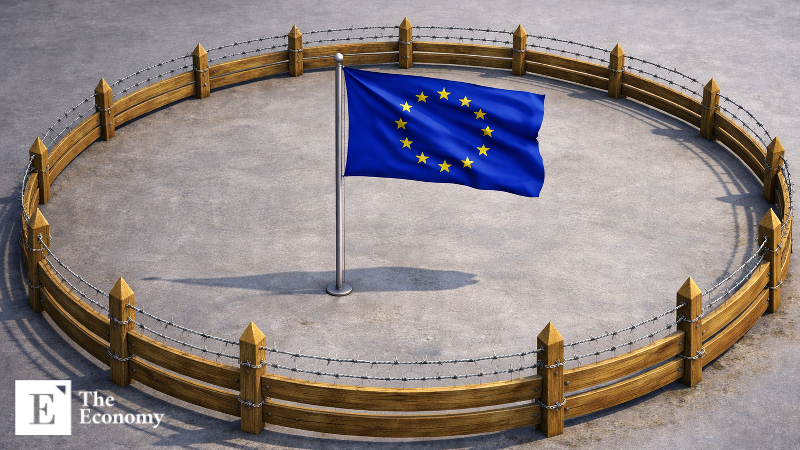
To counter the deepening crisis in its manufacturing sector, the EU has turned to a “home-first” approach. According to Reuters, the European Commission is set to unveil the Industrial Acceleration Act (IAA) later this month. Led by Executive Vice President for Industry Stéphane Séjourné, the initiative is aimed at strengthening European industry in response to an influx of low-priced imports from China. The ultimate goal is to raise the share of industrial production in the EU’s total gross value added from 14.3% in 2020 to 20% by 2030.
The proposed legislation would cap foreign ownership at 49% in key strategic sectors such as energy-intensive industries and automobiles, and require prior screening for investments exceeding €100 million. It would also mandate that, in joint ventures, technological know-how held by foreign firms be shared with European partners for the development of EU industry, while intellectual property rights remain with EU companies. In addition, foreign investors would be required to reinvest at least 1% of joint-venture revenue into R&D within the EU and source more than 50% of production inputs from inside the bloc.
Whether these measures can meaningfully restore competitiveness, however, remains in question. Markets widely argue that the manufacturing downturn across EU countries, including Germany, stems from structural problems such as high energy prices, rising labor costs, and heavy administrative burdens driven by excessive bureaucracy. Protectionist measures alone may not be sufficient to resolve the crisis. In Germany, for example, industrial electricity prices have surged 73% over the past four years to 181 won per kilowatt-hour. As the country raised its reliance on renewables without overcoming intermittency constraints, dependence on imported power increased and costs soared. While the government has since introduced measures to curb further hikes in industrial power prices, many companies have already lost the capacity to absorb the shock. At the same time, the minimum wage has risen 37% since 2020, adding further strain on industry.
Similar Post