Japan Steps Up Supply-Chain Self-Reliance With Deep-Sea Rare Earth Mining Success; Countries Challenge China’s Dominance

Aoife Brennan is a contributing writer for The Economy, with a focus on education, youth, and societal change. Based in Limerick, she holds a degree in political communication from Queen’s University Belfast. Aoife’s work draws connections between cultural narratives and public discourse in Europe and Asia.
Authored On
Modified
Japan Succeeds in Trial Deep-Sea Mining of Rare Earths Near Minamitorishima
Push to Reduce Reliance on China in Rare Earth Supply Chain Accelerates After 2010
Brazil, Australia, and the United States Also Step Up Efforts to Reshape Rare Earth Supply Chains
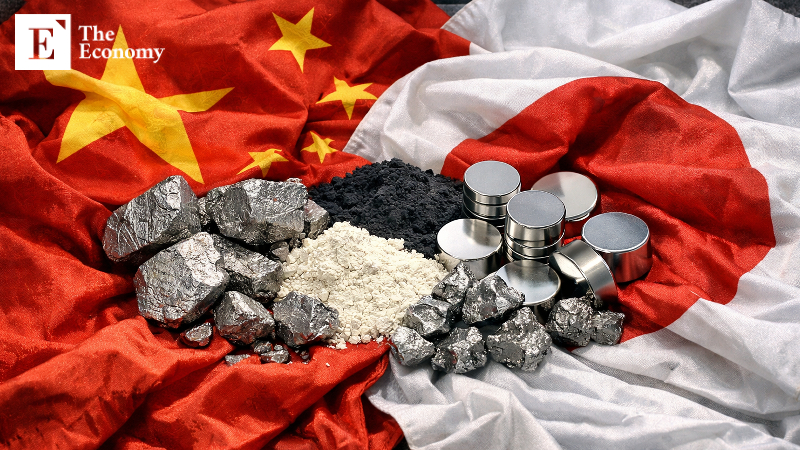
The Japanese government has successfully conducted a trial extraction of rare-earth-bearing mud from the deep sea near Minamitorishima, southeast of the Japanese archipelago. Japan’s push to reduce its reliance on China for rare earths, which gained momentum after the 2010 dispute over the Senkaku Islands, known in China as the Diaoyu Islands, has now picked up additional speed. Similar efforts to reshape supply chains are increasingly being observed not only in Japan but across countries worldwide.
Japan Drills Up Rare-Earth Mud From Seafloor
According to the Yomiuri Shimbun on Feb. 2, the research vessel Chikyu, operated by the Japan Agency for Marine-Earth Science and Technology (JAMSTEC) under the Ministry of Education, Culture, Sports, Science and Technology, successfully lifted rare-earth-bearing mud on Feb. 1 from a point 5,700 meters deep within Japan’s exclusive economic zone (EEZ) near Minamitorishima. Japan had previously found mud with high concentrations of rare earths on the seafloor in the area. An analysis by the University of Tokyo and others estimates that rare-earth deposits near Minamitorishima amount to about 6.8 million tons.
Chikyu departed Shimizu Port on Jan. 12 and reached the drilling site in about five days. After connecting a massive pipe down to the seafloor, the vessel used a “riser system,” adapted from methods used to drill offshore oil and natural gas, to push the mud up to the ship. There has never been a case anywhere in the world of extracting seafloor sediment at depths on the order of 6,000 meters. Building on the success of this trial, the Japanese government plans to begin work in February next year to lift up to 350 tons of mud per day, and to complete a report by spring 2028 assessing the commercial viability of the Minamitorishima rare earths, taking into account the actual costs of deep-sea mining.
Japan’s development of rare earths near Minamitorishima is seen as part of a supply-chain reshoring strategy aimed at countering China’s weaponization of resources. China previously restricted rare-earth exports last April in retaliation for U.S. tariffs. After Prime Minister Takaichi made remarks in November suggesting possible intervention in Taiwan in a contingency, China also stepped up pressure by restricting exports to Japan of items with both civilian and military applications. On Jan. 6, China’s Ministry of Commerce announced, “All exports of dual-use items are prohibited for end users related to Japan’s military, military use, and other end uses that help strengthen Japan’s military capabilities.”
Japan’s Push to Reshape Rare Earth Supply Chains
Japan and China have clashed over rare earths before. In 2010, tensions flared after a Chinese fishing boat collided with a Japan Coast Guard patrol vessel near the Senkaku Islands, known in China as the Diaoyu Islands, in the East China Sea. China then restricted rare-earth exports to Japan for nearly two months. After absorbing the shock to its industrial sector, Japan began drawing up more serious measures to reduce its exposure to the risk of China weaponizing resource supply.
In 2011, Japan Oil, Gas and Metals National Corporation (JOGMEC) and trading house Sojitz signed a deal to provide $250 million in loans and equity investment to Australia-based rare-earth producer Lynas, securing a long-term supply source outside China. Lynas mines rare earths at the Mount Weld deposit in Western Australia, then separates and refines heavy rare earths such as dysprosium (Dy) and terbium (Tb) at a plant in Malaysia before shipping them to Japan. Sojitz supplies the procured rare earths to magnet manufacturers in Japan.
Japan has also maintained national stockpiles equivalent to six months to one year of rare-earth demand to cushion short-term supply shocks. It has upgraded technologies to recover rare elements from discarded home appliances and motors, easing pressure on upstream supply. Industry efforts to reduce usage and develop substitutes have also advanced rapidly. In 2016, Honda developed an electric motor for hybrid vehicles using substitute permanent magnets that do not rely on heavy rare earths, and commercialized it first in the world. Toyota, meanwhile, said it succeeded in 2018 in developing a new magnet that can cut neodymium use by half, a material considered essential for high-output motors in electric vehicles.
Global Pushback Against China’s Dominance
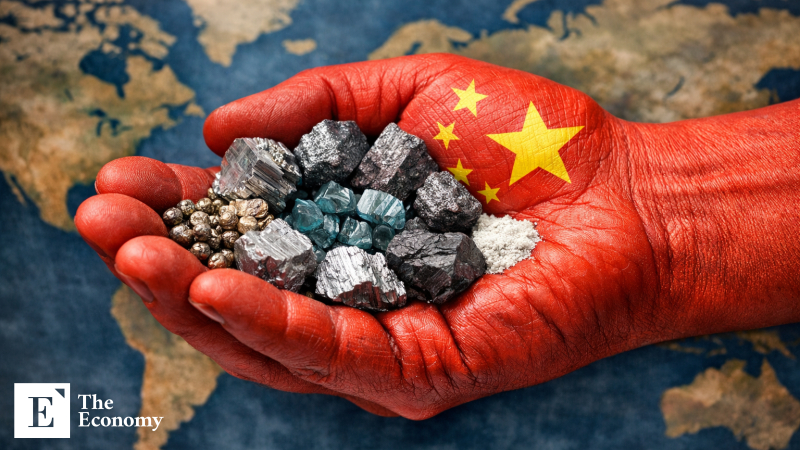
Beyond Japan, a growing number of countries are pushing back against China’s weaponization of rare earths and stepping up efforts to diversify supply chains. Brazil, which holds the world’s second-largest rare-earth reserves, is a case in point. The third Lula da Silva administration, which took office in 2023, added rare earths and other critical minerals to its “Priority Minerals Policy List” in mid-2023, designating them as resources essential to the energy transition and national security. Rare earths, lithium, and nickel were also identified as key inputs for green transition and digitalization in the “National Green Industry Strategy” unveiled in September that year.
In line with this federal policy direction, the state of Minas Gerais, one of Brazil’s major critical-mineral producing regions, has treated rare earths as strategic minerals since 2023 and has expanded exploration and private-sector cooperation through its state-owned company CODEMIG. Brazil is also building a cooperation front with the United States through ongoing discussions on rare-earth collaboration. The U.S. International Development Finance Corporation has signaled its intention to provide about $465 million in support to Brazil-based rare-earth producer Serra Verde.
Australia has recently decided at the national level to build a strategic stockpile of critical minerals worth about $800 million. The move is seen as a strategy to shore up vulnerabilities in the Australian economy amid China’s restrictions on rare-earth exports and to position the country as an alternative supplier of critical minerals. Australia also plans to invest $7 billion by 2040 in the processing and refining of critical minerals, and has enacted legislation granting tax incentives for the production of rare earths and other key minerals, as well as green hydrogen produced from renewable energy without carbon emissions.
The Donald Trump administration in the United States has likewise decided to allocate about $12 billion to stockpile strategic critical minerals. These reserves are intended to help minimize shocks to manufacturers such as automakers and electronics firms in the event of supply-chain disruptions. In addition, the U.S. State Department is set to host a ministerial-level meeting on critical minerals on Feb. 4, bringing together foreign ministers from allied countries including Korea. Discussions will focus on diversifying critical-mineral supply chains and reducing dependence on Chinese-sourced materials.
Aoife Brennan is a contributing writer for The Economy, with a focus on education, youth, and societal change. Based in Limerick, she holds a degree in political communication from Queen’s University Belfast. Aoife’s work draws connections between cultural narratives and public discourse in Europe and Asia.
Similar Post