Takaichi’s Conservative Consolidation Points to a Landslide—A Fragile Triumph Traded for National Credibility

Authored On
Modified
Unprecedented January Dissolution Riding Sky-High Approval Ratings
Ruling Coalition Poised to Exceed 310 Seats, Clearing the Threshold for Constitutional Revision
Two-Year ‘Zero’ Food Tax Pledge Triggers Collapse in Ultra-Long Bonds
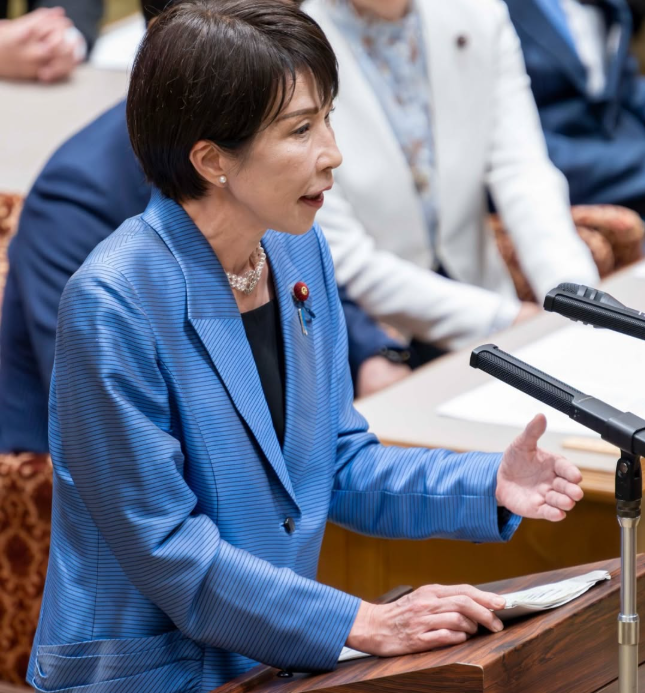
With Japan’s House of Representatives election set for the 8th, a growing number of forecasts point to a landslide victory for the Liberal Democratic Party (LDP) led by hardline conservative Prime Minister Sanae Takaichi. When Takaichi initially pressed ahead with the election on the back of her elevated approval ratings, critics denounced the move as an irresponsible decision that sidelined bread-and-butter issues such as passage of the budget. Yet once the campaign formally began, Takaichi’s slogan of a “Strong Japan” gained traction, galvanizing conservative voters. Her tax-cut pledges and other populist measures have also drawn favorable reactions. At the same time, however, mounting concerns over unfunded tax reductions and the erosion of fiscal discipline are heightening tensions across financial markets.
LDP Forecast to Secure a Majority in the Lower House
On the 3rd, the Asahi Shimbun reported that, based on telephone and online polling conducted between the 31st of last month and the 1st of this month involving approximately 370,000 respondents, the LDP is projected to win around 292 seats, with a range of 278 to 306. Prior to the election announcement, the party held 198 seats. Japan Innovation Party, which forms part of the ruling coalition, is expected to post little change from its pre-election 34 seats, with projections clustering around 32 seats, within a range of 25 to 38.
By contrast, the centrist reform alliance formed by the Constitutional Democratic Party and Komeito appears to be failing to generate meaningful synergy. Polling suggests the bloc will secure roughly 74 seats, with a range of 60 to 87—nearly half of its previous combined total of 167. Other projections include the Democratic Party for the People at around 29 seats, with a range of 23 to 34, and Sanseito at roughly 11 seats, with a range of 8 to 14.
Other media outlets report a similar trajectory. Kyodo News, citing telephone surveys of 194,463 respondents conducted between the 31st of last month and the 2nd of this month, reported that the LDP is leading in roughly 180 of the 289 single-member districts and is on track to secure an outright majority. While Japan Innovation Party could lose some seats, Kyodo added that the combined seat count of the LDP and Japan Innovation Party could still reach an “absolute stable majority” of 261 seats.
The Sankei Shimbun, citing joint polling with Fuji News Network of 162,746 respondents conducted between the 31st of last month and the 1st of this month, reported that the LDP–Japan Innovation Party coalition is likely to surpass 310 seats in the 465-seat House of Representatives. Crossing the 310-seat threshold would allow the ruling bloc to override upper-house rejections of legislation through re-passage and would also meet the requirement to initiate constitutional revision proposals in the lower house.
A ‘Strong Leader’ Image Unifies the Conservative Vote
Japanese media attribute the projected LDP sweep primarily to Takaichi’s popularity. As Japan’s first female prime minister, she has maintained approval ratings in the 60% to 80% range across most surveys, buoyed by a direct speaking style and a forceful leadership image. Although her remarks regarding a potential Taiwan contingency strained relations with China, related polling showed more respondents opposing any retraction of the comments, reinforcing the view that her hawkish posture bolstered electoral support.
Her decision to dissolve the lower house just three months after forming the cabinet also appears to have worked in her favor. On the 23rd of last month, shortly after the opening of the regular Diet session, Takaichi dissolved the House of Representatives. Such a dissolution immediately following the convening of a regular session is only the second instance in 60 years, and the first time since 1992 that a January session has been followed by an early dissolution. Addressing concerns that the move would make passage of the fiscal 2026 budget within the year effectively impossible, Takaichi said the decision was made “after ensuring there would be no gap in economic management.”
For a prime minister, dissolving the lower house is a high-impact maneuver capable of reshaping the political landscape. When executed successfully, it can significantly reinforce the power base. In a poll conducted by JNN, Takaichi’s cabinet approval rating climbed to 78.1% after the dissolution, with other surveys consistently registering figures in the 70% to 80% range. Professor Seijiro Takeshita of Shizuoka University observed that “the calculation is to leverage this popularity to secure a single-party majority in the House of Representatives and pursue bolder policies.” Yet the gamble carries commensurate risk: a defeat in a snap election would immediately imperil the premiership. This is why Takaichi’s decision is widely seen as a wager on her political life.
Fiscal Discipline Eroded by an Election-Driven Tax Cut
A central driver of Takaichi’s popularity is her overtly populist tax-cut agenda. At a press conference on the 19th of last month, she unveiled a pledge to eliminate the current 8% consumption tax on food items—including vegetables, meat, processed foods, and packaged meals—for a two-year period as a core LDP campaign promise. The pledge marks a sharp departure from the party’s longstanding stance. Traditionally, the LDP has framed the consumption tax as a stable funding source for social security and has consistently resisted calls for tax cuts from opposition parties. That position shifted abruptly alongside the announcement of the snap election.
The motivation is electoral arithmetic. After nearly three decades of subdued price growth following the collapse of the asset bubble, Japan entered a pronounced inflationary phase from 2022 onward. Food prices, in particular, have become the primary driver of overall inflation. According to Japan’s Ministry of Internal Affairs and Communications, 195 manufacturers raised prices on more than 20,000 food and beverage items in 2025 alone, with an average increase of 15%. Against this backdrop, the promise to zero out food consumption taxes has provided tangible relief to voters. The ministry estimates that a four-person household would save an average of about $405 per year if the food tax were eliminated.
The fiscal cost, however, is substantial. Eliminating the food consumption tax would erase more than $33 billion in annual revenue, yet the Takaichi administration has offered no alternative funding measures to fill the gap. As tax cuts took center stage without accompanying fiscal offsets, financial markets reacted immediately. On the 20th of last month, the day after the pledge was announced, yields on Japanese government bonds surged. The 30-year yield briefly hit 3.88%, while the 40-year yield climbed to 4.215%, both marking record highs. Rising yields signal falling bond prices.
Inflation concerns amplified the sell-off. Weakened fiscal discipline raises the risk of currency depreciation and prolonged inflation, which erodes real returns on bonds. This dynamic intensified selling pressure, particularly in ultra-long-dated debt. The repercussions were not confined to Japan. In the U.S. Treasury market, the 10-year yield briefly rose to 4.31% on the same day. Treasury Secretary Scott Bessent remarked that “it is very difficult to think about these moves without separating out the spillover effects from Japan.”
Higher yields are set to drive up Japan’s debt-servicing burden. According to Goldman Sachs, the average interest rate paid by the Japanese government on its bonds stood at 0.75% in 2024, reflecting the large stock of low-rate debt issued during the Bank of Japan’s yield-suppression era that has yet to mature. As bonds roll over, however, refinancing will occur at progressively higher rates. Goldman projects the government’s average interest cost to exceed 1% this year, rising to 1.65% by 2030 and 2.16% by 2035—nearly tripling over little more than a decade.
Similar Post