TSMC Embarks on Massive Capital Expansion, Output Capacity Seen Doubling Within a Decade as Samsung Electronics Prioritizes Client Diversification

Siobhán Delaney is a Dublin-based writer for The Economy, focusing on culture, education, and international affairs. With a background in media and communication from University College Dublin, she contributes to cross-regional coverage and translation-based commentary. Her work emphasizes clarity and balance, especially in contexts shaped by cultural difference and policy translation.
Authored On
Modified
Jensen Huang: “TSMC Supply Expansion Inevitable to Meet AI Demand”
TSMC Moves to Resolve Foundry Bottlenecks With 2-Nanometer–Centered Investment
Challenger Samsung Focuses on Yield Stabilization and Profitability Recovery
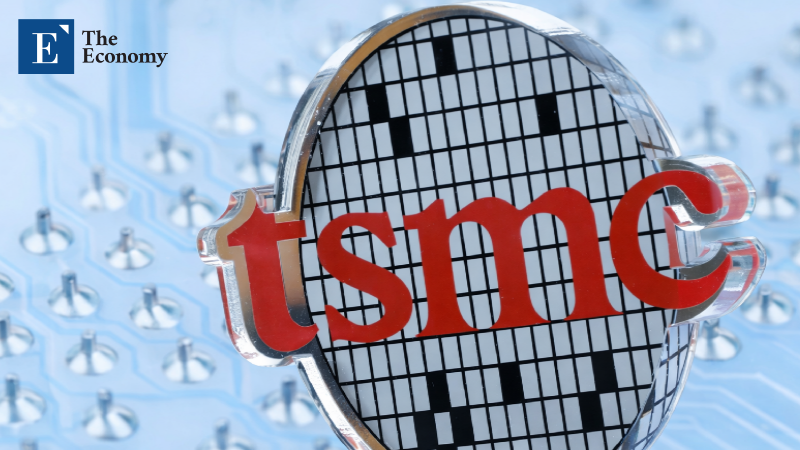
Nvidia Chief Executive Officer Jensen Huang said surging demand for artificial intelligence chips will require Taiwan Semiconductor Manufacturing Co. (TSMC), the world’s largest contract chipmaker, to more than double its production capacity over the next decade. With AI demand already outstripping available supply, Huang argued that large-scale structural capacity expansion is unavoidable to relieve bottlenecks across the semiconductor supply chain. Against this backdrop, TSMC is accelerating capacity expansion and geographic diversification through aggressive capital spending, while challenger Samsung Electronics is intensifying efforts to improve yields at advanced nodes and broaden its customer base.
TSMC’s Annual Wafer Output Estimated at 24 Million This Year
According to Bloomberg and other international media outlets on Feb. 2 (local time), Huang told reporters outside a restaurant in Taipei on Jan. 31 following a dinner with TSMC and other semiconductor suppliers that “over the next ten years, TSMC will expand its production capacity by more than 100%,” adding that “this represents a very significant increase in output.” He went on to stress that “semiconductor demand is extremely strong this year, Nvidia needs a massive volume of wafers, and TSMC will have to work extraordinarily hard.”
Huang’s remarks once again underscored that TSMC is already operating under acute supply constraints. In November last year, TSMC Chairman C.C. Wei publicly acknowledged the severity of wafer shortages at an event hosted by the Semiconductor Industry Association in San Jose. At the time, Wei quipped that he had considered wearing a T-shirt reading “No more wafers” to highlight the shortage, before stressing that advanced-node capacity was roughly three times short of AI-driven demand. He repeatedly emphasized that supply remained “insufficient,” underscoring the depth of the constraint.
Since 2020, TSMC’s production capacity has expanded at an average annual rate of about 10%, enabling it to maintain a dominant market share approaching 70% in the global foundry industry last year. As of 2024, TSMC is estimated to possess annual production capacity of roughly 17 million 12-inch wafers. Industry observers expect that, buoyed by explosive AI demand, TSMC’s wafer output this year will exceed an average of 2 million wafers per month, reaching around 24 million on an annual basis. Should Huang’s projected doubling materialize, TSMC’s annual wafer capacity would expand to more than 34 million.
U.S. Supply Chain Expansion Accelerates as Arizona Ramp-Up Moves Forward
TSMC is correspondingly stepping up capital investment. During its fourth-quarter 2025 earnings conference call last month, the company said it plans to increase capital expenditures by 37% year over year, with total spending reaching between 52 billion and 56 billion USD this year, adding that investment would rise sharply again in 2028 and 2029. The figure exceeded market expectations and reflects assumptions of sustained medium- to long-term demand growth centered on AI, high-performance computing, and advanced packaging. Industry analysts view the aggressive spending as a strategic pivot, acknowledging that TSMC’s historically conservative investment stance contributed to today’s supply constraints and necessitating a more forceful response to AI-driven demand.
The company is concentrating capacity expansion around its next-generation flagship 2-nanometer process. Current 2-nanometer capacity stands at roughly 40,000 wafers per month, with plans to increase this to 90,000 wafers within the year. By 2027, TSMC aims to lift monthly capacity to around 150,000 wafers, elevating 2-nanometer into a core production node within two years. This would bring it close to Morgan Stanley’s estimate of TSMC’s current 3-nanometer capacity of 160,000 wafers per month. As a result, revenue contribution from the 2-nanometer node is expected to rise rapidly. UBS estimates that while 2-nanometer will account for less than 10% of TSMC’s revenue this year, its share could increase to 15–20% by 2027.
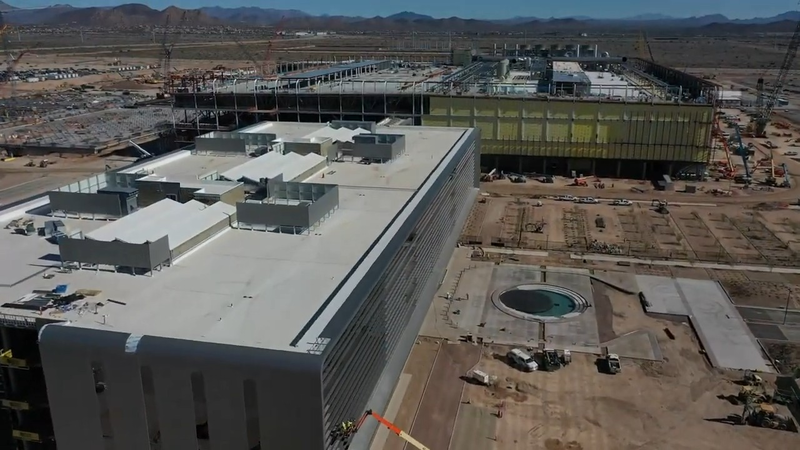
TSMC is also accelerating U.S. supply chain expansion. Under a recently concluded U.S.–Taiwan tariff agreement, the company plans to add five more fabs to the six already under construction in Arizona. In return, substantial incentives will be provided. Under Section 232 of the Trade Expansion Act, Taiwanese semiconductor firms building fabs in the U.S. will receive tariff exemptions on imports equivalent to up to 2.5 times their production capacity during construction, and up to 1.5 times capacity after completion. In addition, TSMC plans to pull forward the launch of the second-phase production line at its Arizona Fab 21 from 2028 to 2027, with equipment move-in and testing scheduled next year, followed by mass production of 3-nanometer chips.
Samsung Electronics Must Accumulate Capabilities From a Secondary Position
Samsung Electronics is also expanding capacity. After recently securing additional global clients, the company plans to begin full-scale operations this year at its advanced foundry facility in Taylor, Texas, backed by 37 billion USD in investment. Using Taylor as a base, Samsung aims to raise yields at leading-edge nodes including 2-nanometer. Capital spending has also increased. Last year, Samsung’s facility investment totaled approximately 38 billion USD, exceeding its original plan by more than 3.6 billion USD. Of this, roughly 34 billion USD was allocated to the semiconductor division, though this figure includes memory. Analysts estimate that spending dedicated specifically to foundry operations amounted to around 7–11 billion USD.
Even so, narrowing the gap with TSMC appears difficult. According to Counterpoint Research, Samsung’s foundry market share stood at around 6% last year, roughly one-tenth of TSMC’s. Securities firms estimate that Samsung’s non-memory semiconductor business posted operating losses of around 4.3 billion USD last year, with losses of roughly 2.2 billion USD expected to persist this year. While Samsung has made progress expanding its customer roster, including securing orders for Tesla’s AI5 and AI6 chips and image sensors for Apple’s next-generation iPhones, critics argue it remains positioned as a secondary option. The Financial Times recently described Samsung’s performance improvement as being “driven by customers who could not choose TSMC.”
Industry observers advise that Samsung should focus on accumulating technological competitiveness by leveraging its secondary-position status rather than attempting to chase TSMC head-on in the short term. In advanced nodes, gaps extend beyond process technology to encompass design ecosystems, customer collaboration experience, and mass-production track records, making rapid catch-up difficult. The Financial Times noted that “Samsung must improve the completeness of its 2- and 3-nanometer processes while securing stable profitability at legacy nodes of 5 nanometers and above to buy time and capital,” adding that “what matters now is not the speed of chasing the leader, but building a sustainable competitive structure.” This assessment reflects the view that, under TSMC’s entrenched leadership, Samsung must prioritize pragmatic investment discipline and customer base expansion.
Siobhán Delaney is a Dublin-based writer for The Economy, focusing on culture, education, and international affairs. With a background in media and communication from University College Dublin, she contributes to cross-regional coverage and translation-based commentary. Her work emphasizes clarity and balance, especially in contexts shaped by cultural difference and policy translation.
Similar Post