Samsung and LG Home Appliance Profitability Declines in Tandem, Collision Between Chinese Offensive and Premium Strategy

Authored On
Modified
Cost Structure Shifts Including Memory Drag Profits
Global Appliance Market Reorganizing Around China
Limits of Feature-Centric Premium Strategies Exposed
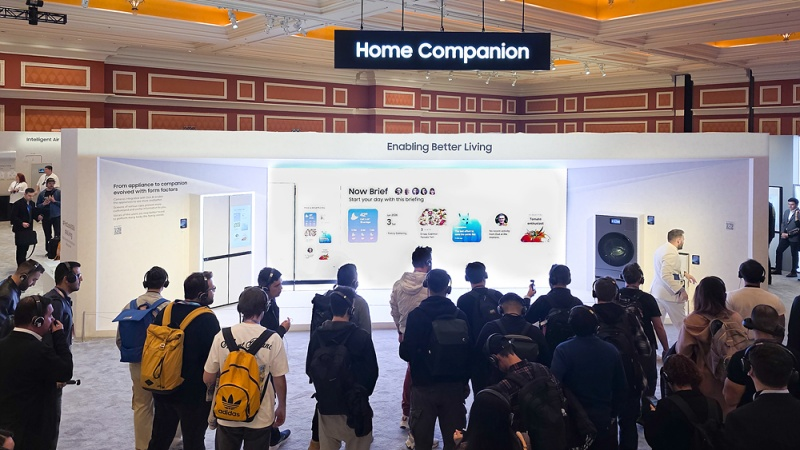
Samsung Electronics and LG Electronics are facing mounting pressure on both performance and profitability in their home appliance businesses. As losses accumulate across TVs and major household appliances, rising costs and intensifying competition have laid bare structural vulnerabilities in their existing business models. With the global appliance market increasingly reorganizing around China, Korean companies are seeking breakthroughs through premium strategies. The market, however, continues to debate the structural limits of such premium approaches under a China-led competitive landscape.
Shipment Expansion and Earnings Recovery Unlikely
Samsung Electronics’ Visual Display (VD) and Digital Appliances (DA) divisions showed clear weakening trends on both quarterly and annual bases last year. In the fourth quarter, the VD and DA divisions posted an operating loss of approximately $413 million, following an operating loss of about $69 million in the third quarter. This marked a second consecutive quarterly loss, following an operating loss of roughly $34 million in the fourth quarter of 2023, signaling more than a temporary downturn.
On an annual basis, the picture was similar. Samsung’s VD and DA divisions recorded operating profit of about $344 million in the first half of the year, but weak performance in the second half fully offset those gains, resulting in a full-year operating loss of approximately $138 million. Revenue growth was also limited. Annual sales reached about $39.5 billion, up just 1% year-on-year. With cost of goods sold and selling and administrative expenses rising simultaneously, profitability deteriorated across the board.
One major factor behind the margin squeeze was a shift in cost structures alongside longer product replacement cycles. Memory prices surged amid expanding AI demand. According to DRAMeXchange, the average fixed contract price for mainstream DRAM (DDR4 8Gb 1Gx8) in December rose 23.7% month-on-month to $11.5. Since memory components are widely used in TVs, smartphones, PCs, and laptops, price increases directly translate into higher manufacturing costs, forcing manufacturers to choose between raising prices or absorbing margin erosion.
Demand conditions have also been unfavorable. Ongoing global economic slowdown has dampened appliance and TV demand, further limiting the potential for shipment-driven earnings recovery. TrendForce projects global TV shipments this year at 194.81 million units, down 0.6% from the previous year, while warning that rising prices for memory, display panels, and precious metals will likely force consumer price increases for new TV models. Such price hikes risk further suppressing demand.
These pressures are not unique to Samsung. LG Electronics faces similar challenges in its TV business. LG’s Media Entertainment Solution (MS) division posted an operating loss of approximately $180 million in the fourth quarter, more than five times the loss recorded a year earlier. Revenue fell 3.3% to about $3.74 billion, while full-year revenue declined 7% year-on-year to roughly $13.38 billion. With both Samsung and LG mired in weak performance, industry observers see little chance of a near-term profitability rebound in TVs and home appliances.
Losing Ground on Price and Volume
Intensifying competition is further dampening recovery prospects, driven by the growing presence of Chinese manufacturers. Changes in the competitive landscape are evident in retail channels and price positioning. Chinese appliances, once viewed as low-cost entry products in Korea, are increasingly expanding into mid-to-high-end segments. Dedicated display sections for Chinese brands have appeared in major appliance stores, and in some categories, Chinese products now command higher prices than Korean equivalents—signaling a shift toward brand- and performance-based pricing power.
Chinese manufacturers are broadening their reach from niche products such as fans and robot vacuum cleanersobot cleaners into premium white goods including TVs, washing machines, and dryers. According to data from price comparison site Danawa, foreign brands accounted for 50% of vacuum cleaner market share in November last year, up from 38.9% in 2022, with most of the increase attributed to Chinese brands such as Roborock and Ecovacs.
Expanded distribution strategies and strengthened after-sales service capabilities have further supported this growth. Roborock has expanded nationwide service access points, Ecovacs introduced one-stop service options including convenience-store parcel reception, and Xiaomi now operates 16 service centers in Korea, including four directly run locations. These efforts have reduced service-related consumer resistance to higher-priced products.
Globally, Chinese appliance makers’ presence is also evident in market data. Euromonitor International reports that China’s Haier has maintained the top global position in refrigerator and washing machine sales volumes for 17 consecutive years. In TVs, China’s TCL has narrowed the gap with Samsung, holding a 16% market share compared with Samsung’s 17%. As competition expands beyond price and volume into branding and services, defending profitability has become increasingly difficult for Korean appliance makers.
Question Marks Over Differentiation Strategies
Samsung and LG are positioning premium appliances as new growth engines, but success remains uncertain. At CES 2026 in Las Vegas this January, both companies highlighted AI-powered appliances as key differentiators, emphasizing convenience and ecosystem integration. Yet amid weakening demand, such offerings face strong price resistance. Chinese players like TCL and Hisense are also rapidly expanding AI-equipped TVs and appliances, limiting differentiation based solely on technology.
Historically, premium strategies in the appliance market have rarely delivered sustained success. One notable exception is Denmark’s Bang & Olufsen, which has consistently combined functional innovation with design, materials, and craftsmanship since the 1920s, elevating its products into the realm of furniture and art. This brand equity was built over decades.
By contrast, Korean companies’ premium efforts often rely on feature bundling or partnerships. LG’s collaboration with Bang & Olufsen on OLED TV and audio packages is emblematic. While such initiatives may enhance user satisfaction, brand leadership largely remains with the partner, exposing clear limits. Moreover, when premium positioning is defined as a “sum of features,” competitors can rapidly replicate similar configurations, undermining defensibility. In today’s fiercely competitive environment, such strategies are unlikely to provide effective short-term earnings protection.
- Previous Crude Tanker Rates Surge Amid U.S.–Iran Tensions, While Container Freight Slides on China’s Deflation Risk
- Next [AI Bubble] “Surpassing Alibaba and Tencent in Market Capitalization” — SK hynix and Samsung Electronics Secure Asia’s AI Leadership Amid Memory Boom, Chinese Big Tech Left Playing Catch-Up
Similar Post