Mitsubishi Chemical Walks Away from Coke, China’s Low-Price Offensive Reshapes Japan’s Industrial Landscape

Authored On
Modified
Steel’s core material also yields to oversupply
Vertical integration weakens bargaining power
Japan’s steel industry shifts overseas
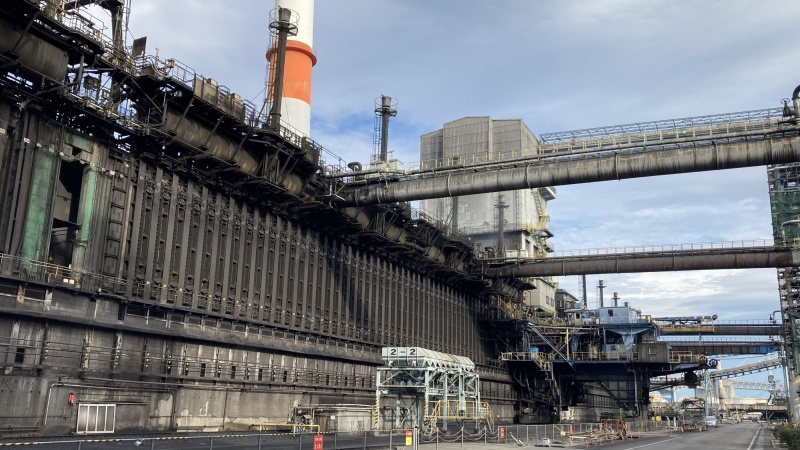
Japan’s Mitsubishi Chemical has decided to exit its steelmaking coke business entirely. Once regarded as a stable profit engine within the group for decades, the business has become unsustainable as prolonged oversupply and falling prices driven by massive capacity expansion by Chinese companies eroded profitability. As the strategic status of core materials such as coke changes, market attention is increasingly focused on how Japan’s steel industry will respond at a broader level.
Accepting $5.45 billion in losses
According to Nikkei Asia on the 3rd (local time), Mitsubishi Chemical recently approved and formally announced a plan at a board meeting to end coke production by the second half of fiscal year 2027. Despite years of aggressive restructuring, the company was unable to withstand deteriorating global market conditions and steelmakers’ shift toward self-sufficiency. As a result, Mitsubishi Chemical plans to record up to $5.45 billion in extraordinary losses in the fiscal year ending March 2026, including asset impairments, plant dismantling costs, and expenses related to employee transfers.
The industry is paying close attention to why Mitsubishi chose to abandon a business long classified as a core profit source within the group. The company has produced coke since 1969 at its Sakaide Works in Kagawa Prefecture, with annual production capacity of about 1.5 million tons. However, cumulative price declines caused by large-scale production increases by Chinese firms fundamentally destabilized its profit structure. Given the long-operated facilities and established customer base, the exit is viewed as materially different from a routine divestment of a non-core business.
The shift is also clearly reflected in financial performance. Mitsubishi Chemical’s carbon products segment posted an operating loss of $1.79 billion in the fiscal year ending March 2025. The company cut production capacity by about 40% and reduced export volumes while pursuing cost reductions and restructuring. Nevertheless, losses of $365 million persisted in the second and third quarters (April–September) of the prior year. Even additional group-level support aimed at restoring profitability was deemed insufficient given market conditions and changes in customers’ procurement strategies.
The scale and timing of the extraordinary losses further underscore the irreversibility of the exit. Of the total $5.45 billion, approximately $1.22 billion will be recognized as fixed-asset impairment losses in the October–December 2025 period, while the remaining $4.23 billion will be recorded between January and March 2026 for facility dismantling and employee transition support. About 600 affected employees will be reassigned within the group or supported in finding new employment. Absorbing losses of this magnitude to proceed with the exit signals that the business is no longer considered viable within the company’s medium- to long-term portfolio.
Diminishing strategic importance
Coke, produced by distilling coal at high temperatures, is a core input for blast furnaces. It serves both as a heat source for reducing iron ore and as a structural support that stabilizes iron ore and limestone inside the furnace. Inconsistent quality or unstable supply can disrupt pressure and temperature control, leading directly to productivity losses. For steelmakers, coke facilities have traditionally been regarded as among the most strategically important assets within chemical operations.
The experience of Korean companies illustrates this importance. POSCO MC Materials, jointly established by POSCO and Mitsubishi, expanded its use of needle coke into high-value segments such as graphite electrodes for electric arc furnaces and anode materials for secondary batteries. After posting an operating loss of $163 million in 2016, the company returned to profitability the following year with $291 million in operating profit, and subsequently generated steady operating profits of $314 million in 2018, $207 million in 2019, $74 million in 2020, $220 million in 2021, $393 million in 2022, $380 million in 2023, and $321 million in 2024.
The problem is that the global supply-demand structure for coke has changed rapidly. Major steelmakers have expanded equity investments in mines and long-term contracts to secure coke and coking coal, strengthening self-sufficiency. Nippon Steel raised its self-procurement ratio for coking coal from 20% in 2023 to about 35% by the end of last year, while JFE Steel also enhanced supply stability through overseas mining interests. Combined with the previously mentioned wave of Chinese supply, bargaining power for specialized coke producers weakened, while the fixed costs required to maintain facilities remained. Although coke remains essential for steel production, oversupply and steelmakers’ self-sufficiency strategies now threaten the survival of incumbent producers.
Capacity adjustments and overseas relocation
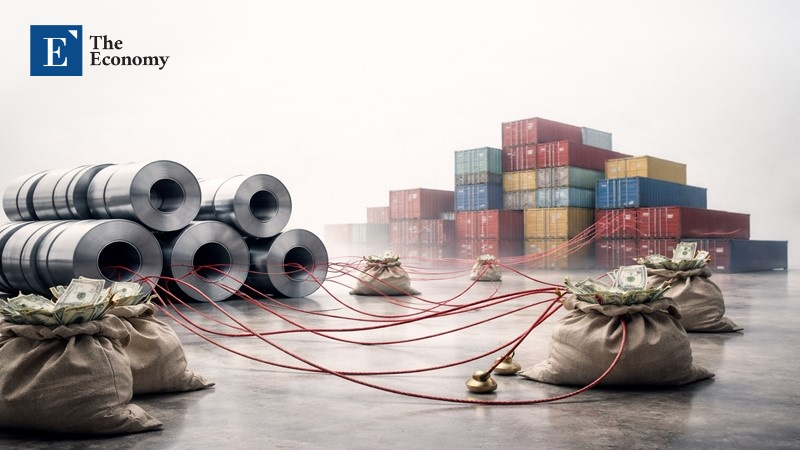
The crisis facing Japan’s steel industry extends beyond coke. An influx of low-priced Chinese steel and stagnant domestic demand have simultaneously pressured prices and utilization rates. According to the Japan Iron and Steel Federation, distribution prices for 1.6-mm hot-rolled steel sheets fell to about $721 per ton at the end of last year, the lowest level since August 2021 and more than 4% lower than at the end of June that year. After peaking in the summer of 2022, weakening demand prevented a reversal of the downward trend.
Imports continued to rise. In May last year, imports of general steel products from China into Japan reached 98,667 tons, up about 50% year on year. While the Japanese government launched antidumping investigations into nickel-added cold-rolled stainless steel coils and sheets from China and Taiwan, no such probes have been initiated for general steel products. This contrasts with global trends: last year saw a record 30 new antidumping investigations worldwide into Chinese steel, with 18 more already launched this year.
Severe domestic weakness has led to capacity adjustments. Tokyo Steel decided not to raise domestic prices for first-half contracts to counter low-priced imports. JFE Holdings halted operations at one blast furnace in Okayama Prefecture and is considering suspending another in Hiroshima Prefecture in fiscal year 2027. JFE Holdings CEO Yoshihisa Kitano said that unless conditions change significantly, business restructuring can no longer be postponed. The shift in priority from price defense to loss management through reduced utilization is evident.
These pressures have also accelerated the shift of corporate strategies overseas. After restructuring its domestic footprint through the 2012 merger with Sumitomo Metal and the 2017 acquisition of Nisshin Steel, Nippon Steel moved to acquire an Indian steelmaker in 2019 and is now pursuing the acquisition of U.S. Steel. Its long-term plan is to reduce domestic production to around 40 million tons, below domestic demand, while expanding overseas output to build a total production system exceeding 100 million tons. As weak domestic demand accelerates the movement of facilities and capital, Japan’s steel industry appears to be entering a phase of reconfiguration of production bases and sales markets.
Similar Post