China’s Consumption Wobbles from the Wealthy First as Spending Decisions Change

Stefan Schneider brings a dynamic energy to The Economy’s tech desk. With a background in data science, he covers AI, blockchain, and emerging technologies with a skeptical yet open mind. His investigative pieces expose the reality behind tech hype, making him a must-read for business leaders navigating the digital landscape.
Authored On
Modified
Spending capacity intact, but purchase decisions delayed
Local brands gain ground as buying criteria shift
Selective premium spending coexists with defensive consumption
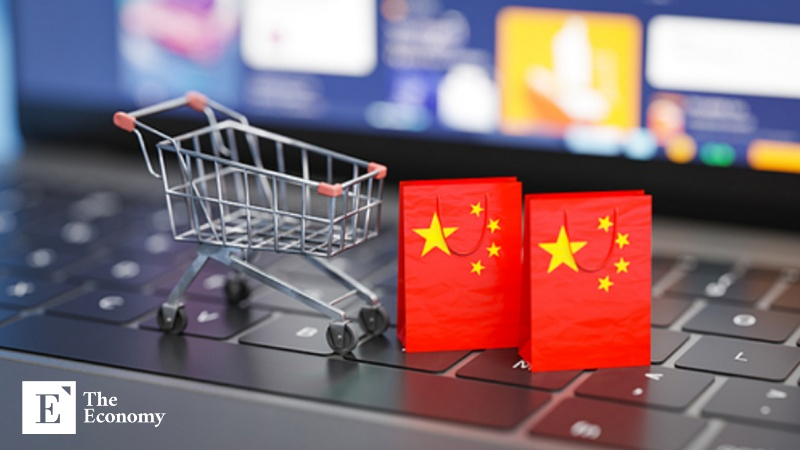
A new survey shows that consumption sentiment among China’s high-net-worth individuals—long a pillar of the country’s economy—has frozen. As confidence among the group that once drove recovery through spending and investment contracts rapidly, changes in consumption behavior are accelerating. Satisfaction derived from owning foreign luxury brands has weakened, while purchasing decisions increasingly hinge on design, craftsmanship, and brand identity. Attention is now focused on whether these shifts, first evident among affluent consumers, will spread across China’s broader domestic market.
High-Value Spending Put on Hold
According to the Hurun Research Institute, China’s economic confidence index among high-net-worth individuals stood at 5.4 points last year. This marked the fourth consecutive annual decline and fell below levels seen during the height of the U.S.–China trade war in 2018 (6.6) and the COVID-19 pandemic period (6.7–7.2). In the survey of 470 Chinese households with investable assets exceeding $1.44 million, only 26% expressed “strong optimism” about China’s economy over the next two years, underscoring the severity of perceived risk among the wealthy. In the same survey conducted in 2022, 58% had expressed strong optimism.
Consumption indicators support this psychological shift. The institute projected that luxury spending by affluent Chinese consumers last year declined about 5% year on year to $225 billion. Average budgets for material consumption were set at $304,000, down more than 10%, with the sharpest cuts in high-ticket luxury categories such as watches, jewelry, and collectibles. About one-quarter of respondents also said they had no plans to purchase a new car over the next two years, signaling a wait-and-see stance even in high-end durable goods.
Risk aversion was also evident in investment preferences. According to the survey, 26% of respondents planned to reduce their real estate holdings, while 20% said they would increase gold holdings. As concerns about volatility in assets such as property and equities grow, strategies appear to be shifting from wealth accumulation toward preservation. While 84% said they were considering offshore investments, the average share of offshore assets in portfolios edged down to 15% from a year earlier. Together, these adjustments in spending and investment suggest that deteriorating economic sentiment is being reflected broadly in consumption and asset allocation.
Changes in consumer behavior are also visible on the ground. Deliveries in China (including Hong Kong) by German sports car brand Porsche totaled 32,195 units from January to September last year, down 25% year on year, while French luxury group LVMH posted revenue growth of only around 1% over the same period. Although store traffic for both brands recovered compared with the pandemic period, conversion rates and average transaction values fell short of expectations. As spending decisions are increasingly deferred even in segments emblematic of affluent consumption, signs point to a broader spread of weakening domestic demand.

A New Definition of Premium
A notable shift is that Chinese consumers—particularly the upper-middle class and younger generations—are moving away from foreign brand symbolism toward more personal and intrinsic criteria when making purchases. Whereas owning overseas luxury brands once served as the most direct signal of social status and economic power, design quality, functional value, and a brand’s narrative and identity have become decisive factors. This represents a qualitative transition, indicating a fundamental realignment of “what to buy” independent of changes in purchasing power.
The rise of local Chinese brands is also striking. Pop Mart differentiated itself clearly from traditional doll markets by pursuing a character merchandise strategy based on proprietary intellectual property. Rather than remaining a distributor of global character licenses, it chose to shoulder higher costs and uncertainty to focus on developing its own characters. This approach paid off with the success of its “Labubu” character, with last year’s net profit estimated to exceed $14.4 billion, while directly challenging perceptions that Chinese brands merely imitate.
Jewelry brand Lao Pu offers another example of shifting consumer criteria. Lao Pu emphasizes traditional gold craftsmanship over production efficiency, prioritizing differentiated design and artisanal value, and prices products independently of spot gold prices. As a result, its gross margin last year reached 39%, far above the industry average of around 20%. These cases suggest that China’s consumer market has moved beyond an era of quantitative expansion and entered a phase of reorganization around differentiation and identity.
Selective Consumption vs. Absolute Contraction
The coexistence of sustained premium spending alongside tightened budgets elsewhere reflects a pattern of “selective consumption” commonly observed during downturns. Rather than cutting total spending across the board, consumers preserve budgets for areas they consider hard to substitute while compressing the rest, concentrating purchasing power in specific categories. Swimm, which operates the K-pop fan platform Daily Duck, said 95% of its users are Chinese, adding that organic traffic continues to grow without separate promotion.
The “pingti consumption” trend spreading among younger Chinese consumers fits the same pattern. Referring to the choice of cost-effective alternatives over high-priced luxury goods, pingti consumption has taken hold amid economic slowdown. On social media platform Xiaohongshu, posts related to pingti consumption totaled 1.95 million by the end of last year, while posts about value-for-money surged 720% year on year. Expansion among low-priced substitute brands has been rapid. Cotti Coffee, promoting $1.27 coffee, surpassed 6,000 stores nationwide within ten months of launch, while fast-food chain Tastien—positioning itself as a challenger to McDonald’s—exceeded 8,000 outlets by December 2024.
This selective spending structure indicates a fundamental shift in the definition of “premium.” Consumption tied to identity—such as content, IP, and experiences—retains priority, while demand for everyday items like coffee, fast food, and apparel migrates to proven substitutes. This differs from an absolute contraction in consumption, instead reflecting a reallocation of demand based on price and utility. As a result, companies are recalibrating sales strategies to position products as irreplaceable, judging that such positioning increasingly determines performance gaps during periods of consumption weakness.
Stefan Schneider brings a dynamic energy to The Economy’s tech desk. With a background in data science, he covers AI, blockchain, and emerging technologies with a skeptical yet open mind. His investigative pieces expose the reality behind tech hype, making him a must-read for business leaders navigating the digital landscape.
Similar Post