‘Europe’s Largest Auto Market’ Germany Sees the EV Formula Reversed as BYD Overtakes Tesla

Stefan Schneider brings a dynamic energy to The Economy’s tech desk. With a background in data science, he covers AI, blockchain, and emerging technologies with a skeptical yet open mind. His investigative pieces expose the reality behind tech hype, making him a must-read for business leaders navigating the digital landscape.
Authored On
Modified
January sales more than double Tesla’s
Exports–dealers–local production lift awareness
Tesla falters in core EV markets
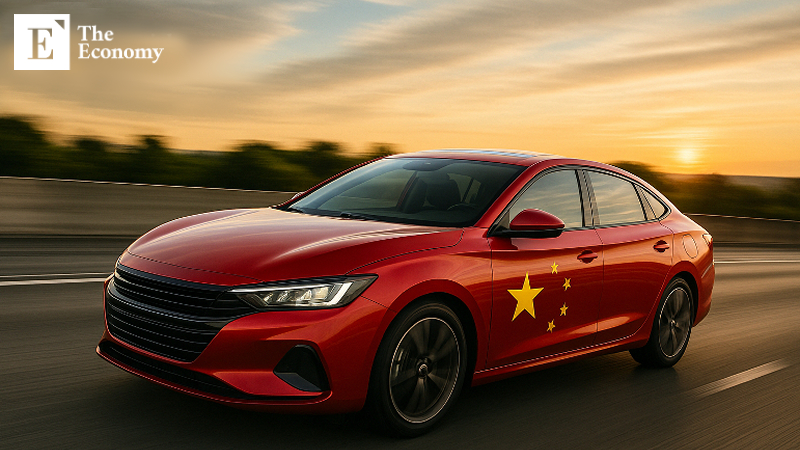
In Germany, Chinese electric-vehicle maker BYD has overtaken Tesla in sales, signaling a major shift in competitive dynamics in the EV market. The gap is visible not only in a single month but also on a cumulative annual basis, as BYD expands its presence across key markets such as Germany and the UK. The change is widely interpreted as the outcome of years of Chinese EV makers’ investment in production and supply-chain strategies across Europe. Tesla, by contrast, remains unable to escape a broader contraction of its European footprint despite rebounds in a handful of countries.
2,629 vs. 1,301
According to the German Federal Motor Transport Authority (KBA), BYD sold a total of 2,629 new vehicles in Germany in January. That represents a 1,018% year-on-year increase and more than double Tesla’s 1,301 units over the same period. On an annual basis last year, BYD recorded 23,306 sales in Germany alone, comfortably surpassing Tesla’s 19,390. As BYD’s surge continues in Europe’s largest auto market, observers say the global contest for EV leadership has entered a new phase.
A similar pattern is evident in the UK, Europe’s second-largest EV market. Backed by its Dolphin hatchback, BYD first surpassed Tesla in monthly sales in September 2024 and went on to register 51,422 vehicles for the year. Tesla posted 45,513 over the same period, widening the gap. Piper Sandler commented that the sales reversals observed simultaneously across key European markets are difficult to explain solely by policy changes or subsidy adjustments, adding that brand strength, pricing, and supply strategies worked in combination.
The timing of Tesla’s sales decline intersecting with BYD’s rapid growth supports that view. Tesla’s global deliveries fell 16% year on year in the fourth quarter, ceding the global EV sales crown to BYD. On an annual basis, Tesla failed to break a two-year decline, with 2025 deliveries totaling 1.64 million units. BYD, meanwhile, strengthened its global push and delivered 2.26 million EVs despite slower growth at home amid pricing constraints. The European sales crossover is a clear manifestation of that global trend in core markets.
Aggressive investment reaches payoff
Industry watchers say BYD’s aggressive investment in Europe is beginning to pay dividends. Since the early 2020s, BYD has designated Europe as a long-term growth hub and pursued direct investment across production, distribution, and supply chains. One prominent example was its bid to acquire Ford’s Saarlouis plant in Germany, which Ford planned to shut after using it for compact internal-combustion models. Although the deal collapsed amid unresolved labor issues, discussions over other facilities, including Cologne, continue.
At the same time, BYD has built brand awareness by selling electric buses alongside passenger EVs in major markets such as Germany, France, and the UK, then localizing production and procurement. The approach is often summarized as a classic automaker playbook: exports, followed by dealer-network build-out, then local manufacturing. BYD is also advancing a plant in Hungary with annual capacity of 300,000 vehicles and has entered trial production, making it the first Chinese automaker to establish full-scale manufacturing in Europe. Such investments bolster both price competitiveness and supply stability.
The pace of growth in Europe’s EV market underpins those moves. Jato Dynamics reports that from January to October last year, EV sales in Europe reached 1.09 million units, accounting for 12% of total vehicle sales of 9.09 million. Including plug-in hybrids lifts the total to 1.86 million. Jato notes that tightening EU environmental rules are pushing automakers to prioritize EV launches, resulting in growth rates up to twice as fast as in the US.
Tesla’s brand recovery remains elusive
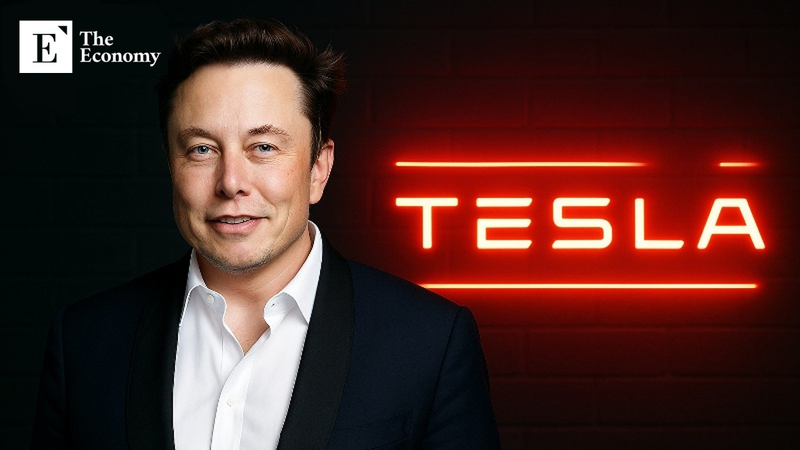
Meanwhile, Tesla’s position continues to erode. Despite short-term rebounds in a few countries, its overall trajectory in Europe points to contraction. In January, Tesla sold 456 vehicles in Spain, up 70% year on year, and 512 in Sweden, a 26% increase. Yet such gains are confined to specific countries and months and are widely seen as insufficient to reverse the broader trend.
In France, Tesla’s January sales fell 42% year on year to 661 units. In the Netherlands, sales plunged 66.9% to 307 units, and in Norway—where EVs account for more than 90% of total auto sales—Tesla sold just 83 vehicles, an 88% collapse from a year earlier. The simultaneous declines across core EV markets suggest Tesla’s European position has entered a phase of weakness that is unlikely to be reversed quickly.
Annual figures underscore the slide. After peaking at 355,000 units in 2023, Tesla’s European sales dropped 10% to 326,000 in 2024 and then fell another 26.9% to 238,656 in 2025. As the declines deepen year by year, Tesla’s market share has slipped from 2.3% to 1.4%. BYD, by contrast, expanded its share from 0.4% to 1.2% over the same period. Tesla still leads in cumulative volume, but the divergence in growth rates and market-share momentum is stark.
Most market participants attribute Tesla’s struggles to intensifying competition compounded by brand risk. As Chinese EV makers led by BYD gain share with competitive pricing and rapid model rollouts—and European automakers quickly expand their own EV lineups—the distinctiveness Tesla once enjoyed as a pure-play EV brand has diminished. Analysts also point to political statements and actions by CEO Elon Musk that have fueled consumer backlash in Europe. An industry source said that while launching lower-priced standard models could offer limited relief, restoring a damaged Tesla brand image in the short term will be difficult.
Stefan Schneider brings a dynamic energy to The Economy’s tech desk. With a background in data science, he covers AI, blockchain, and emerging technologies with a skeptical yet open mind. His investigative pieces expose the reality behind tech hype, making him a must-read for business leaders navigating the digital landscape.
Similar Post