[Bio Power Rivalry] “On the Front Line of Clinical Trials and Drug Development” China’s Biotech Surge on State Backing Raises Doubts Over U.S. Containment Effectiveness

Aoife Brennan is a contributing writer for The Economy, with a focus on education, youth, and societal change. Based in Limerick, she holds a degree in political communication from Queen’s University Belfast. Aoife’s work draws connections between cultural narratives and public discourse in Europe and Asia.
Authored On
Modified
China’s biotech sector has sharply expanded its market presence on the back of government support
Surpassing the U.S. in cutting-edge fields such as ADCs and siRNA, with Big Pharma partnerships surging
Washington ramps up sanctions, but struggles to meaningfully slow China’s advance
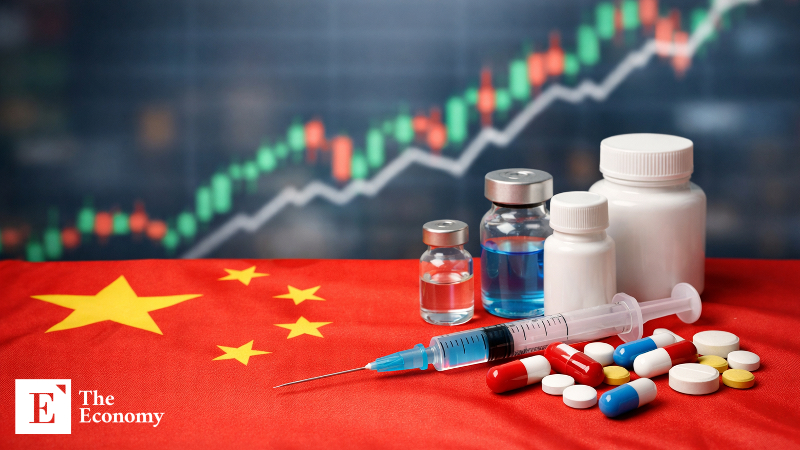
Chinese biotechnology companies are reshaping the global biopharmaceutical landscape. Leveraging sustained state support and a business-friendly domestic market environment, they are accelerating both quantitative and qualitative growth, increasingly challenging the United States’ long-standing dominance in biotech. Faced with an erosion of its leadership position, Washington has moved to curb China’s biotech expansion through a range of sanctions and regulatory measures. Market observers, however, increasingly question whether these actions pose any material threat to China’s momentum.
China’s Expanding Global Biotech Footprint
According to the pharmaceutical industry on the 6th, Chinese biotech firms have maintained steep growth trajectories in both scale and technological depth over recent years. An analysis published in 2024 by the Australian Strategic Policy Institute shows that China now leads the United States in four of seven core biotech technologies—synthetic biology, genomics analysis, biomanufacturing, and antibiotics and antivirals. In the Belfer Center’s “Critical and Emerging Technology Index” released by Harvard Kennedy School, China ranked second globally in biotechnology, trailing only the United States.
China’s growing influence is also evident in advanced biotech patent filings. Since 2019, China has overtaken the United States as the world’s largest filer of biotech patents and now ranks second in high-quality patent applications. This shift underscores China’s transformation from a producer of generics into a central hub of advanced biotech research. In particular, Chinese firms have demonstrated notable strength in high-complexity technologies such as antibody-drug conjugates (ADCs) and small interfering RNA (siRNA). According to McKinsey, more than 50% of all global ADC candidates currently in early-stage clinical trials originate from Chinese companies.
Licensing-out activity, a key indicator of technological competitiveness, has also surged. Over the past year, Chinese firms concluded more than 100 licensing deals, with aggregate transaction values reaching 85 billion dollars. In one prominent example, Novartis signed a 5.2 billion dollar technology licensing agreement with Chinese biotech firm Argo in September last year to secure siRNA capabilities. UK-based GSK followed on the 14th by entering a collaboration with Jiangsu Hengrui Pharmaceuticals covering 12 drug candidates, including treatments for chronic obstructive pulmonary disease, with a total potential value of up to 12 billion dollars.
State Support Underpinning Rapid Expansion
The rapid ascent of China’s biotech industry has been driven by sustained government backing. Beijing has consistently expanded policy support, unveiling initiatives such as “Made in China 2025” in 2015 and “Healthy China 2030” in 2016. Made in China 2025 is an industrial strategy designed to channel capital into advanced manufacturing and technology sectors, including biotech. Healthy China 2030 integrates healthcare, medical services, and biotechnology innovation into a unified national economic strategy, significantly boosting research and development activity and investment in the sector.
Regulatory reforms have further reinforced growth. The government has introduced fast-track review systems, biotech cluster incentives, and IPO reforms to establish a policy-driven innovation framework. In 2018, regulators adopted an “implied approval” mechanism, sharply lowering barriers to clinical trials by allowing studies to commence automatically if authorities raise no objections within a defined period. This has fostered a business-friendly ecosystem characterized by low entry barriers and rapid decision-making.
Additional measures followed last year with the introduction of a “Category C” commercial health insurance designation aimed at facilitating market access for high-cost innovative drugs. This pathway enables monetization via private insurance for therapies such as ADCs, CAR-T treatments, and GLP-1 drugs that fall outside the national reimbursement list. In the same year, Shanghai’s STAR Market launched a “Growth Tier” system, granting listing eligibility to firms that have yet to generate profits but possess government-approved core technologies and demonstrable R&D performance and market potential. The reform substantially relaxed profitability-focused listing standards, markedly improving funding conditions for high-risk, cutting-edge biotech startups.
The United States Steps Up Containment Efforts
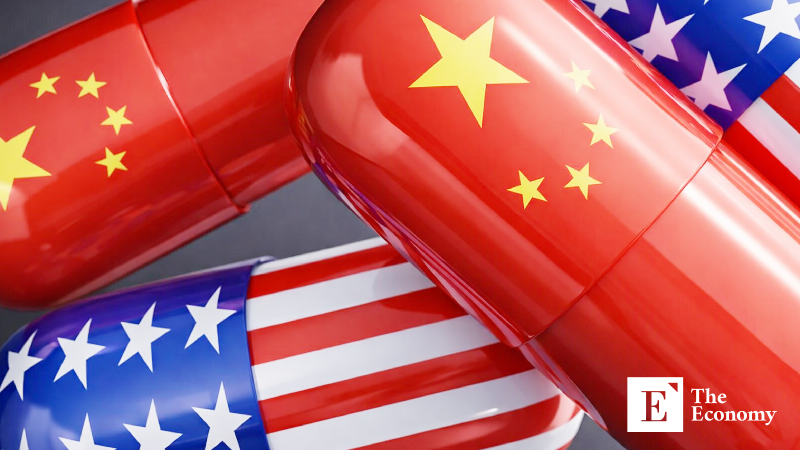
As the incumbent biotech superpower, the United States has come to view China’s rapid rise as an explicit strategic threat and has intensified countermeasures. In September last year, U.S. President Donald Trump accused China and other adversarial states of exploiting vulnerabilities in America’s open scientific and regulatory systems, circulating a draft executive order proposing tighter restrictions on drug approvals and licensing transactions. The draft included provisions for national security reviews of U.S. pharmaceutical companies seeking approvals for Chinese-developed drugs, higher regulatory fees for firms submitting Chinese clinical trial data, enhanced FDA scrutiny of such data, incentives to reshore production of drugs heavily dependent on China such as acetaminophen, and preferential government procurement for U.S.-manufactured products.
China-related biotech provisions were also embedded in the National Defense Authorization Act passed by Congress in December. These clauses, modeled on the proposed “Biosecurity Act,” aim to protect Americans’ personal health and genetic data by restricting business ties with “entities of concern.” While the standalone Biosecurity Act—which sought to impose a blanket ban on U.S. operations by China’s largest genomics firm BGI Group and its affiliates—failed to clear the Senate, the NDAA stops short of naming specific Chinese firms, instead limiting contracts with designated “biotechnology providers of concern.”
Despite these efforts, experts argue that U.S. measures are unlikely to significantly impede China’s biotech trajectory. Global Big Pharma companies, they note, remain reluctant to sever ties with Chinese partners even amid mounting political pressure. One market specialist observed that “China is currently setting the pace in clinical development and next-generation drug innovation,” adding that “for global pharmaceutical giants, China has become an indispensable partner.” The same expert cautioned against expectations that U.S. pressure would yield clear spillover benefits for countries such as South Korea, noting that while selective opportunities may emerge in areas like contract development and manufacturing, the broader industry structure and competitive dynamics make it difficult to identify definitive beneficiaries.
Aoife Brennan is a contributing writer for The Economy, with a focus on education, youth, and societal change. Based in Limerick, she holds a degree in political communication from Queen’s University Belfast. Aoife’s work draws connections between cultural narratives and public discourse in Europe and Asia.
Similar Post