[Vietnam Rare Earths] “Leveraging Domestic Reserves” Vietnam Throws Down the Gauntlet in the Global Rare Earth Supply Chain, Accelerating Resource Development Through Partnerships With Major Powers

As one of the youngest members of the team, Tyler Hansbrough is a rising star in financial journalism. His fresh perspective and analytical approach bring a modern edge to business reporting. Whether he’s covering stock market trends or dissecting corporate earnings, his sharp insights resonate with the new generation of investors.
Authored On
Modified
Vietnam Steps Up Efforts to Foster the Rare Earth Industry, Moves to Overhaul Regulatory Framework
Expansion of the Mining Value Chain to Absorb Surging Global Rare Earth Demand
South Korea, the United States, and the EU Move Early to Establish Cooperative Ties With Vietnam
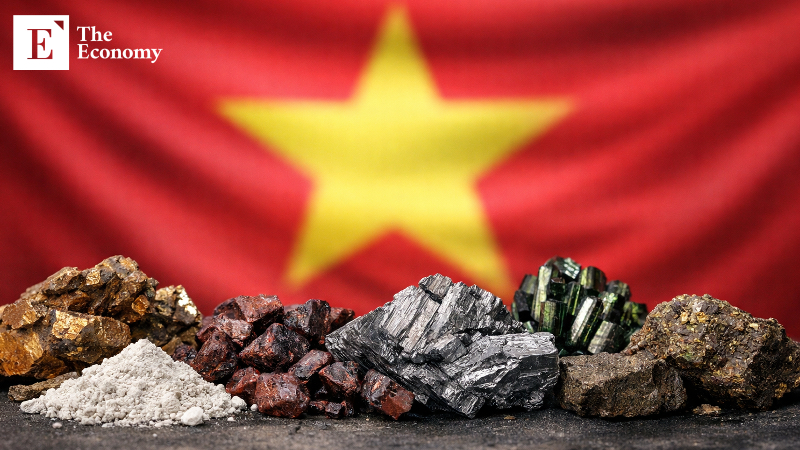
Vietnam has designated rare earths as a core engine of its national economy. As China’s weaponization of resources prompts a diversification of global rare earth demand, Vietnam—long reliant on other mineral resources for revenue—is now extending its value chain into rare earths. Countries around the world are taking note of the potential embedded in Vietnam’s rare earth ambitions and are moving swiftly to forge cooperative partnerships.
Vietnam Government’s Determination to Foster the Rare Earth Industry
According to Vietnamese local media CafeF on Feb. 5 (local time), the revised Law on Geology and Minerals, passed by Vietnam’s National Assembly in December last year, officially entered into force on Jan. 1. The core objective of the amendment is to enhance transparency and efficiency in the management of mineral resources, including rare earths, in order to safeguard strategic national assets. The Vietnamese government has clearly identified rare earths as a critical resource underpinning advanced industries such as semiconductors, renewable energy, defense technologies, electric vehicles, drones, and military robotics.
Under the revised law, exports of rare earths in raw ore form are prohibited, while exploration, mining, and processing are permitted only on a limited basis and under strict control by state-designated or state-approved entities. Advanced downstream processing of rare earth minerals will be carried out in conjunction with plans to build a modern industrial ecosystem aimed at achieving technological self-sufficiency. In addition, the government plans to establish and manage an integrated geological data system for rare earth elements, regulate import and export activities by period, and maintain appropriate strategic stockpiles through policy measures.
This regulatory overhaul reflects the Vietnamese government’s strong commitment to nurturing the rare earth industry. Remarks made last month by Prime Minister Pham Minh Chinh at a standing government committee meeting underscore Vietnam’s view of rare earths as a “key” to economic growth. The prime minister stressed that Vietnam’s rare earth reserves must become a central pillar of national self-reliance. His vision calls for building a closed-loop value chain—spanning raw material extraction, high value-added processing, and advanced technological applications—in a market that remains largely undeveloped. To achieve this, he emphasized the need for institutional breakthroughs, technological independence in processing, stronger capital attraction and incentives, infrastructure expansion, and the establishment of smart governance.
Strengthening the Mineral Value Chain Beyond Gold and Copper
Vietnam’s heightened focus on rare earths is driven by growing global demand to restructure supply chains amid China’s resource weaponization. With substantial rare earth reserves, Vietnam is seen as capable of becoming a key pillar of the global supply chain if it succeeds in upgrading its technological capabilities. According to the U.S. Geological Survey, Vietnam’s rare earth reserves amount to 3.5 million tons, ranking sixth globally. Under a plan to establish annual mining and advanced processing capacity of 900,000 tons by 2030, the Vietnamese government completed the first phase of rare earth potential assessments across 42 regions last year and has since launched a second phase of field surveys through the construction of a national rare earth database.
Market observers note that Vietnam’s strategy is less about pioneering an entirely new market and more about extending an already profitable value chain. Vietnam has long generated substantial revenue from mineral resources other than rare earths. According to the 2025 fourth-quarter financial statements of Vimico, a mining subsidiary of state-owned Vietnam National Coal and Mineral Industries Group (TKV), the company posted record revenue of approximately $588 million last year, up more than 8% year on year. Pre-tax profit reached about $104 million, exceeding initial targets by more than 2.5 times, while net profit surged 64% to roughly $82 million, also a record high.
Vimico attributed its improved performance to rising average selling prices for its key mineral products. The company said the average selling price of gold climbed to around $104,000 per kilogram last year, an increase of about $30,900 from the previous period, while copper plate prices jumped to roughly $10,700 per ton, up about $1,300. Vimico’s output last year included 918 kilograms of gold, approximately 31,200 tons of copper plates, and about 64,200 tons of copper concentrate.
Growing Demand Among Major Powers to Build Partnerships
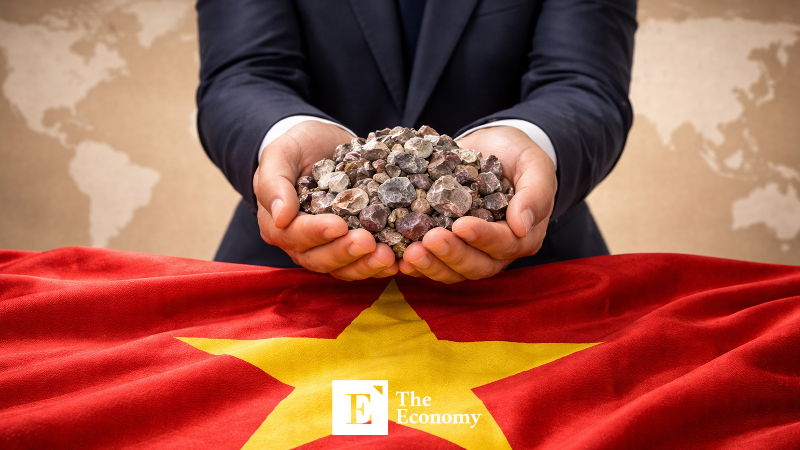
Against this backdrop, countries around the world are stepping up cooperation with Vietnam, drawn by the potential of its mineral sector. The European Union has elevated its diplomatic relationship with Vietnam to the highest level and is seeking closer cooperation in the field of critical minerals. According to a Reuters report on Jan. 28, a draft joint statement recently prepared by the two sides includes language on promoting trade and investment in goods, services, and technologies that support sustainable mining and processing.
The United States signed a memorandum of understanding with Vietnam in September 2023 under the Biden administration to strengthen critical mineral supply chains and cooperate on rare earth technologies. The initiative aimed to reduce reliance on China-centric supply chains by leveraging Vietnam’s resources while supporting stable rare earth procurement and mining and refining technologies. In October last year, Washington further underscored its commitment to supply chain diversification by pursuing rare earth-related trade agreements with Vietnam and other ASEAN countries, including Malaysia, Cambodia, and Thailand.
South Korea, meanwhile, is seeing accelerating market entry led by private-sector companies. Late last year, LS Eco Energy announced plans to invest $20 million to build a rare earth processing plant in Ho Chi Minh City. POSCO has recently discussed cooperation with Vietnamese counterparts on the mining and refining of rare earths and magnet minerals, while Trident Global Holdings, a company engaged in rare earth mining projects, is also reported to be pursuing entry into the Vietnamese market in partnership with U.S.-based Zoetic.
As one of the youngest members of the team, Tyler Hansbrough is a rising star in financial journalism. His fresh perspective and analytical approach bring a modern edge to business reporting. Whether he’s covering stock market trends or dissecting corporate earnings, his sharp insights resonate with the new generation of investors.
Similar Post