[21st-Century Luddites] Humanoids Step Onto U.S. Factory Floors First—The Path Hyundai Motor Has Chosen

Authored On
Modified
Moves to redesign U.S. production cost structures
Labor relations emerge as a key variable shaping adoption speed
Signals of fractures in human-labor-centric manufacturing
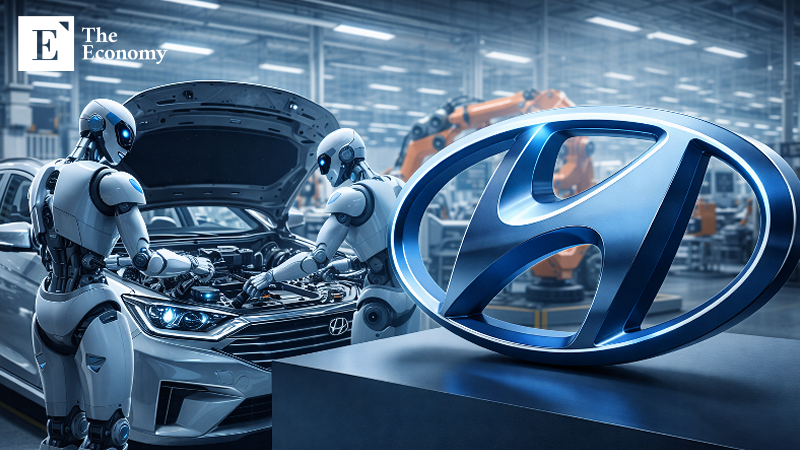
Hyundai Motor has signaled a broad restructuring of manufacturing by deploying humanoid robots across its global production bases. While the move is outwardly framed as a response to tariffs, it is more accurately read as a long-term calculation to overhaul cost structures by turning high-labor-cost U.S. plants into testbeds for automation. Mass production and phased deployment of humanoids designed to work in the same space as humans point to a shift in process design assumptions—from humans to machines. Industry observers are watching closely to see whether Hyundai Motor’s automation transition could spread beyond autos to manufacturing more broadly.
Production process standards under redefinition
Hyundai Motor plans to begin full deployment of Boston Dynamics’ humanoid robot “Atlas” at its global production bases as early as this year. Earlier, at CES 2026 held in Las Vegas in early January, Hyundai Motor Group unveiled Atlas and announced plans to apply it across its production lines, including the Hyundai Motor Group Metaplant America (HMGMA) in Savannah, Georgia. While the move was publicly described as a response to tariff measures under the Trump administration, it more clearly reflects an intent to fundamentally alter cost structures at labor-intensive U.S. plants.
This intent is evident in the gap between performance and profitability in the U.S. market. Hyundai Motor and Kia surpassed annual U.S. sales of 1 million vehicles for the first time last year, but tariff burdens directly pressured earnings. Regulatory filings show Hyundai Motor recorded record revenue of about $126.9 billion, while net profit fell 21.7% year on year to about $7.1 billion. Including Kia, losses attributable to U.S. tariffs amount to roughly $49.0 billion. Hyundai Motor CFO Lee Seung-jo recently stated at an earnings briefing that the company is reviewing emergency response measures to minimize the negative impact of tariffs.
Atlas sits at the center of these contingency measures. Unlike fixed industrial robots, Atlas is designed in a human-like form, allowing it to share the same workspace and perform varied tasks in auto plants where workflows constantly change. Its durability has been reinforced to operate reliably amid temperature swings, dust, and vibration, enabling expansion into logistics, assembly, and maintenance. The robot also supports 24-hour continuous operation through an automated battery-swap system, reinforcing Hyundai Motor’s mid- to long-term plan to shift process operations fundamentally toward machines.
From a cost perspective, the impact is concrete. Samsung Securities estimates that once mass production of 30,000 Atlas units is achieved, hourly operating costs could fall from $9.40 initially to around $1.20—far below U.S. labor costs and roughly one-sixth of Chinese labor costs. Hyundai Motor has been conducting proof-of-concept tests at the Georgia Metaplant since late last year, with plans to expand deployment to parts sorting and sequencing by 2028 and to parts assembly after 2030.
Korean plants: delay, not impossibility
By contrast, deployment at domestic plants has been delayed by strong union opposition. On the 22nd, the Hyundai Motor chapter of the Korean Metal Workers’ Union stated in a bulletin that “not a single robot can enter production sites without labor-management agreement.” Tensions intensified with references to the “DF247” concept reportedly discussed at the Global Leaders Forum—an unmanned factory operating 24/7 without lights. The union argued that factories run solely by AI-based robots would ultimately replace all jobs, directly linking robot adoption to employment issues.
On the 29th, the union further warned that production volumes could be shifted to overseas plants where robots can be deployed, leaving domestic plants to become idle before being replaced by highly automated new facilities. It criticized views framing union resistance as opposition to technological progress, calling them demands to tolerate automation and production relocation without alternatives.
Hyundai Motor appears to be avoiding direct confrontation while adjusting timelines. Hyun Dong-jin, head of Hyundai Motor·Kia’s Robotics Lab, said at the Korea CEO Forum on the 5th that “people who operate technology and build systems matter more than technology itself,” adding that society should focus on solving problems through technology rather than imagining dystopias. He stressed that full replacement of human labor requires both technological advances and social consensus, noting that time remains.
Implications for organizations, employment, and industrial ecosystems
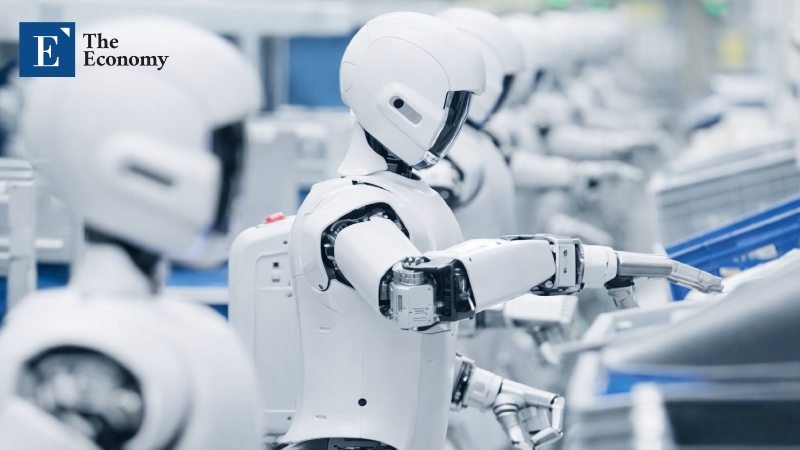
Industry consensus holds that Hyundai Motor’s deployment of Atlas marks not just a single company’s automation experiment but a turning point that could fundamentally reshape manufacturing ecosystems long centered on human labor. As robots capable of human-like tasks move beyond repetitive and hazardous work, assumptions underlying process design and workforce allocation are being shaken—particularly in complex, large-scale sectors like automotive manufacturing.
Atlas’s technological evolution also draws attention. First developed in 2013 under a U.S. DARPA-led initiative as a hydraulics-based research platform for disaster response, early versions focused on basic bipedal balance. Around 2016, hybrid electric-hydraulic models demonstrated jumping, rotation, backflips, and parkour, symbolizing advances in full-body control and dynamic balance. Yet these remained ill-suited for sustained industrial work.
The turning point came in 2024, when Boston Dynamics retired the hydraulic model and unveiled a fully electric Atlas, declaring a shift from research to industrial product. The robot adopted a more upright form, expanded degrees of freedom beyond human joint limits, and introduced interchangeable grippers for task-specific use—signaling a move toward general-purpose deployment.
Hyundai Motor’s emphasis on mass production further reshapes interpretation. Through its software platform “Orbit,” linked to manufacturing execution (MES) and warehouse management systems (WMS), Hyundai Motor envisions operating multiple Atlas units simultaneously, sharing learned task data across robots. Experience accumulated on auto lines could later spread to logistics, shipbuilding, steel, electronics, and other manufacturing fields.
Experts caution against equating these shifts with the rapid disappearance of human labor. While robots may handle repetitive and hazardous tasks, human judgment becomes more critical in process design, operations, maintenance, and data management—pointing to role reallocation rather than outright replacement. The political sphere has also weighed in. President Lee Jae-myung recently suggested initiating discussions on social systems to address job and income impacts from robot adoption, stating at a senior aides’ meeting that “we must adapt quickly to an unavoidable tide.”
- Previous [Vietnam Rare Earths] “Leveraging Domestic Reserves” Vietnam Throws Down the Gauntlet in the Global Rare Earth Supply Chain, Accelerating Resource Development Through Partnerships With Major Powers
- Next Japan’s LDP Secures Record-Breaking Seat Count on “Strong Japan” Platform, Markets Turn Alert as Political Weight Shifts
Similar Post