“Also Under Consideration in Vietnam” France Expands Rafale Exports, Competition with Germany Expected to Intensify as Berlin Turns Away from FCAS

Aoife Brennan is a contributing writer for The Economy, with a focus on education, youth, and societal change. Based in Limerick, she holds a degree in political communication from Queen’s University Belfast. Aoife’s work draws connections between cultural narratives and public discourse in Europe and Asia.
Authored On
Modified
Vietnam Signals Air Force Overhaul by Weighing Adoption of French Rafale Fighters
Indonesia, India, Iraq Also Purchasing Rafales, Expanding France’s Export Channels
Franco-German Rift Over Next-Generation Fighters Raises Question: Rafale Exports as a Strategy to Reinforce Strategic Autonomy?
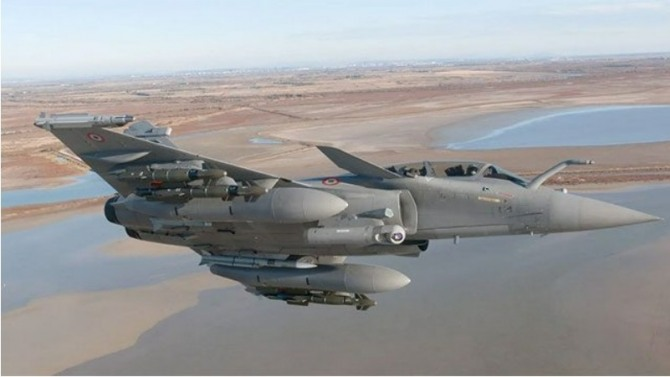
Vietnam is reviewing the acquisition of French-made fighter jets as part of an effort to restructure an air force long centered on Russian aircraft. As France encounters setbacks in its next-generation fighter development project amid frictions with partner Germany, Paris is moving to diversify the customer base for its existing flagship platform to shore up an independent industrial footing. Market observers increasingly expect the deepening rift between Germany and France to reshape the competitive landscape of Europe’s future fighter aircraft market.
Vietnam’s Rafale Fighter Acquisition Plan
On February 9 local time, Poland-based defense and military outlet Defense24 reported that Vietnam is discussing a plan to introduce Dassault Aviation’s Rafale fighters in place of Russian-made aircraft. At present, the backbone of the Vietnamese Air Force consists of 35 Sukhoi Su-30MK2 fighters. The Su-30MK2, an export variant derived from the Su-30MKK family, was introduced relatively recently and is still assessed to retain substantial combat value.
Vietnam’s interest in the Rafale, despite the Su-30MK2 not yet having lost its competitiveness, is widely interpreted as a strategy aimed at incremental force expansion and long-term military modernization. Shifts in the security environment surrounding the South China Sea and China’s accelerating military buildup have pushed Hanoi toward qualitative upgrades of its air power. In addition, the operational risks associated with Russian-made weapons systems, which have become more pronounced since the outbreak of the war in Ukraine, are cited as a key factor reinforcing the need for diversification.
Defense24 noted that the exact number of Rafale fighters under consideration has not been finalized, but discussions are reportedly proceeding around a scale similar to figures previously mentioned when Vietnam was rumored to be considering the Sukhoi Su-35—approximately 40 aircraft. Should such a plan materialize, the Vietnamese Air Force could adopt a dual-structure configuration in which existing Su-30MK2s focus on strike missions, while newly introduced Rafales serve as multirole platforms employing Western precision-guided munitions.
Rising Rafale Demand Across Asia and the Middle East
Vietnam is not alone in reorganizing its air power around the Rafale. Indonesia, for instance, signed a contract with France in 2022 to purchase 42 Rafale fighters for USD 8.1 billion, and took delivery of three aircraft at the end of last month, deploying them to a domestic air base. At the time, Rico Ricardo Siahaan, spokesperson for Indonesia’s Ministry of Defense, stated that “the Rafale fighters have been deployed at an air base in Pekanbaru, Riau Province,” adding that “these aircraft represent a critical component of the Indonesian Air Force’s defense equipment modernization program.”
India currently operates more than 30 Rafale fighters and decided in April last year to procure an additional 26 carrier-capable Rafale variants. At the end of last month, India also reapproved a plan to introduce 114 more Rafale aircraft. With the retirement of Russian-made fighters that have long formed the backbone of the Indian Air Force approaching, New Delhi’s decision reflects an effort to sustain its air combat capabilities through large-scale Rafale procurement. India plans to localize production of roughly 80% of the 114 aircraft through joint manufacturing with Dassault Aviation and is also considering the establishment of domestic maintenance, repair, and overhaul facilities to improve operational readiness.
Iraq is likewise seeking to move away from its long-operated U.S.-made F-16 fighter system and toward the Rafale. According to international defense media, the Iraqi government is currently in negotiations with France to purchase 14 Rafale F4 fighters, targeting contract conclusion within the year. If finalized, the Iraqi Air Force would acquire a mix of 10 single-seat and four twin-seat aircraft. Industry observers note that Iraq’s prior operational cooperation with the French Air Force in countering the Islamic State (IS) likely influenced Baghdad’s familiarity with Rafale operations and, by extension, the current negotiations.
France and Germany: From Partners to Rivals
France’s steady expansion of Rafale sales is closely linked to its deteriorating relationship with Germany. Paris has been pursuing the development of a sixth-generation fighter through the Future Combat Air System (FCAS) project alongside Germany and Spain, with the goal of replacing the Rafale and the German- and Spanish-operated Eurofighter by 2040. However, the partners have repeatedly clashed over the course of the program. France insisted from the outset on holding decisive authority over core technologies and project leadership, while Germany strongly objected, emphasizing proportional returns in technology and industrial benefits relative to its investment. Tensions intensified when France reportedly sought roughly 80% of the project’s workshare, diverging sharply from the initial agreement to divide responsibilities evenly among the three countries.
Against this backdrop, the German government has recently begun exploring participation in the Global Combat Air Programme (GCAP), led by the United Kingdom, Japan, and Italy. The move signals Berlin’s search for alternative options beyond the France-led FCAS framework. GCAP, agreed upon in 2022, aims to deploy a sixth-generation fighter by 2035 and has already entered the demonstrator production phase. Should Germany, Europe’s largest defense market, join GCAP, it could simultaneously secure development funding and future air force replacement demand.
If Germany ultimately pivots toward GCAP, France could be left shouldering a significantly heavier financial burden in pursuing next-generation fighter development alone, given that FCAS was originally structured around shared roles and costs among France, Germany, and Spain. A market analyst observed that “France appears to be expanding Rafale exports to sustain its ability to continue next-generation fighter development independently even after a potential German departure,” adding that “the situation reflects a tense tug-of-war between Germany and France—once partners, now rivals—over leadership in Europe’s future fighter aircraft market.”
Aoife Brennan is a contributing writer for The Economy, with a focus on education, youth, and societal change. Based in Limerick, she holds a degree in political communication from Queen’s University Belfast. Aoife’s work draws connections between cultural narratives and public discourse in Europe and Asia.
Similar Post
















