“Banks Join In” China Steadily Reduces U.S. Treasury Holdings, Expands Gold Purchases to Drive Bullion Rally

Aoife Brennan is a contributing writer for The Economy, with a focus on education, youth, and societal change. Based in Limerick, she holds a degree in political communication from Queen’s University Belfast. Aoife’s work draws connections between cultural narratives and public discourse in Europe and Asia.
Authored On
Modified
China Moves to Cut U.S. Treasury Exposure, Orders Financial Institutions to Restrict Purchases and Reduce Holdings
Risk-Averse Stance Prolonged as Fiscal and Policy Uncertainty Deepens
China’s Gold Reserves Continue to Rise, Intensifying Upward Pressure on Prices

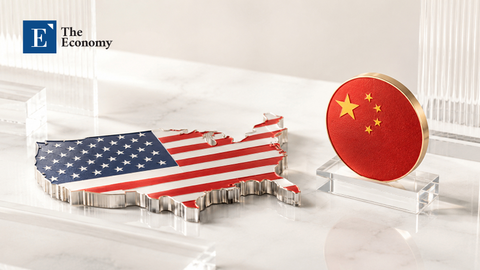
Chinese regulators have advised domestic financial institutions to scale back their holdings of U.S. Treasuries. As Beijing has maintained a multiyear strategy of reducing exposure to U.S. government debt amid concerns over U.S. fiscal and policy uncertainty, this risk-avoidance approach is now spreading across the financial sector. China, having offloaded a substantial volume of Treasuries, has turned to gold as an alternative investment, emerging as a key driver behind the global rise in gold prices.
Chinese Authorities Rein in Financial Sector Investment in U.S. Treasuries
On the 9th, Bloomberg reported, citing sources familiar with the matter, that Chinese authorities instructed banks to limit new purchases of U.S. Treasuries. Institutions with relatively high exposure were reportedly given additional guidance to reduce existing positions. According to the sources, the directives were discussed confidentially and conveyed verbally to several major Chinese banks in recent weeks. No specific targets were set regarding the scale or timeline of the reductions.
Bloomberg assessed the move as a risk-management measure aimed at addressing U.S. fiscal fragility and market volatility. Excessive exposure to U.S. Treasuries and heightened price swings were seen as potential threats to the financial soundness of Chinese banks. Bloomberg added that the guidance applies to private and commercial banks and does not extend to U.S. Treasury holdings officially held by the Chinese government, including those of the central bank.
Market participants largely view the question of whether the measures apply to sovereign holdings as immaterial. China has already been steadily reducing the share of U.S. Treasuries in its portfolio. According to U.S. Treasury data, China’s U.S. Treasury holdings stood at $682.6 billion as of November last year, the lowest level since September 2008. This represents a decline of roughly 10.2% from $760.8 billion at the end of January last year, when President Donald Trump took office. As a result, China’s share of total U.S. Treasury holdings has fallen sharply to around 2%.
China’s Push to Crowd Out U.S. Treasuries
China’s reduction of U.S. Treasury holdings has been underway for several years. Data from the State Administration of Foreign Exchange show that between 2014 and 2018, around 60% of China’s foreign exchange reserves were denominated in U.S. dollar assets, a substantial portion of which was estimated to be U.S. Treasuries. At the time, Treasuries were widely regarded as unequivocal safe-haven assets, prized for their deep liquidity and interest-bearing nature.
However, in 2017, the State Administration of Foreign Exchange began adjusting its dollar-centric asset allocation. The pace of U.S. Treasury sales accelerated after China observed the freezing of Russia’s overseas assets following Moscow’s invasion of Ukraine in 2022. As a result, between January 2022 and December 2024, China’s official U.S. Treasury holdings fell by more than 27%, far exceeding the 17% decline recorded between 2015 and 2022.
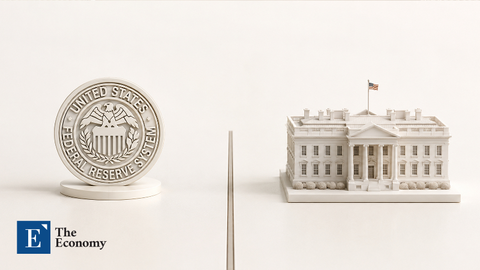
The core driver behind China’s retreat from U.S. Treasuries is widely seen as concerns over America’s debt burden. As of early this month, U.S. federal government debt stands at $38.57 trillion. Persistent fiscal deficits, driven by annual spending outpacing revenue, have been financed through heavy Treasury issuance, pushing debt levels ever higher. According to the Congressional Budget Office, net interest costs associated with federal debt currently amount to 3.2% of U.S. gross domestic product and are projected to rise to 5.4% over the next 30 years. Concerns over the independence of the U.S. central bank may also have influenced China’s portfolio recalibration. The Trump administration has continued to attack Federal Reserve Chair Jerome Powell, whose term ends in May, raising questions about the Fed’s institutional autonomy.
Policy-related uncertainty has further undermined investor confidence. Following the launch of the second Trump administration earlier this year, uncertainty surrounding trade policy intensified, amplifying volatility across financial markets and spilling into the Treasury market. As U.S. policy signals grew less predictable, investors became increasingly cautious about holding long-term Treasuries, and in some episodes, the traditional risk-hedging function of U.S. government bonds appeared to weaken. This unstable environment has sharpened China’s focus on “concentration risk,” referring to the vulnerabilities that arise when bank portfolios are overly concentrated in specific counterparties, sectors, or countries.
Portfolio Rebalanced Toward Gold
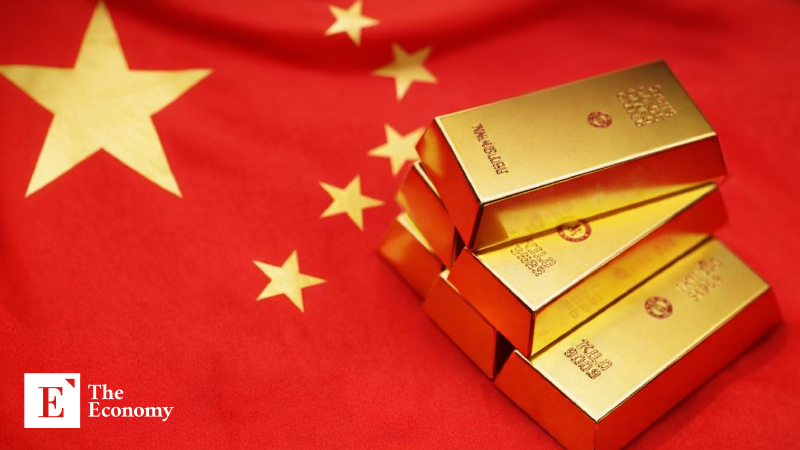
As China reduced the weight of U.S. Treasuries in its portfolio, it selected gold as an alternative investment. According to the State Administration of Foreign Exchange, China’s official gold reserves stood at 74.15 million troy ounces as of the end of last year. The People’s Bank of China has purchased gold for 15 consecutive months through this month, and gold’s share of total foreign exchange reserves surpassed 9% for the first time in November last year. State-run Securities Times reported that the accumulation trend is expected to continue, noting that relatively small-scale purchases can support asset diversification at the PBOC without triggering excessive price volatility.
Strong buying by central banks led by China, combined with geopolitical uncertainty, currency depreciation concerns, and doubts over the Fed’s independence, pushed gold prices to successive record highs last month. However, speculative inflows overheated the market, triggering a sharp reversal. After surging to an all-time high on the 29th, gold prices retreated rapidly. In this context, U.S. Treasury Secretary Scott Bessent said in an interview with Fox News on the 8th that gold trading in China had become “unruly,” adding that speculative fervor had grown so intense that authorities may need to tighten margin requirements. He warned that the gold market was exhibiting a classic pattern of speculative spikes followed by abrupt pullbacks.
Even so, major financial institutions expect gold prices to regain upward momentum. Global investment banks and asset managers, including Deutsche Bank and Goldman Sachs, forecast that long-term demand factors such as portfolio diversification away from U.S. assets, policy uncertainty, and increased central bank purchases will continue to underpin gold prices. Gold prices indeed rebounded on the 9th, rising as much as 2.3% to $5,070 per ounce, extending the recovery.
Aoife Brennan is a contributing writer for The Economy, with a focus on education, youth, and societal change. Based in Limerick, she holds a degree in political communication from Queen’s University Belfast. Aoife’s work draws connections between cultural narratives and public discourse in Europe and Asia.
Similar Post