South Korea Joins Bid for Vietnam’s Ninh Thuan Nuclear Project, Westinghouse Technology Licensing Deal Faces Crucible

Aoife Brennan is a contributing writer for The Economy, with a focus on education, youth, and societal change. Based in Limerick, she holds a degree in political communication from Queen’s University Belfast. Aoife’s work draws connections between cultural narratives and public discourse in Europe and Asia.
Authored On
Modified
Vietnam Resumes Nuclear Development, South Korea Emerges as Leading Contender
Westinghouse Technology Licensing Pact Seen as Double-Edged Sword
Surging Global Nuclear Demand to Test Team Korea’s Capabilities
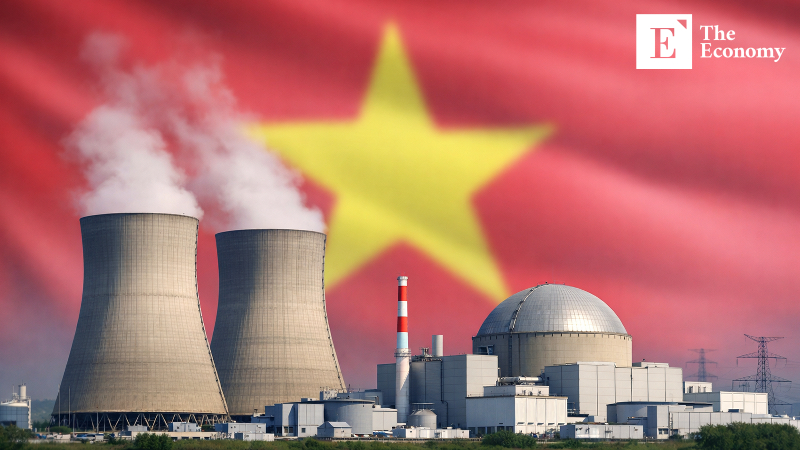
As the Vietnamese government moves to revive its large-scale nuclear power plant construction initiative, South Korea has emerged as one of the leading contenders for the contract. Analysts point to Seoul’s “package strategy,” which combines financial backing with technological cooperation, as well as its secured rights to utilize proprietary technology from U.S.-based Westinghouse—obtained despite considerable risk exposure—as meaningful competitive advantages. Industry observers are closely watching whether South Korea can leverage the Vietnam project as a springboard to capture expanding nuclear demand worldwide and solidify its standing in the global market.
Vietnam Restarts Nuclear Development
According to Eco-Business, an Asia-Pacific business publication, on the 10th local time, the Vietnamese government in 2009 formed cooperative frameworks with Russia and Japan to construct nuclear power plants in Khanh Hoa Province (formerly Ninh Thuan Province) in south-central Vietnam, selecting Russia’s state-owned nuclear corporation Rosatom as the contractor for the first unit. However, the project failed to gain traction and was suspended in 2016 due to fiscal burdens and safety concerns.
Vietnam resumed its nuclear development program in 2024 to achieve its 2050 carbon neutrality target and address mounting electricity shortages. The plan calls for the construction of two nuclear power plants—Ninh Thuan Units 1 and 2—each comprising two reactors in Khanh Hoa Province, securing more than 4,000 megawatts of power capacity. Russia currently leads the bidding for Unit 1. In addition to having previously secured development rights for Ninh Thuan Unit 1, Moscow has offered an aggressive financing package, pledging to cover 85 percent of construction costs through loans. Vietnam subsequently signed another cooperation agreement with Rosatom in January last year.
Japan had been selected as the preferred bidder for Unit 2, but negotiations stalled due to differences over the project completion timeline. Last month, the Vietnamese government instructed its Ministry of Industry and Trade to formally notify Japan of its decision to suspend investment in the Ninh Thuan Unit 2 project and to prepare documentation terminating the existing investment cooperation framework. Since then, Hanoi has been engaging multiple nuclear technology-holding countries to identify a new partner for subsequent reactor construction.
Securing U.S. Proprietary Technology Rights: Strategic Masterstroke or Liability?
At present, South Korea and Russia are cited as the most likely candidates for Unit 2. In August last year, Korea Electric Power Corporation (KEPCO) signed a memorandum of understanding with Vietnam National Industry-Energy Group (PVN), the project owner of Ninh Thuan Unit 2, focused on workforce development in the nuclear sector, laying the groundwork for its bid. KEPCO is understood to have proposed a comprehensive package extending beyond construction to include local workforce training and financial support. Korean companies are also actively exploring mechanisms such as strategic export finance funds to mobilize substantial capital, aiming to alleviate Vietnam’s fiscal burden.
Perceptions that South Korea is a country willing to shoulder potential losses to access advanced U.S. nuclear technology are also viewed as bolstering its competitiveness. In July last year, after the Czech government selected Korea Hydro & Nuclear Power (KHNP) as the preferred bidder for the construction of Dukovany Units 5 and 6, Westinghouse filed a complaint with Czech authorities alleging that South Korea had misappropriated proprietary technology. The Czech government subsequently suspended its contract with KHNP, causing the project to stall.
Last month, however, KHNP and Westinghouse issued a joint declaration stating that both sides would strengthen cooperation in the global nuclear market and withdraw all legal actions. The agreement signed by KHNP, KEPCO, and Westinghouse reportedly includes provisions requiring that, for the next 50 years, South Korean exporters of nuclear reactors conclude procurement contracts with Westinghouse for goods and services worth $650 million per unit and pay technology licensing fees of $175 million per reactor. The pact also stipulates that if Korean companies independently develop and export next-generation nuclear technologies, such as small modular reactors (SMRs), they must undergo verification to determine whether Westinghouse technology is applicable. Domestically, the agreement has sparked intense debate, with critics characterizing it as disproportionately favorable to Westinghouse, while proponents argue it was an unavoidable step to unlock overseas nuclear markets.

Acceleration of Nuclear Adoption Worldwide
The appropriateness of the agreement will ultimately be judged by Team Korea’s performance in upcoming international bidding contests. Global demand for nuclear energy has been rising sharply. Earlier this month, the Netherlands granted final approval for plans to construct four new reactors, including large-scale nuclear units and SMRs. The Dutch nuclear agency NEO NL is set to officially launch next month and will begin full-scale project management, including site assessments and technology selection.
Poland, under its “Polish Nuclear Power Program,” commenced construction of its first nuclear power plant in partnership with Westinghouse last autumn and plans to sequentially build additional plants at intervals of two to three years. In November last year, Poland invited Westinghouse, France’s state-owned energy company EDF, KHNP, and Canada-based nuclear engineering firm AtkinsRéalis to participate in a competitive dialogue process to lay the groundwork for investment in a second large-scale nuclear plant. The competitive dialogue is scheduled for this year, through which the core technology supplier for Poland’s second nuclear facility will be finalized.
The United States in May last year designated nuclear energy as a cornerstone of its energy strategy to secure leadership in artificial intelligence. Washington plans to expand nuclear generation capacity from the current 100 gigawatts to 400 gigawatts by 2050 and construct 10 new reactors. The challenge lies in the near-collapse of the U.S. nuclear value chain, including developers and construction firms. Domestic capabilities alone are insufficient to meet surging electricity demand driven by the AI boom.
Against this backdrop, South Korea is building a framework for nuclear cooperation with the United States. During a recent foreign ministers’ meeting in Washington, D.C., Foreign Minister Cho Hyun and U.S. Secretary of State Marco Rubio discussed measures to advance the alliance and agreed to cooperate in areas including civilian nuclear energy, nuclear-powered submarines, shipbuilding, and expanded Korean investment to support the rebuilding of critical U.S. industries. Discussions remain at an early stage, and participating Korean companies have yet to be finalized.
Aoife Brennan is a contributing writer for The Economy, with a focus on education, youth, and societal change. Based in Limerick, she holds a degree in political communication from Queen’s University Belfast. Aoife’s work draws connections between cultural narratives and public discourse in Europe and Asia.
Similar Post
















