“Up to 700W Power Draw” Intel Adopts Ultra-High-Performance Design for Next-Generation CPU in Aggressive Bid to Counter AMD and Arm

Authored On
Modified
Intel’s next-generation CPU Nova Lake to consume up to 700W
Intel’s dominance falters amid AMD and Arm advances, market share erosion accelerates
High-stakes bet embracing thermal and yield risks, testing the durability of its leadership
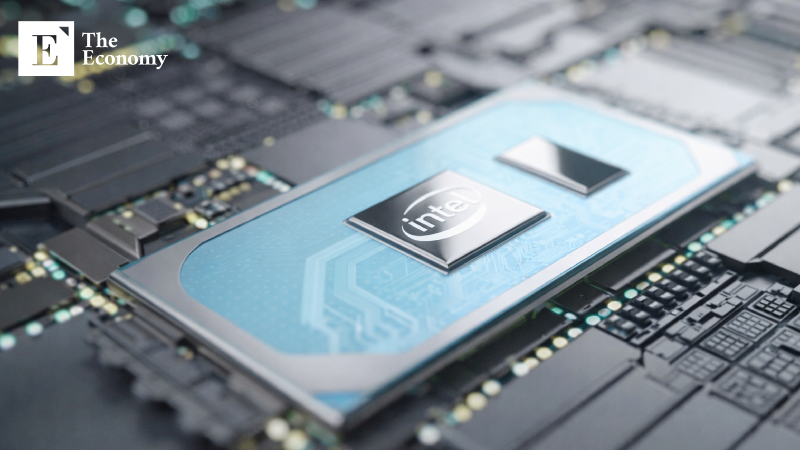
Intel’s next-generation central processing unit (CPU) is reported to feature a dramatic increase in power consumption. As rivals including U.S.-based AMD and U.K.-based Arm intensify their pursuit, unsettling Intel’s long-standing supremacy in the CPU market, the company has opted for an ultra-high-performance design strategy in a decisive effort to preserve its leadership. Market observers characterize the move as a calculated gamble that pushes beyond the conventional boundaries of mainstream consumer CPUs.
Intel Bets on Ultra-High-Performance CPUs
According to foreign media outlets including Notebookcheck on the 10th (local time), Intel’s flagship model of its next-generation desktop CPU, Nova Lake, is expected to draw more than 700W under maximum load. By comparison, Intel’s current top-tier model, the Core Ultra 9 285K, consumes up to 356W, while the power-hungry i9-14900K is rated at approximately 548W.
In principle, higher power consumption enables greater CPU performance. Increased power allows for higher clock speeds, more cores operating simultaneously, and faster processing of complex workloads. High-performance modes that sharply elevate power usage boost both voltage and frequency, maximizing instantaneous computational throughput. The reported rise in power consumption for the next-generation CPU signals the extent of Intel’s emphasis on performance enhancement.
The trade-off lies in thermal output, which rises in tandem with power draw. An industry official noted that power consumption approaching 700W would exceed the capabilities of conventional air-cooling systems, necessitating high-performance liquid-cooling solutions, effectively reaching specifications associated with high-end desktop (HEDT) platforms. The official added that for Intel’s ultra-high-performance strategy to deliver tangible results, the company must secure manufacturing stability capable of sustaining power levels near 700W during mass production. Failure to do so could expose Intel to yield deterioration, undermining its market standing.
AMD Breaks Intel’s Monopoly
Intel’s aggressive posture reflects intensifying competition in the global CPU market, which has markedly narrowed the company’s strategic space. A report released last month by Swiss investment bank UBS indicated that Intel’s server CPU market share has fallen sharply from over 90% in the past to around 60% in 2025. In contrast, AMD’s share expanded from roughly 5% to over 20% during the same period, consolidating a duopoly structure in place of Intel’s former dominance.
A similar pattern is evident in the consumer CPU segment. Hardware statistics released by gaming platform Steam show Intel’s CPU share on the platform declining from 66.6% in July 2024 to 55.58% in December of last year. Over the same period, AMD increased its share to 44.42%, substantially narrowing the gap. Within the gaming industry, CPU market share is widely regarded as a barometer of technological competitiveness, ecosystem influence, and future market leadership.
AMD’s ascent is widely attributed to performance gains driven by its Zen architecture and its chiplet design strategy. By combining smaller chips rather than relying on a single large die, AMD improved yield and cost efficiency, while leveraging Taiwan-based TSMC’s advanced process technologies to secure advantages in power efficiency and integration density. The growing presence of its EPYC processors in the cloud data center market significantly strengthened profitability, channeling additional capital into research and development and reinforcing a virtuous cycle of growth.
Arm Accelerates Expansion with Low-Power Architecture
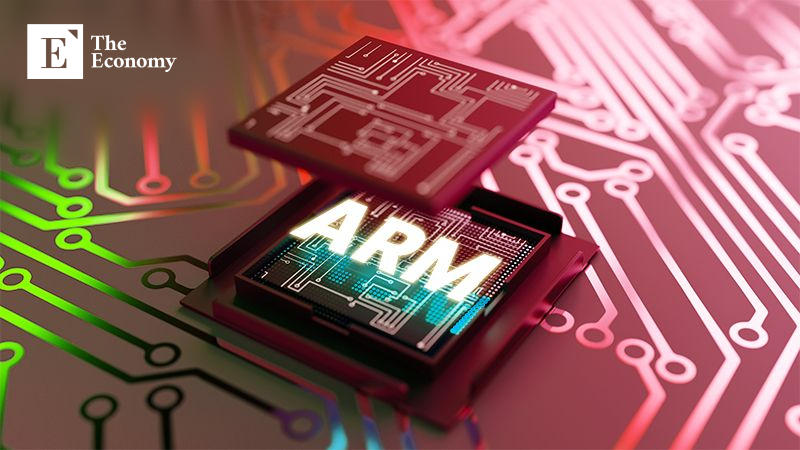
More recently, U.K.-based semiconductor design firm Arm has expanded its influence in the AI data center CPU design market. According to a report last month by Japan’s Nikkei, approximately 50% of CPUs used by major data center operators currently incorporate Arm designs. Major operators including Amazon Web Services (AWS) and Microsoft (MS), as well as Nvidia—dominant in the graphics processing unit (GPU) market—have adopted Arm technology in their CPU offerings.
Originally a leader in smartphone processor design, Arm entered the server market in earnest beginning in 2019 to secure new growth engines. Within just a few years, it has secured major AI server-providing data center operators as customers, reshaping competitive dynamics. According to analyses by market research firms IDC and Mercury Research, Arm-based server processors account for less than 10% of revenue share, though its expanding roster of high-profile customers suggests further gains are likely.
Arm’s competitive edge lies in its low-power architecture and energy efficiency. Built on a RISC-based framework, Arm simplifies instruction sets to significantly reduce power consumption. This energy-efficient approach has proven attractive not only in its traditional mobile stronghold but also in high-performance computing environments such as cloud and data centers, where power burdens are substantial. Arm-based processors deliver favorable performance per watt compared with conventional x86 architectures, enabling meaningful reductions in power and cooling costs upon deployment.
Similar Post