Seven Minutes to Full Charge? Geely Signals the Opening of a New EV Charging Speed War

Stefan Schneider brings a dynamic energy to The Economy’s tech desk. With a background in data science, he covers AI, blockchain, and emerging technologies with a skeptical yet open mind. His investigative pieces expose the reality behind tech hype, making him a must-read for business leaders navigating the digital landscape.
Authored On
Modified
Charging Speed Takes Center Stage in Technology Strategy
Chinese Automakers Escalate High-Speed Charging Record Race
Breaking the Low-Cost Image Barrier Remains a Credibility Test
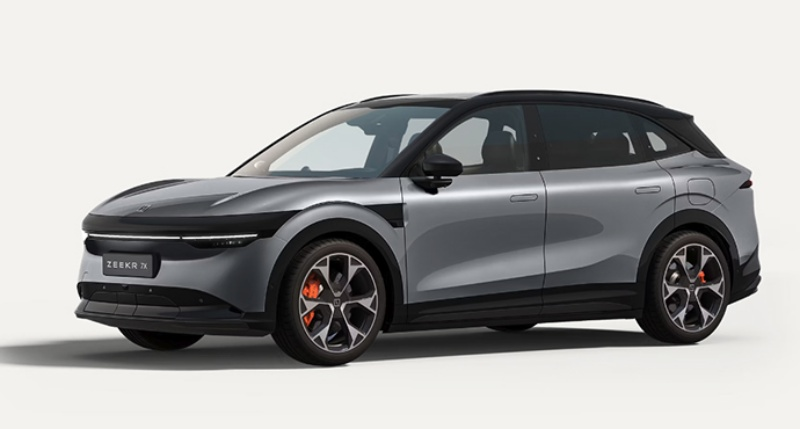
Chinese automaker Geely, which has set its sights on global markets including South Korea, has signaled a strategic pivot by foregrounding ultra-fast charging technology rather than engaging in price-cutting competition. Drawing on years of accumulated technical development, the company appears poised to enter a full-scale race centered on time efficiency. Across China’s electric vehicle sector, record-setting claims—ranging from five-minute charging to battery swaps in just over two minutes—have intensified. Yet despite these advances, consumer trust in product quality remains relatively subdued, leaving questions over the durability of this momentum.
Positioning as a Luxury Electrification Brand
According to industry sources, Geely has recently emphasized ultra-fast charging capabilities as a core pillar of its global expansion strategy. At an event on the 24th, Geely CEO Jerry Gan declared opposition to loss-making price competition, stating that the company would compete on the basis of technology, quality, brand, service, and corporate ethics. In December 2024, Geely underscored its commitment to quality by opening a safety testing facility in Ningbo, Zhejiang Province, backed by an investment of approximately $292 million.
Geely has concretized its market push with the premium brand Zeekr’s midsize SUV, the 7X. Built on the Geely Group’s dedicated electric platform SEA, the 7X adopts a 900-volt high-voltage architecture to overcome the technical limitations of conventional 800-volt systems, raising charging efficiency thresholds. The model can charge from low battery levels to 80% capacity in just seven minutes and offers a driving range of 700 kilometers under China’s CLTC certification standard. In the all-wheel-drive performance trim, output reaches 475 kilowatts, establishing a foundation for competition with premium models such as the Genesis GV70 and Tesla Model Y.
Years of ultra-fast charging development have translated into optimized hardware and software integration. The 2026 Zeekr 001, unveiled late last year, reduces charging time from 4% to 80% battery capacity to under seven minutes. Paired with a 95-kilowatt-hour lithium iron phosphate (LFP) battery and megawatt-level charging infrastructure capable of sustaining over 500 kilowatts throughout the charging process, the model demonstrates significant output stability. The initial response time—reaching 10% from 4% in a single second—and a CLTC-certified range of 710 kilometers underscore the brand’s effort to anchor its identity in charging efficiency.
Zeekr plans to accelerate global expansion through entry into the South Korean market, with official sales beginning in June and an annual sales target of 5,000 units. The Korean-market 7X incorporates localized features such as T Map navigation and advanced voice recognition systems, while integrating Korean-made components including Samsung Display panels to enhance perceived reliability. Jeff Chow, Zeekr’s head of East Asia operations, stated that construction of a local production facility remains under consideration depending on consumer response and market share trends, signaling long-term investment intentions.
Approaching Refueling Speeds
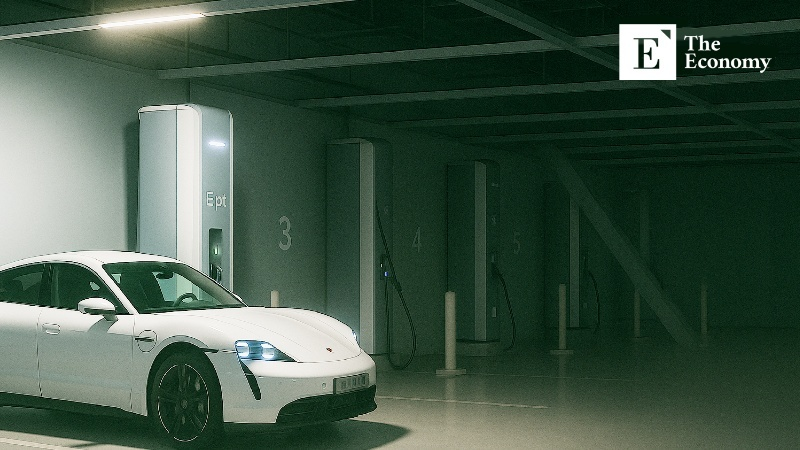
China’s rapid advances in charging technology are expanding into an industry-wide standards race. In April of last year, CATL, the world’s largest battery manufacturer, unveiled its second-generation Shenxing battery capable of delivering up to 520 kilometers of range with a five-minute charge. Compared with Hyundai’s Ioniq series, which achieves 388 kilometers of range after an 18-minute charge, and Tesla’s Supercharger system, which delivers 320 kilometers in 15 minutes, CATL’s benchmark represents nearly triple the charging speed. Around the same time, BYD introduced a 1,000-volt high-voltage system with 1,000-kilowatt output, enabling 400 kilometers of range from a five-minute charge.
As an alternative to overcoming the physical constraints of charging time, Nio’s battery swap system has drawn attention. Nio’s fourth-generation battery swap station completes pack replacement in just two minutes and 24 seconds, comparable to or faster than average refueling times for internal combustion vehicles. While Tesla and Renault previously failed to commercialize battery swapping, Nio integrated the model with a subscription-based Battery-as-a-Service (BaaS) framework and established it as a viable business model. The company currently operates more than 8,600 stations across over 550 cities in China.
The Chinese government has mobilized administrative capacity at the national level to translate private-sector innovation into infrastructure competitiveness. The National Development and Reform Commission and three other ministries announced a roadmap to deploy more than 100,000 fast-charging stations nationwide by 2027, targeting 98% availability at highway service areas. The objective is to elevate EV charging convenience to a level comparable with conventional refueling. Local governments are supporting infrastructure expansion by offering long-term land leases of more than 10 years and issuing special bonds to share investment risk, while advancing integration with intelligent power grid systems.
China’s technological acceleration presents a dual challenge to South Korea, long regarded as a traditional battery powerhouse: advancing technology while optimizing costs. Domestic players including LG Energy Solution, Samsung SDI, and SK On are intensifying efforts to commercialize solid-state batteries, which promise lower fire risk and higher output. However, rising battery costs driven by increased conductive material content and additional infrastructure expenditures such as energy storage system installations remain unresolved issues. As the competitive focal point in the global EV market shifts toward charging technology, Korean companies face mounting pressure to recalibrate strategies in response to China’s scale and technological push.
Four in Ten Interested but Skeptical
Despite technological strides, Chinese automakers confront persistent perception challenges. Chinese EV brands remain associated primarily with value pricing, and consumer confidence in quality and safety has yet to solidify. In a survey conducted this year by mobility concierge platform Chabot Mobility of 450 prospective new car buyers, 75.1% expressed a positive outlook toward purchasing an electric vehicle. However, attitudes toward Chinese brands were more cautious. The largest share of respondents—38.6%—said they were interested but lacked trust, while 18.1% cited concerns over quality or safety. Only 5.8% rated Chinese brands as strong in technology and quality.
Price competitiveness remains the most frequently cited appeal. When allowed multiple responses, 64.3% identified pricing as a key advantage, followed by battery technology and driving range at 14.1%, design sophistication at 11.9%, and advanced technical features at 9.0%. Yet 26.4% responded that Chinese EVs offered no compelling advantages, suggesting limited differentiation beyond cost. Top concerns included quality and durability (63.2%), after-sales service and network coverage (60.6%), and safety and battery fire risk (54.2%).
The credibility gap has been amplified by recall cases. In the second half of last year, BYD issued recalls affecting more than 200,000 vehicles due to defects in key electrification components, including reduced battery pack output and motor control unit malfunctions. Models such as the Qin Plus sedan and the Tang and Yuan Pro SUVs were included, heightening consumer anxiety. In South Korea, owners of the Sealion 7—launched in September last year—have reported frequent charging errors when using high-speed chargers, further raising questions about technical maturity.
Industry experts emphasize that the sustainability of China’s EV sector hinges on establishing quality trust that surpasses price competitiveness. In a context where technological innovation does not automatically translate into brand credibility, analysts argue that emphasis should shift from aggressive marketing centered on charging speed to demonstrating robust after-sales systems and stable parts supply chains. One industry source observed that overcoming consumer concerns such as battery fire risks and data security will require sustained market validation, and that genuine competitive advantage in global standards competition depends on substantiating quality and safety rather than merely listing specifications.
Stefan Schneider brings a dynamic energy to The Economy’s tech desk. With a background in data science, he covers AI, blockchain, and emerging technologies with a skeptical yet open mind. His investigative pieces expose the reality behind tech hype, making him a must-read for business leaders navigating the digital landscape.
Similar Post