Sanctions and Long-Term Recovery
Erik Van der Meer examines how scientific knowledge is produced, validated, and institutionalized across disciplines. His writing explores the structure of modern science, the evolution of research norms, and the interaction between technology and scientific epistemology. He contributes reflective essays on science itself—bridging hard research and meta-level analysis.
Authored On
Modified
Sanctions reshape economies slowly, but the structural damage runs deep
The Russian sanctions impact is generational, not temporary
Recovery will require rebuilding skills, institutions, and trust over a decade or more
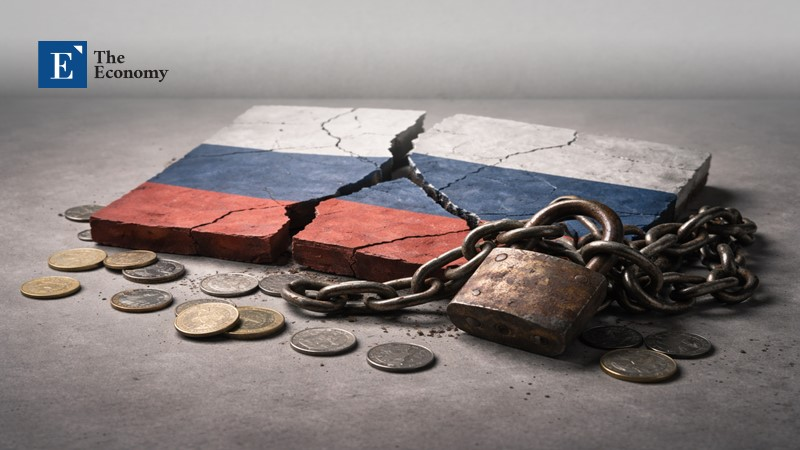
In February 2022, Western banks froze approximately $300 billion in Russian central bank reserves. This intervention had far-reaching consequences, reshaping incentives across numerous sectors, including industry, finance, and policy. The effects of the sanctions on Russia are not a fleeting event with a simple success-or-failure outcome for policymakers. Instead, they represent a long-term structural shift that disrupted established supply chains, increased the costs of external funding, and led to greater state involvement in allocating credit and overseeing production. These changes have not always translated into an immediate and dramatic decline in GDP. Rather, they have manifested as slower investment, higher operational costs, changes in educational programs, and shifts in migration patterns. It's crucial to shift our perspective. Instead of simply asking whether the sanctions are working right now, we must examine the extent of the damage and the time it will take to recover. This question is particularly vital for educators, administrators, and policymakers who will be responsible for reconstructing skills, networks, and institutions.
The effects of sanctions: Loss of Inputs and the Slow Decay of Industrial Capabilities
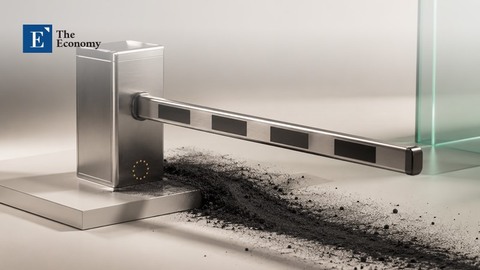
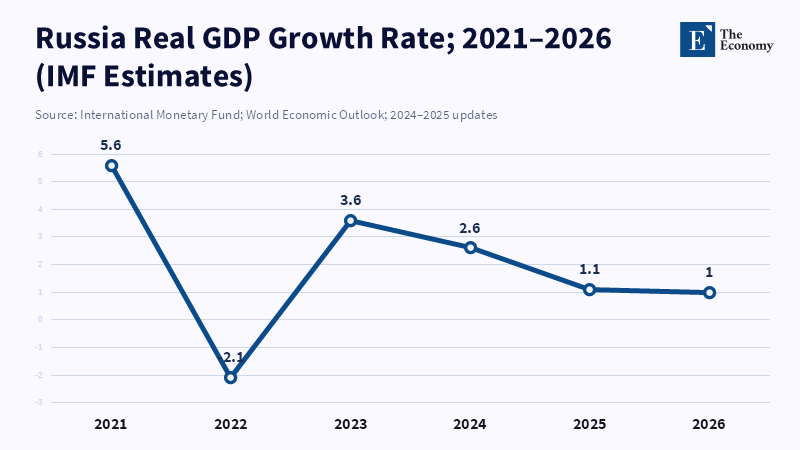
One of the most immediate ways that sanctions impact Russia is through the loss of vital inputs. High-precision machine tools, test benches, and advanced semiconductors are not just luxury goods; they are essential components of modern industry. Following the implementation of export controls and embargoes, official trade statistics and industry reports showed sharp reductions in the supply of these key items. While total trade figures can be useful, they can also be misleading. Despite the overall decline in imports, the drop in advanced technologies was even more drastic. While firms could continue to operate assembly lines, they were unable to upgrade them. They became increasingly reliant on older components, reworked spare parts, or unofficial suppliers. This shift has altered the nature of production. According to the Council of the European Union, Russia’s gross domestic product declined by 2.1% in 2022, reflecting the economic strain that has led to higher operational costs and shifted management's focus from innovation to basic survival. Investments in new product lines and research are being postponed or cancelled entirely. When the availability of advanced inputs is unstable, firms abandon long-term competitive strategies and focus on simpler activities that are easier to sustain. Over time, this simplification leads to reduced productivity and narrower economic opportunities.
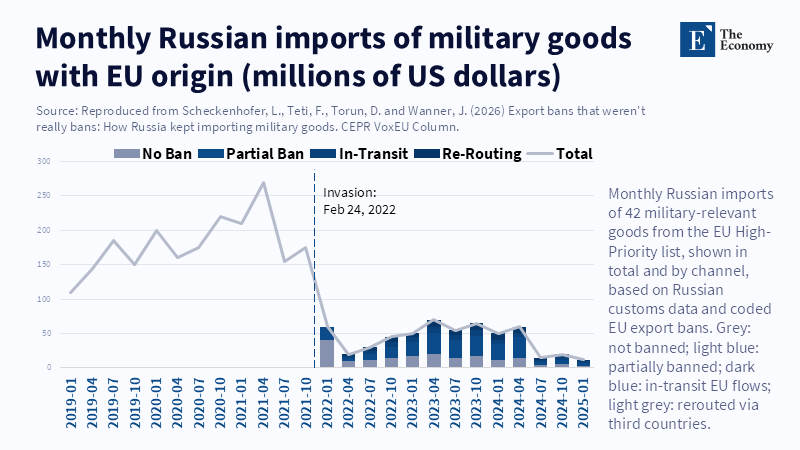
While finding other sources softened the initial blow, it did not eliminate the long-term harm. Parts and components from third-party countries have allowed factories to keep running to some degree. However, these alternative sources rarely provide the level of design assistance, after-sales service, and practical understanding that come with established partnerships. Data from industry sources and technical publications indicate that imports of name-brand CPUs and testing equipment have decreased significantly, while imports of replacements have increased. These replacements often come with longer delivery times and are less reliable. The end result isn't just a temporary dip in production; it's a fundamental change in the trajectory of industrial capacity. Reduced access to sophisticated production inputs translates to fewer opportunities for engineers to gain on-the-job experience, fewer opportunities to produce complex products, and a weaker network of suppliers to support high-value manufacturing growth in the years to come. This is why measures targeting inputs can have lasting effects across generations.
The effects of sanctions: Immobilized Capital, Fiscal Choices, and Limited Finance
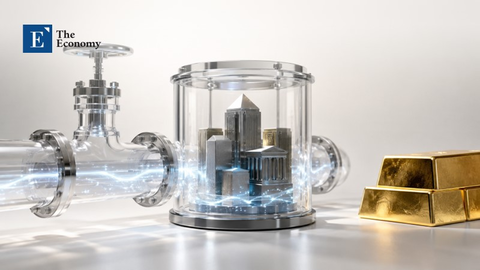
Sanctions have financial and material implications. Freezing substantial foreign reserves and increasing obstacles to correspondent banking have raised the cost and reduced the availability of external finance. These shifts affect both the cost of capital and its allocation. When there is less foreign money available, those in political power tend to steer limited domestic financial resources to firms that are strategically important or have close political connections. State-owned banks increase lending to favored industries, while private small and medium-sized businesses find it more difficult to borrow. While this political allocation of credit may help parts of the economy stay afloat in the short term, it can lower efficiency and reduce returns on private investment. According to People's Daily Online, President Putin stated that the government has ensured economic stability. However, beneath the surface, the distribution of lending and investment has shifted toward less productive uses.
Government financial responses have reinforced this pattern. In light of frozen assets and increasing defense spending, policymakers have directed funds towards local production and military supply chains. This decision has preserved immediate capacity in politically important areas. It has also reduced long-term public investments in transportation, higher education, and scientific research – all of which are key channels for technology and productivity growth. A government that prioritizes short-term stability over long-term investment creates a difficult financial situation. The cost of restoring skills and standards later is far greater than the cost of maintaining them now. In other words, the short-term stabilizing effect of directed government financial policy comes at a long-term cost that increases the time and expense of recovery.
The effects of sanctions: Skills, Emigration, and Generational Impact
The harm caused by sanctions extends beyond machines and money; it also affects people. Academic partnerships have been disrupted. Joint research projects and internships with foreign firms have slowed or stopped. As a result, students and young engineers have fewer chances to learn about the latest technologies and work alongside experts. According to a recent report by United24 Media, Russian universities are increasingly adapting their curricula to meet the demands of the country’s parallel economy, shaped by ongoing geopolitical isolation. Over time, this will produce a generation with less experience with global best practices.
Emigration compounds the issue. Faced with limited career prospects or restricted access to global networks, many skilled professionals have left the country or moved into fields less dependent on advanced supply chains. While those who emigrate may eventually come back, this depends on whether there is trust in institutions, mutual recognition of qualifications, and career opportunities back home. These conditions take time to re-establish. When a country loses skilled people, the loss is not simply a matter of numbers. It also means losing mentors, supervisors, and the practical knowledge needed to maintain complex systems. Therefore, rebuilding human capital requires more than just providing new equipment. It requires a sustained effort to restore training programs, certifications, and professional networks.
What Educators, Administrators, and Policymakers Must Do
If the harm caused by sanctions will take years to address, then the response must be patient and well-planned. Educators should prioritize teaching skills that can be applied across contexts and offer education structured in modules. This includes methods that can be used across different generations of hardware, such as simulation, software-based system design, diagnostics, and systems thinking. These skills are useful when the available hardware is constantly changing. For vocational training, focus on diagnosing problems, repairing equipment, and managing lifecycles rather than on a single machine model. Universities should create long-term partnership programs with planned exchanges and collaborative research, instead of simply providing equipment. This is how practical knowledge and trust can be restored.
Administrators and donors should focus on rebuilding the ability to absorb new knowledge before investing heavily in hardware. Accreditation, quality control, and standards are essential. Without confidence in certifications and degrees, employers will continue to devalue skills acquired locally. Scholarships should be designed as long-term investments. This could involve funding study abroad programs that require students to return to their home country for placements or establishing joint research positions that incorporate knowledge transfer. Policymakers should plan for a phased approach. Initially, they should support aligning regulations and mutual recognition of qualifications to allow trade and academic cooperation to resume on solid foundations. Later, they can expand training programs and joint centers of excellence. It is important to avoid the mistake of replacing all Western connections with a single geopolitical partner. A diverse network of partners promotes competition in ideas and keeps future options open.
Addressing Concerns
Some may point to short-term GDP stability or rapid replacement of goods through third-party countries as evidence that sanctions are not important. While these points may be valid to some extent, they do not tell the whole story. Favorable commodity prices and demand substitution can mask weaker capital formation and declining productivity. Substitution can reduce severe shortages, but it cannot replicate the important technology partnerships and management networks that are lost when reliable suppliers and joint research relationships are cut off. Seeing a temporary rise in GDP does not necessarily mean the economy's ability to innovate and sustain long-term growth has been fully restored.
The effects of sanctions are not a one-time event. They represent a gradual accumulation of changes, including lost inputs, restricted finance, altered government financial priorities, and reduced human capital. These changes build upon each other and interact. For educators and policymakers, the implications are clear: they must create long-term programs that rebuild institutions, trust, and people, rather than implementing short-term measures that provide equipment without training or standards. Educational programs must be modular; partnerships must be long-term; and funding must be patient. Recovery is expensive because allowing capabilities to diminish is costly. We must think of recovery as a decade-long project. We must plan for a phased reintegration, invest in the ability to absorb new knowledge, and keep channels open for professional exchange. This is the only practical way to turn the legacy of sanctions into an opportunity for lasting, inclusive recovery.
The views expressed in this article are those of the author(s) and do not necessarily reflect the official position of The Economy or its affiliates.
References
Demarais, A. (2024) Export controls on Russia might be working better than you think, Politico Europe, 24 June 2024.
Dometeit, G. (2025) Sanctions are not a strategy, diplo.news, 5 June 2025.
International Monetary Fund (IMF) (2024) Press release / staff country materials: Russia, International Monetary Fund, 2024.
Prokopenko, A. (2023) How sanctions have changed Russian economic policy, Carnegie Endowment for International Peace, April 2023.
Scheckenhofer, L., Teti, F., Torun, D. & Wanner, J. (2026) Export bans weren't really bans: How Russia kept importing military goods, CEPR / VoxEU, 24 February 2026.
Taylor, T. (2024) Economic Sanctions on Russia: Ineffective or Insufficient? The Conversable Economist, 16 August 2024.
Tom's Hardware (Morales, J.) (2025) Intel and AMD imports in Russia fell by up to 95% in 2024, but local companies disagree, Tom's Hardware, 24 May 2025.
World Bank (2024) Macro Poverty Outlook / Russia economic update, World Bank Group, October 2024.
European Parliamentary Research Service (EPRS) (2024) Legal options for confiscation of Russian state assets to support the reconstruction of Ukraine, EPRS, February 2024.
Erik Van der Meer examines how scientific knowledge is produced, validated, and institutionalized across disciplines. His writing explores the structure of modern science, the evolution of research norms, and the interaction between technology and scientific epistemology. He contributes reflective essays on science itself—bridging hard research and meta-level analysis.