AI Black Hole Triggers ‘Chipflation,’ Heralding the Era of $2,100 Laptops and $1,400 Smartphones

Authored On
Modified
AI ‘Black Hole’ Devours Memory, Driving Commodity DRAM to a ‘Supply Cliff’
Notebook Market Reels From Price Surge, “Today Is the Cheapest It Will Ever Be”
Structural Regime Shift, Supplier Dominance Set to Persist
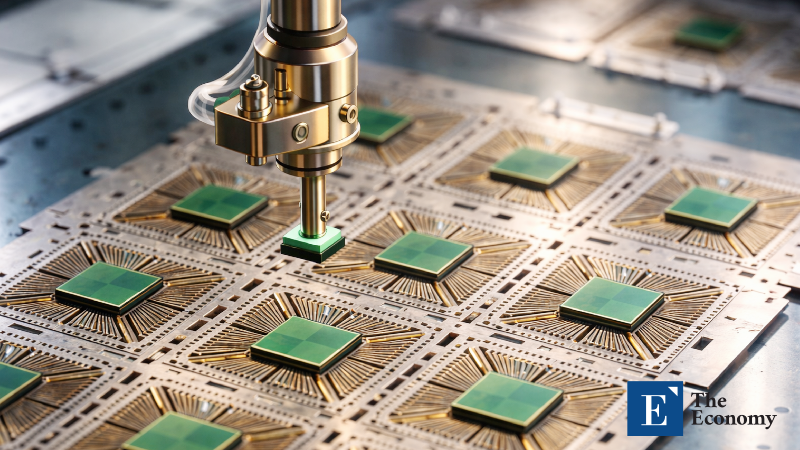
A surge in memory prices is rippling across the global information technology (IT) landscape. As demand for high-bandwidth memory (HBM) accelerates in tandem with the proliferation of artificial intelligence (AI), prices for commodity DRAM and NAND have spiked, feeding directly into higher retail prices for finished products such as notebooks, smartphones, and gaming consoles. The pass-through of elevated memory costs into end-product pricing signals that so-called “chipflation” is now in full swing.
Semiconductor Crunch Ushers in the ‘Gold Laptop’ Era
According to IT trade publications including TechRadar and CRN on the 25th (local time), Lenovo, the world’s largest PC manufacturer, has formally notified distribution partners that it will raise prices on select product lines beginning in March. Lenovo reportedly specified that only orders placed by February 28 will qualify for current pricing, and that even those orders will be subject to higher prices if shipments are not completed by March 31.
Wade McFarland, Lenovo’s Vice President for North America Channels, said the company regularly reviews pricing in response to shifting market conditions, describing the latest adjustment as unavoidable. As a result, anticipated launches such as the new gaming handheld “Legion Go 2” are increasingly likely to debut at higher-than-expected price points.
The primary driver behind the sharp rise in PC prices is memory. Surging demand for HBM used in AI chips has curtailed production of commodity memory for general electronics, directly fueling price escalation. The lowest available price for PC DRAM (Samsung Electronics DDR5-5600 16GB) climbed from $49 in September last year to $140 in December, and soared to $287 by the end of last month. NAND-based storage devices have followed suit. High-speed solid-state drives (SSDs) rose from $110 (Samsung 990 PRO 1TB) in September last year to $281, a 2.6-fold increase, while hard disk drives (HDDs) advanced from $136 (WD Blue 256MB) to $225 over the same period, up 1.7 times.
Beyond Lenovo, Dell is also set to implement price increases in the first half of this year. During an earnings conference call last November, Chief Operating Officer Jeff Clarke remarked that he had never witnessed input costs rising at such a pace, adding that there was no viable alternative but to pass the increases on to consumers. Dell has already raised prices on laptops equipped with 32GB of memory by $130 to $230 since mid-December last year, while 128GB configurations have seen increases of up to $765.
HP has likewise signaled that price hikes are inevitable. Chief Executive Officer Enrique Lores noted that memory chips account for 15% to 18% of PC production costs, indicating the likelihood of additional increases in the second half of this year. Asus implemented price adjustments starting on the 5th of last month. Modular notebook startup Framework has consecutively raised prices for both memory and storage components, warning that pricing pressures could persist for years. Samsung Electronics has also incorporated higher component costs into new product pricing. Its forthcoming “Galaxy Book6 Pro,” set for release on the 27th, carries a top-tier price of $2,470, up roughly $490 from its predecessor.
Smartphones and Game Consoles Join the Upward Spiral
Pricing pressures are spreading beyond the PC sector into the broader industry. U.S. IT outlet The Verge projected that smartphones priced around $500 this year could rise to $600. With memory accounting for 15% to 20% of smartphone manufacturing costs, elevated component prices are poised to translate directly into higher retail prices. Chinese manufacturers including Xiaomi, Oppo, Vivo, and Honor have already lifted prices on new models in response to mounting input costs.
Samsung Electronics has confirmed price increases for its Galaxy S26 series. The 256GB base model rose by $70 compared with its predecessor, while the 512GB version increased by $147 and the 1TB flagship model by $294. Specifically, the Galaxy S26 is priced at $881 for the 256GB model, the Plus variant at $1,020, and the Ultra at $1,262. The 512GB Ultra model is set at $1,441. Excluding the 1TB configuration, this marks the first time a 512GB model has surpassed the $1,400 threshold. The highest-priced model currently stands at $1,789 for the S26 Ultra 1TB.
The gaming industry has also been hit. Nintendo is reportedly struggling to secure sufficient DRAM and other components, limiting supply of the “Nintendo Switch 2.” Sony has delayed the launch of its next-generation console, the “PlayStation 6,” to 2027 or later. Given that the previously released “PS5 Pro” debuted at $776, significantly higher than the standard PS5 and faced consumer backlash, the delay is widely interpreted as a move to mitigate potential sales headwinds. Valve Corporation has postponed plans for a home gaming console and is reassessing its overall pricing strategy. The Verge noted that memory components are embedded in products ranging from smart refrigerators to hospital equipment and agricultural tractors, forecasting that virtually all memory-equipped goods will face higher prices.

Outlook for Smartphone and Notebook Market Slowdown Next Year
Industry experts expect chipflation to persist. While memory manufacturers are expanding capacity, the pace of expansion trails demand growth. Semiconductor fabrication facilities typically require years to construct, and companies lack strong incentives to accelerate investment at the risk of future oversupply. Senior executives have voiced concern. Intel Chief Executive Officer Lip-Bu Tan said in a recent Bloomberg interview that conditions are unlikely to improve before 2028. Phison Electronics Chief Executive Officer Pua Khein-Seng similarly warned that NAND shortages could continue for the next decade.
Additional factors are exacerbating supply imbalances. U.S.-based Micron has discontinued its consumer memory brand “Crucial” as of this month, pivoting its focus toward enterprise and AI customers, effectively removing one supplier from the consumer memory market. A semiconductor industry official observed that it remains difficult to gauge when AI infrastructure expansion will peak or when memory demand will begin to moderate.
Market observers anticipate that the memory crunch will dampen global smartphone and notebook demand next year. Research firm TrendForce revised its smartphone production growth forecast for next year from 0.1% to negative 2.0%, and cut its PC production outlook from 1.7% growth to negative 2.4%. The firm concluded that soaring memory prices are likely to feed into higher end-product prices and weigh on consumer demand. TrendForce estimates that if memory prices rise by more than 75% year-on-year in the fourth quarter, smartphone production costs could increase by 8% to 10%, while notebook prices may face upward pressure of 5% to 15%.
In response, IT hardware manufacturers including Apple are pre-purchasing DRAM and NAND supplies while discontinuing low-margin product lines to safeguard profitability. Nvidia and AMD are reportedly considering halting production of mid-range gaming graphics cards with high memory cost exposure. Taiwanese PC makers such as Asus are reviewing adjustments to per-unit memory configurations. TrendForce noted that manufacturers are likely to scale back low-margin entry-level products and maintain a broad-based pricing uptrend.
Similar Post