‘$10 Billion IPO Imminent’ Holtec Moves to Command the Global SMR Market with Gujarat as Its Strategic Hub

Stefan Schneider brings a dynamic energy to The Economy’s tech desk. With a background in data science, he covers AI, blockchain, and emerging technologies with a skeptical yet open mind. His investigative pieces expose the reality behind tech hype, making him a must-read for business leaders navigating the digital landscape.
Authored On
Modified
IPO Funding Within Reach as India Expansion Accelerates
India Declares End to 40-Year Ban on Private Nuclear Participation
Emerging Asian Economies Turn to SMRs Over Large-Scale Reactors
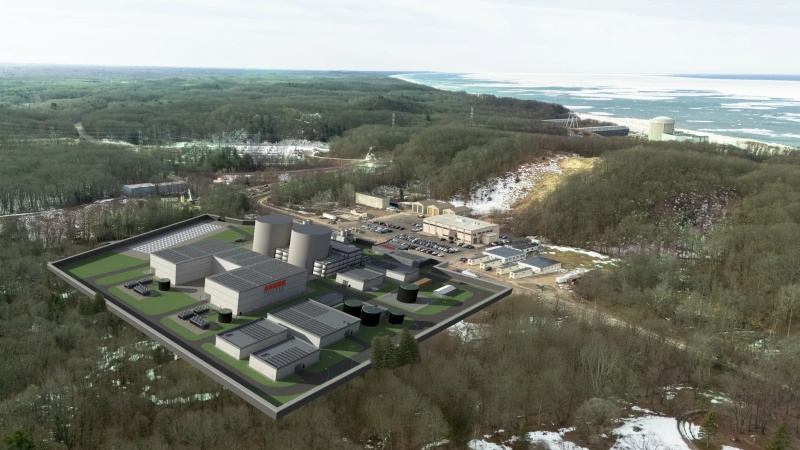
U.S.-based nuclear power company Holtec International has unveiled a large-scale project to manufacture 200 small modular reactors (SMRs) in India, signaling a potential reshaping of the global energy landscape. The plan, emerging as India dismantles its long-standing state monopoly over nuclear power generation, has drawn heightened attention as it coincides with Holtec’s anticipated public listing. India, alongside emerging economies such as Indonesia, is prioritizing SMRs as a pathway to energy independence, favoring their cost efficiency and shorter construction timelines over large-scale nuclear plants burdened by enormous capital costs and persistent schedule delays.
India Chosen as Global Launchpad
According to Indian media outlet ThePrint, Holtec International Chairman and Chief Executive Officer Kris Singh disclosed in a recent interview plans to establish a dedicated manufacturing facility in Gujarat state to produce 200 SMRs. Singh stated that the company aims to serve one-third of India’s 600 administrative districts and will soon begin discussions with the Atomic Energy Regulatory Board (AERB) to secure design approval for a 300-megawatt SMR. Holtec already operates a condenser manufacturing facility in Dahej, making the planned site its second production base in India.
Markets have focused on Holtec’s robust financial performance and its pursuit of an initial public offering. Earlier this month, the company confidentially filed for listing with the U.S. Securities and Exchange Commission (SEC), with its valuation currently estimated at more than $10 billion. Wall Street has characterized Holtec as a “game changer” in the nuclear industry, citing its technological capabilities, earnings track record, and policy backing. While most competitors have yet to generate meaningful revenue given the absence of operational SMRs in the United States, Holtec reported more than $500 million in revenue last year, demonstrating solid financial footing.
Singh plans to float approximately 20% of the company’s equity, channeling IPO proceeds into restarting nuclear plants in the United States and expanding global SMR construction. Holtec has made clear its long-term vision of developing India into a core manufacturing hub for Asia and the broader global supply chain. In March of last year, the company received approval from the U.S. Department of Energy (DOE) to share technical information with Indian entities including Tata Consulting Engineers and Larsen & Toubro (L&T). Holtec emphasized that adapting U.S. reactor designs for local production in India would enhance cost competitiveness and represent a mutually beneficial strategy for both countries.
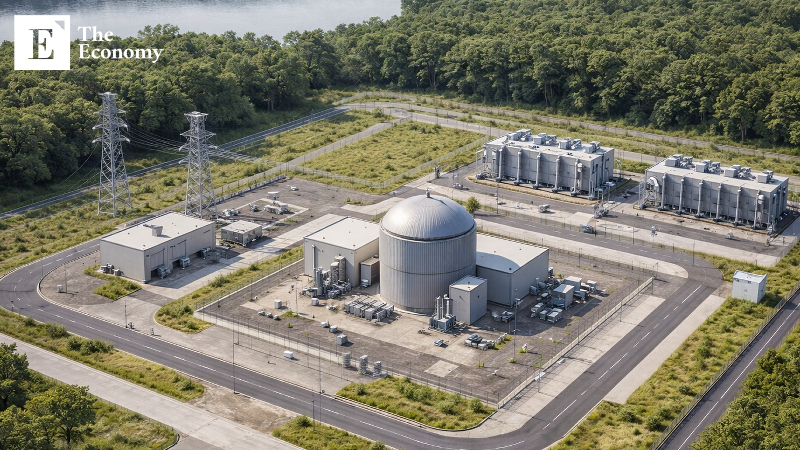
The project’s success hinges on overcoming India’s challenging environmental and technical conditions. Holtec aims to address concerns by leveraging proprietary technologies capable of operating safely in arid regions with limited water resources and in seismically active zones. Its flagship SMR-300 model offers an air-cooled condenser option rather than relying on water-based cooling, enabling deployment away from rivers or coastlines. A standardized seismic-resistant design will be applied nationwide to reduce construction time and costs. Holtec has also outlined plans to collaborate with leading institutions such as the Indian Institutes of Technology (IIT) to establish training programs and nuclear quality assurance systems, presenting a comprehensive infrastructure strategy.
Dismantling Barriers to Private Investment
Holtec’s initiative aligns with the Indian government’s recent decision to open the nuclear sector to private participation. On the 1st, Finance Minister Nirmala Sitharaman declared India’s intent to reduce fossil fuel dependence through nuclear power and formally announced plans to end the exclusive control of the Nuclear Power Corporation of India Limited (NPCIL). The policy forms part of a national strategy to expand nuclear capacity to 100 gigawatts by 2047, roughly twelve times current levels, requiring an estimated $214 billion in investment.
India has also pledged to amend its Civil Nuclear Liability Law, long viewed as the principal obstacle to foreign investment. Enacted after the 1984 Bhopal gas leak disaster, the law imposes unlimited liability not only on operators but also on equipment suppliers in the event of a nuclear accident. As a result, major global firms including GE Hitachi withdrew from the Indian market, while projects involving EDF and Westinghouse have remained stalled for years. The government’s move is widely interpreted as dismantling a four-decade institutional barrier to provide credible commercial momentum for overseas companies equipped with capital and technology.
India’s leading private conglomerates have responded swiftly. The Adani Group is discussing plans with the Uttar Pradesh state government to build eight 200-megawatt SMRs totaling 1.6 gigawatts. Reliance Industries, Tata Power, and JSW Energy have also signaled participation in the “Bharat SMR” initiative, intensifying competition to secure early market positions. Proposed amendments to the Atomic Energy Act currently under parliamentary review would provide a legal framework guaranteeing private-sector investment in nuclear generation.
Global technology giants’ entry into the SMR market has further accelerated India’s policy shift. Companies such as Google and Amazon are investing directly in SMRs to power their data centers, reinforcing external momentum for India’s nuclear liberalization. Anish De, global head of energy at KPMG, noted that expansion of nuclear power requires resolution of issues ranging from technology and fuel supply to safety, liability, and cost, and assessed the government’s clearer policy direction as a constructive step forward.
SMRs Emerge as a Pragmatic Alternative
India and rapidly growing Southeast Asian economies are prioritizing SMRs to avoid the immense financial burden associated with conventional large-scale nuclear reactors. Rather than committing to massive upfront capital expenditures and decade-long construction timelines, governments are opting to deploy multiple smaller, more affordable units to address electricity shortages while preserving fiscal stability. For emerging economies, SMRs represent an energy portfolio strategy that mitigates the systemic fiscal risks posed by failed mega-projects.
In terms of construction efficiency and capital recovery, SMRs hold a marked economic advantage. Prefabricated modular components manufactured off-site and assembled in the field can cut construction timelines by more than half relative to large reactors, substantially reducing financing costs. India’s decision to allocate 20 billion rupees—equivalent to approximately $219.8 million—to SMR research and development, alongside a target of commissioning five domestic models by 2033, reflects this urgency. The minimal civil engineering requirements of SMRs make them particularly suitable for remote regions in emerging markets with underdeveloped grid infrastructure.
Indonesia has likewise partnered with U.S.-based NuScale Power to construct two 250-megawatt SMRs in West Kalimantan province on Borneo Island. NuScale completed a feasibility study last year with Indonesia’s state utility PLN for deployment of its developing SMR design. Coordinating Minister for Economic Affairs Airlangga Hartarto stated that leading companies from both countries are conducting technical consultations and preliminary studies, and that once Indonesia secures legal safeguards—including ratification of international conventions on nuclear liability—it plans to advance to full-scale technology transfer and development.
Stefan Schneider brings a dynamic energy to The Economy’s tech desk. With a background in data science, he covers AI, blockchain, and emerging technologies with a skeptical yet open mind. His investigative pieces expose the reality behind tech hype, making him a must-read for business leaders navigating the digital landscape.
Similar Post