Israel Moves to Forge India-Centered ‘Hexagonal Alliance,’ Signaling Strategic Check on Iran Amid Rising War Clouds

Authored On
Modified
Israel Unveils ‘Hexagonal Alliance’ Blueprint, Seeking Security Realignment
New Cooperative Framework Aimed at Counterbalancing Iran, Deemed ‘Primary Security Threat’
Escalating U.S.-Iran Military Confrontation Fuels Fears of Full-Scale Conflict
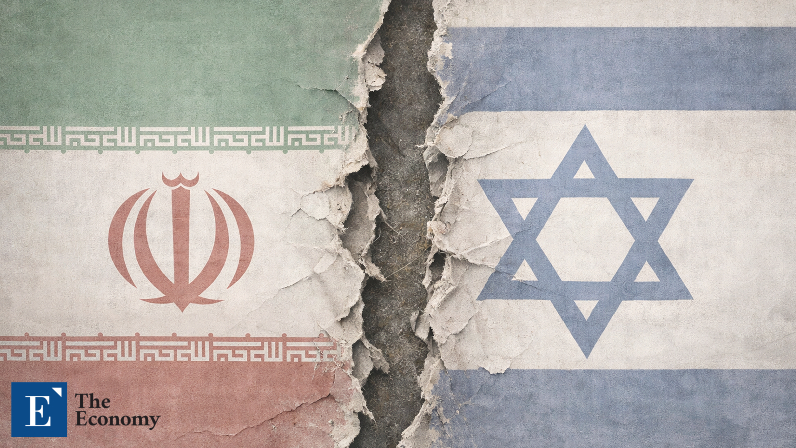
The security architecture of the Middle East is showing signs of realignment. Amid mounting skepticism across the region over U.S. security commitments, Israel has advanced a proposal to establish a new economic and security cooperation framework linking the Middle East, Asia and Europe with India at its core. The initiative is widely interpreted as a diplomatic and strategic countermeasure aimed at Iran, which has heightened international tensions through its ongoing military standoff with the United States.
Shifting Middle East Landscape
According to Indian outlet NDTV on the 25th (local time), Indian Prime Minister Narendra Modi began a two-day visit to Israel, where he is scheduled to hold summit talks with Israeli Prime Minister Benjamin Netanyahu. The two leaders are expected to discuss cooperation in advanced technology sectors and concrete implementation measures for the proposed “Hexagonal Alliance.” The envisioned bloc would connect India, Israel, Arab states, African nations, Mediterranean countries and select Asian partners in a vast strategic network.
Analysts caution that if Israel’s initiative materializes, it could intensify instability across the Middle East. Several months ago, discussions were already underway regarding the formation of a countervailing coalition aimed at containing Israel. In September last year, Lebanese daily Al-Akhbar and other regional outlets reported that Egypt had been expanding back-channel contacts with neighboring states to establish an integrated Arab force modeled on the North Atlantic Treaty Organization (NATO). Egypt was reportedly prepared to contribute 20,000 troops and assume command of the unified force, with Saudi Arabia or another Gulf state serving as deputy commander, alongside detailed operational planning.
Egypt’s apparent policy shift—despite its prior role as a mediator in the Israel-Palestine conflict alongside Qatar—appears linked to Israel’s military operations conducted in Qatar. On September 9 last year, Israel carried out an airstrike targeting a Hamas ceasefire negotiation delegation in Doha, Qatar’s capital. The strike was seen as undermining one of the region’s principal mediation platforms and destabilizing the ceasefire framework painstakingly built by Egypt.
Beyond these developments, regional states have been diversifying defense partnerships and accelerating efforts to craft a new security order. The Trump administration’s hardline, transactional foreign policy posture has fueled doubts about the reliability of U.S. security guarantees. Saudi Arabia recently signed a mutual defense pact with nuclear-armed Pakistan, while NATO member Türkiye has explored defense cooperation with both Saudi Arabia and Pakistan. The United Arab Emirates (UAE) is pursuing a multi-balancing strategy among India, China and other powers, while Oman and Qatar have assumed mediation roles in U.S.-Iran relations.
Sustained U.S.-Iran Military Standoff
Israel’s Hexagonal Alliance proposal forms part of this broader security recalibration and is widely viewed as a mechanism to counter Iran. Netanyahu has argued that the framework could serve not only as a backbone for the India-Middle East-Europe Economic Corridor (IMEC), but also as a formidable diplomatic and security instrument against Iran-aligned radical forces. From Israel’s perspective, Iran constitutes a clear and present danger. Tehran has accumulated highly enriched uranium and steadily advanced its nuclear capabilities, while cultivating an assertive regional posture through Iran-backed militant groups. Israel faces mounting security pressure stemming from Iran’s potential nuclear armament and sustained multi-front threats.
From the standpoint of Western governments, Iran’s nuclear ambitions represent a pivotal variable capable of destabilizing the Nuclear Non-Proliferation Treaty (NPT) regime. In response, the United States has recently concentrated its largest Middle East force deployment since the 2003 Iraq War to intensify pressure on Tehran in nuclear negotiations. Satellite imagery analyzed by Chinese commercial satellite firm MizarVision indicates that the United States has deployed EA-18G electronic warfare aircraft, F-35, F-22, F-15 and F-16 fighter jets, C-17 transport aircraft, KC-135 aerial refueling tankers and E-3C airborne early warning and control aircraft to the region. Two aircraft carrier strike groups—the USS Abraham Lincoln and the USS Gerald R. Ford—have also been deployed, alongside the installation of advanced Terminal High Altitude Area Defense (THAAD) systems and Patriot interceptor batteries in allied states to counter potential Iranian retaliation.
While Iran has expressed willingness to engage in negotiations under mounting U.S. pressure, it has not relinquished the option of military retaliation. Tehran has begun transitioning the country into a wartime posture in preparation for possible U.S. force deployment. According to The Wall Street Journal (WSJ) and The Telegraph, Iranian authorities have forward-deployed troops, decentralized command authority and intensified crackdowns on dissidents perceived as potential internal threats. The Islamic Revolutionary Guard Corps (IRGC) has revived a defensive strategy enabling frontline units to conduct autonomous operations and has forward-positioned its naval forces in the Strait of Hormuz.
Supreme Leader Ayatollah Ali Khamenei has reportedly designated potential successors—including Ali Larijani, Secretary of the Supreme National Security Council; Mohammad Ghalibaf, Speaker of Parliament; and former President Hassan Rouhani—in the event of his incapacitation. Senior government and military officials have also been instructed to designate up to four successors in their respective chains of command. The measures reflect Tehran’s acute awareness that a full-scale war with the United States could result in leadership decapitation and regime destabilization.
Iran’s Retaliation Scenarios
In the event of open hostilities, Iran’s primary retaliatory option would likely involve ballistic missile strikes. Should the United States initiate an attack, Tehran reportedly plans to target 13 U.S. military bases across the Middle East, including sites in Israel, Qatar, Bahrain and Saudi Arabia. The WSJ estimates that Iran possesses approximately 2,000 medium-range ballistic missiles capable of striking Israel and much of the broader region. These include the Khorramshahr-4 and Sejjil-2, each with a maximum range of 2,000 kilometers, and the Fattah-1 hypersonic missile, which has a reported range of 1,400 kilometers and travels at Mach 13 to 15, rendering interception highly challenging.
Concerns persist that Iran-aligned actors could conduct terrorist operations across Europe and the Middle East. Hezbollah in Lebanon, al-Qaeda or affiliated networks could potentially target U.S. embassies or military installations within European territory. The Telegraph reported that Iran has demonstrated the capability to operate proxy networks in Europe, noting that in May last year British authorities arrested five individuals, including four Iranian nationals, allegedly plotting an attack on the Israeli embassy in London. Additional risks stem from Iran-backed forces such as Yemen’s Houthi rebels, Hamas and Iraqi militias, which could escalate hostilities against Israel in alignment with Tehran’s strategic directives.
Some analysts foresee the possibility of a protracted war of attrition between Washington and Tehran. Iran could seek to close the Strait of Hormuz—through which roughly one-fifth of global oil shipments transit—as well as disrupt Red Sea shipping lanes, thereby driving up energy prices and exerting pressure on President Trump ahead of the November midterm elections. The strategy would mirror tactics employed by the Houthis last year, when persistent drone and missile attacks on U.S. forces and commercial vessels in the Red Sea generated economic strain.
As military tensions between the United States and Iran intensify, residents within Iran are reportedly gripped by anxiety over the prospect of full-scale war. Sara, a 53-year-old resident of Tehran, told The New York Times (NYT) on the 24th that she felt as though she was “going crazy,” expressing a desire for the uncertainty to end. Amir, a 42-year-old businessman, voiced deep apprehension, stating that it felt as though “there is no government,” and that the country must find a way to survive against what he described as the world’s most powerful military.
Similar Post