Trump Pressure vs. Joint Chiefs’ Concerns Collide as Full-Scale War with Iran Looms Over the Middle East

Stefan Schneider brings a dynamic energy to The Economy’s tech desk. With a background in data science, he covers AI, blockchain, and emerging technologies with a skeptical yet open mind. His investigative pieces expose the reality behind tech hype, making him a must-read for business leaders navigating the digital landscape.
Authored On
Modified
Chairman of the Joint Chiefs Warns of “Entrapment in a Prolonged War”
Oil Prices Surge on Risk of Hormuz Strait Closure
Low Likelihood of Russian or Chinese Military Intervention Deepens Iran’s Isolation
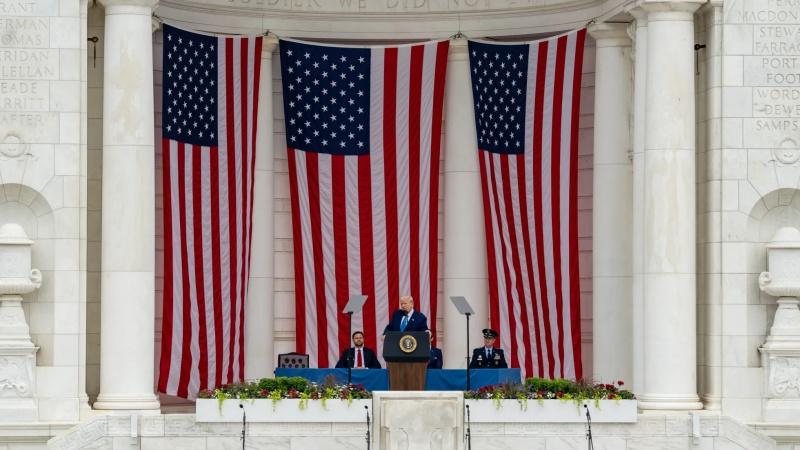
Military tensions between the United States and Iran have escalated sharply. As concerns over the prospect of a prolonged conflict surfaced within the U.S. military leadership, the partial evacuation of personnel from the U.S. Embassy in Lebanon signaled that the situation has entered a phase where the possibility of direct confrontation is openly discussed. Diplomatic observers assess that Russia and China are unlikely to intervene militarily and that, in the event of full-scale conflict, Iran’s range of viable countermeasures would be severely limited.
Military Leadership Pushes Back Amid Escalating Tensions
According to U.S. political outlet Axios, Chairman of the Joint Chiefs of Staff Gen. Dan Caine recently conveyed concerns to President Donald Trump regarding potential U.S. military action against Iran. Caine reportedly argued during a high-level White House meeting that military operations against Iran, unlike the situation in Venezuela, could result in significant U.S. casualties and carry the risk of entanglement in a prolonged conflict. The Wall Street Journal reported the same day that Caine and other senior Pentagon officials expressed concern that strikes on Iran could significantly deplete air defense missile stockpiles and strain U.S. troop resources.
Within the Department of Defense, there is a prevailing view that air defense missile inventories, already drawn down by support for Israel and Ukraine, may last only about two weeks at current levels of use. Senior military officials believe that if air defense assets are exhausted in responding to potential Iranian missile attacks, the United States’ defensive posture against other adversaries, including China, could be compromised. The Wall Street Journal noted that Caine also highlighted the reluctance of certain Middle Eastern allies to grant airspace access for strikes on Iran as an additional operational constraint.
Caine previously earned President Trump’s confidence by leading last June’s strike on Iranian nuclear facilities and the January operation targeting Venezuelan President Nicolás Maduro. His more cautious stance on Iran, despite a record of assertive external operations, has fueled analysis that internal military assessments diverge from the president’s inclinations. President Trump dismissed the reports as “100% wrong,” asserting that military leaders agree the United States would prevail decisively if a final decision on military action were made, underscoring his authority as commander in chief.
Meanwhile, tensions have intensified on the diplomatic front. The U.S. Embassy in Beirut evacuated approximately 50 personnel, including 32 local staff members, the previous day. Non-essential diplomats and their families were ordered to depart, described as a measure taken following an assessment of the regional security environment. At the same time, the deployment of two U.S. aircraft carrier strike groups, 18 F-35 fighter jets, 17 F-15 fighter jets, and eight A-10 attack aircraft to the region has further heightened military tensions. Iran warned that any attack, regardless of scale, would constitute an act of aggression, signaling that the prospect of confrontation remains open.
Energy Supply Shock Becomes Visible
As the possibility of full-scale conflict in the Middle East has grown, global oil markets have reacted swiftly. On the 23rd, West Texas Intermediate crude on the New York Mercantile Exchange (NYMEX) rose 0.26% to settle at $66.48 per barrel. Brent crude on the London ICE Futures Exchange gained 0.10% to $71.56 per barrel. These represent the highest levels in roughly six months since the second half of last year, suggesting that market participants have begun pricing in geopolitical risk.
Market attention has centered on the potential closure of the Strait of Hormuz, through which approximately 20% of global oil shipments pass. A disruption there could trigger immediate supply constraints. Some analysts have warned that in the event of actual hostilities, oil prices could climb toward $100 per barrel. The prospect of a “second oil shock” reflects concerns not only over physical supply disruptions but also rising maritime insurance costs and shipping delays, implying both a psychological risk premium and tangible supply-side impacts.
The ramifications of higher oil prices extend beyond the energy sector. Should prices exceed levels absorbable by markets, industries with heavy fuel cost exposure—including refining, petrochemicals, aviation, and shipping—would face direct pressure on cost structures. That would compress corporate margins and ultimately feed through to consumer prices, intensifying inflationary pressures. Expectations regarding the path of interest rates could also shift. Energy-driven inflation raises the likelihood of sustained or tightened monetary policy, with cascading effects on bond yields, exchange rates, and equity market volatility. The surge in oil prices triggered by the prospect of U.S.-Iran conflict thus functions as a macroeconomic variable influencing global financial markets.
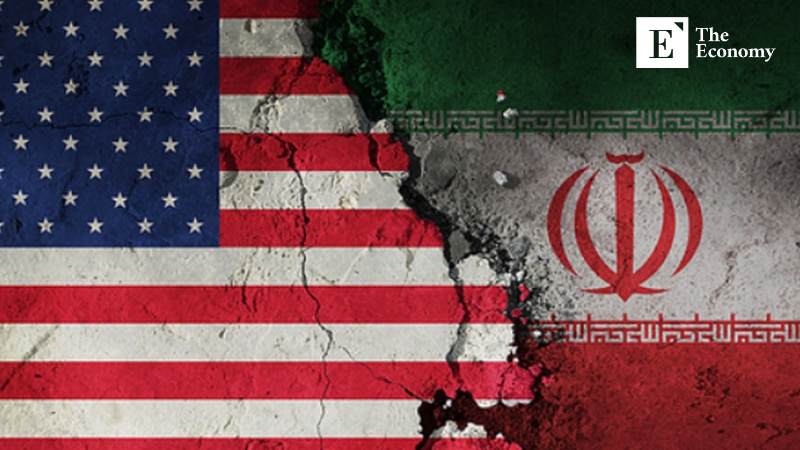
Gap Between Diplomatic Support and Military Intervention
Should a full-scale war scenario materialize, Iran’s strategic options would be limited. Despite adversarial relations with the United States and traditional ties with China and Russia, substantive military intervention from either power appears unlikely. On the 19th, Russia conducted a small-scale naval drill with Iran in the Gulf of Oman and the northern Indian Ocean, and a trilateral exercise involving China in the Strait of Hormuz is reportedly forthcoming. However, these measures are widely viewed as symbolic when compared with the deployment of two U.S. carrier strike groups and substantial air power.
Russia has supplied Iran with S-300 air defense systems and electronic warfare equipment, but with the Ukraine war ongoing, Moscow’s capacity to risk further direct confrontation with Washington remains constrained. While Iran is regarded as a strategic partner in the Middle East, analysts assess that it does not rank high enough in Russian priorities to justify direct military engagement with the United States. China, the largest importer of Iranian oil and a supplier of missile components in recent years, must simultaneously manage its relationship with Washington and the Taiwan Strait issue.
Alexander Palmer, a researcher at the Center for Strategic and International Studies (CSIS), stated that China and Russia lack sufficient strategic interest to go to war with the United States on Iran’s behalf. He noted that the advanced weapons and technological assistance sought by Iran’s Islamic Revolutionary Guard Corps (IRGC) have remained largely symbolic. Without meaningful external military backing, Iran would likely rely on its own capabilities and regional non-state actor networks for asymmetric responses. Even so, the intensity and scope of such responses would depend on the level of regional military tension and the trajectory of nuclear negotiations. Diplomatic observers broadly conclude that Iran’s viable strategic choices are effectively constrained.
Stefan Schneider brings a dynamic energy to The Economy’s tech desk. With a background in data science, he covers AI, blockchain, and emerging technologies with a skeptical yet open mind. His investigative pieces expose the reality behind tech hype, making him a must-read for business leaders navigating the digital landscape.
Similar Post