Global Supply Shortfall Triggers Rare Earth Shock, Nations Accelerate Supply Chain Realignment

As one of the youngest members of the team, Tyler Hansbrough is a rising star in financial journalism. His fresh perspective and analytical approach bring a modern edge to business reporting. Whether he’s covering stock market trends or dissecting corporate earnings, his sharp insights resonate with the new generation of investors.
Authored On
Modified
U.S. Aerospace and Semiconductor Sectors Hit by China’s Export Controls
Washington Moves to Rebuild Rare Earth Supply Chain Through Trade Blocs and Strategic Stockpiles
Global Momentum Builds for Rare Earth Diversification Beyond China
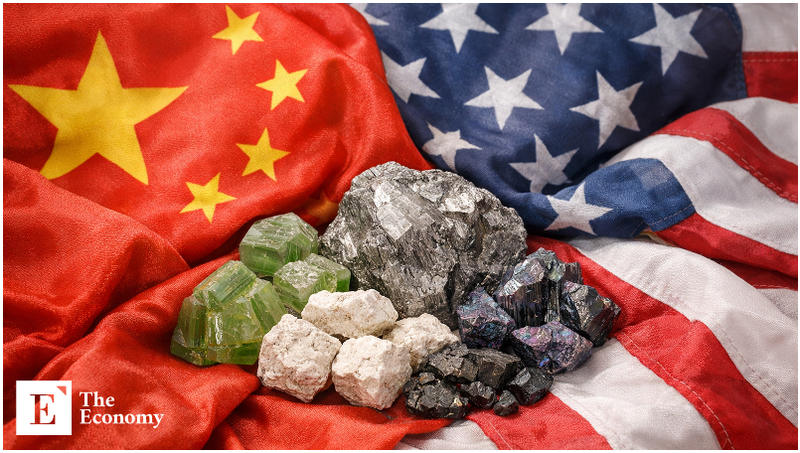
U.S. aerospace and semiconductor manufacturers are grappling with mounting disruptions in rare earth procurement. China, which dominates the global rare earth supply chain, has tightened export controls, leading to acute shortages of key materials such as yttrium and scandium. As Beijing’s weaponization of critical minerals sends shockwaves across industrial sectors, the United States and other major economies are accelerating efforts to restructure their rare earth supply networks.
U.S. Industry Reeling from China’s Resource Leverage
According to Reuters on the 25th, U.S. aerospace companies have recently encountered significant bottlenecks in parts procurement. Engine manufacturers are reportedly struggling to secure sufficient yttrium supplies, impairing their ability to meet airline demand as well as production ramp-up requirements from Boeing and Airbus. Yttrium is essential for high-temperature coatings that prevent engines and turbines from melting under extreme operating conditions; without regular yttrium-based coatings, engine deployment is effectively unviable. One U.S. coating company told Reuters that it has been forced to turn away smaller and overseas clients, prioritizing large-scale customers due to constrained yttrium availability. Another firm has reportedly suspended sales of products containing yttrium oxide.
The semiconductor industry is similarly contending with scandium shortages. Scandium is an exceptionally rare metal, with global annual output limited to only several dozen tons, yet it plays a pivotal role in advanced semiconductor fabrication and packaging processes. Dylan Patel, founder of U.S.-based semiconductor research firm SemiAnalysis, stated that leading U.S. chipmakers are effectively reliant on scandium to manufacture virtually all semiconductor components used in 5G smartphones and base stations. He added that the United States currently produces no domestic scandium and lacks viable alternative suppliers outside China, warning that existing inventories are likely sufficient for only months rather than years.
The root of the disruption lies in China’s overwhelming dominance in yttrium and scandium production. Last April, Beijing imposed rare earth export controls in response to tariff measures introduced by President Donald Trump. Although shipments partially resumed as bilateral trade tensions eased, export volumes of yttrium and scandium have yet to recover. Reuters reported that in the eight months following China’s export restrictions, U.S.-bound yttrium shipments totaled just 17 tons, a sharp decline from 333 tons during the eight months preceding the controls.
Washington’s Supply Chain Stabilization Drive
China’s ability to exert leverage over the rare earth market stems from its commanding market share. China accounts for 90% of global rare earth refining and separation capacity, including oxide production, and controls 93% of the permanent magnet manufacturing market, the final stage of the rare earth value chain. Even rare earth minerals mined outside China are frequently shipped there for processing before being re-exported worldwide. The concentration of refining and processing capacity has created a scenario in which any disruption or strategic restriction by Beijing reverberates across global industries.
In response, the United States is intensifying efforts to realign supply chains away from China-centric networks. A central initiative involves building a critical minerals trade bloc anchored by allied nations. Earlier this month, Interior Secretary Doug Burgum stated at an event hosted by the Center for Strategic and International Studies that the Trump administration is in the process of forming a “club of nations” to reinforce critical mineral supply chains. Burgum disclosed that five bilateral agreements have already been concluded with participating countries, with up to eleven additional accords expected. He further noted that approximately twenty countries have expressed interest in joining the trade bloc framework.
The administration is also advancing “Project Vault,” a public-private initiative designed to stockpile more than 50 critical minerals, including rare earths, lithium, and cobalt. The U.S. Export-Import Bank plans to provide $10 billion in loans for the project, while private-sector participants are set to contribute $1.67 billion in equity investment. More than ten companies, including Alphabet, General Motors, Boeing, and Corning, have pledged participation. The stockpiled materials are intended to cushion manufacturers in the automotive, electronics, and other industrial sectors against future supply disruptions.
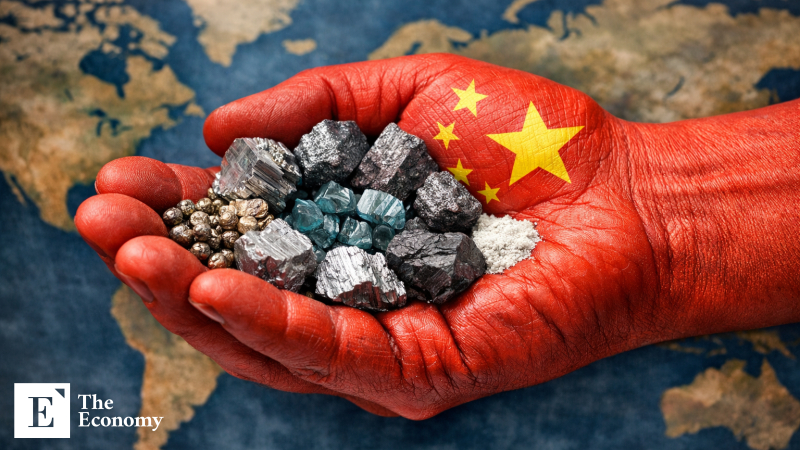
Global Push for Rare Earth Diversification
Efforts to reduce dependence on China are gaining traction beyond the United States. Japan has secured partial rare earth supplies from Australian producer Lynas and recently succeeded in pilot extraction of rare earth-rich mud from deep-sea deposits near Minamitorishima Island, southeast of the Japanese archipelago. Beginning this summer, Japan plans to launch demonstration projects to recover rare earth elements from discarded motors and other electronic waste. The Ministry of the Environment will subsidize transportation and storage operations for waste motors and electronic substrates, as well as support facility investments to promote recycling. Funding of approximately $400 million has already been incorporated into the government’s fiscal 2026 budget, covering April 2026 through March 2027.
International coordination on rare earth supply chains is also expanding. Indonesia recently agreed, under a trade arrangement with the United States, to eliminate non-tariff barriers on U.S. goods and lift export restrictions on critical minerals and other industrial raw materials destined for the United States. The removal of export constraints is viewed as a prerequisite for integrating Indonesia—home to substantial rare earth potential—into a broader trade bloc framework. The United States will maintain a 19% reciprocal tariff on Indonesian products while granting duty-free treatment to selected items, including palm oil.
Australia has likewise deepened cooperation with Washington. Last October, the two countries signed an agreement to strengthen rare earth and critical mineral supply chains. Under the accord, each side will invest $1 billion over the next six months in mining and refining projects and establish price floors for critical minerals. Australia, one of the world’s leading critical mineral producers, has emerged as a key partner in U.S. supply chain diversification efforts. According to the U.S. Geological Survey, Australia’s rare earth reserves were estimated at approximately 104.2 million tons as of 2022, ranking third globally behind China and Russia and accounting for 8.1% of worldwide reserves.
As one of the youngest members of the team, Tyler Hansbrough is a rising star in financial journalism. His fresh perspective and analytical approach bring a modern edge to business reporting. Whether he’s covering stock market trends or dissecting corporate earnings, his sharp insights resonate with the new generation of investors.
Similar Post