[U.S.–Iran War] Hormuz Strait Blockade Slams Global Supply Chains, Prolonged Conflict Seen Paving the Way for Global Stagflation

As one of the youngest members of the team, Tyler Hansbrough is a rising star in financial journalism. His fresh perspective and analytical approach bring a modern edge to business reporting. Whether he’s covering stock market trends or dissecting corporate earnings, his sharp insights resonate with the new generation of investors.
Authored On
Modified
Hormuz Strait effectively blocked amid U.S.–Iran war
Surging maritime and air freight rates rattle global industrial supply chains
Prolonged war expected to trigger worldwide stagflation
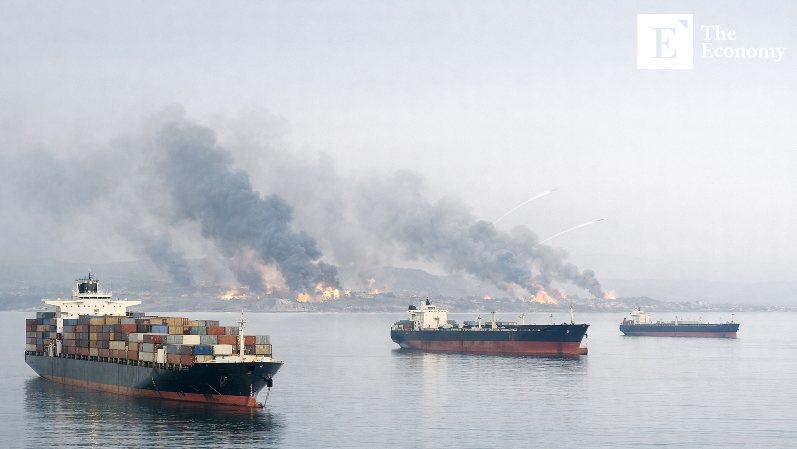
Geopolitical risk emanating from the Middle East has plunged global industry into turmoil. As maritime freight rates and oil prices surge in tandem, supply chains across numerous industries—including key manufacturing pillars such as pharmaceuticals, chemicals, and semiconductors—are showing signs of severe disruption. Market participants are increasingly voicing pessimistic projections that if the war drags on for an extended period, persistently high energy prices could become entrenched, potentially triggering a full-fledged global stagflation crisis.
Surging global maritime freight rates
According to the shipping industry on the 5th, the regional situation in the Middle East has deteriorated rapidly since the United States and Israel launched airstrikes against Iran on the 28th of last month (local time). Iran’s elite Revolutionary Guard (IRGC) warned immediately after the attack that it would “burn every vessel passing through the strait,” threatening to target ships attempting to transit the Strait of Hormuz, the Middle East’s most critical oil shipping corridor.
Amid Iran’s threats, shipping companies worldwide are increasingly shifting to alternative routes. China Ocean Shipping (COSCO) has suspended new bookings for routes serving Gulf ports in the United Arab Emirates (UAE), Bahrain, Saudi Arabia, Iraq, and Kuwait. Major global carriers such as CMA CGM and Maersk have halted Red Sea operations and rerouted vessels around South Africa. As a result, the estimated average spot rate for very large crude carriers (VLCCs)—the price paid for cargoes scheduled to be loaded shortly after contract signing—surged to $350,000 per day as of the 3rd. The daily rate for a VLCC traveling from the Middle East to China jumped from several tens of thousands of dollars under normal conditions to more than $400,000 this week.
However, these figures remain indicative asking prices circulating in the market. Industry sources say that since the weekend airstrikes by the United States and Israel on Iran, almost no actual shipping contracts for voyages through the Strait of Hormuz have been concluded. Even so, freight quotes continue rising as shipowners hold back vessels while monitoring the evolution of the conflict or delay contracts in anticipation of higher prices.
Worsening vessel availability driven by longer sailing distances is also pushing freight rates higher. If shippers fail to secure Middle Eastern crude and instead turn to more distant sources, vessel travel distances increase substantially, extending voyage times. In practical terms, the pool of ships available for immediate deployment in the market shrinks sharply. At the same time, an increasing number of traders unable to find ports to discharge crude are using tankers as floating storage, further tightening vessel supply.
Another complication is that a large share of the world’s container ships is caught in the turmoil around the Strait of Hormuz. Jeremy Nixon, chief executive officer (CEO) of Ocean Network Express (ONE), the world’s sixth-largest container shipping company, said at a shipping conference in Long Beach on the 2nd that about 100 of the roughly 750 vessels currently waiting near the Strait of Hormuz are container ships. “Around 10% of the global container fleet is there,” he said, warning that cargo could begin piling up at major hub ports in Europe and Asia. If container ship movements remain restricted and port congestion intensifies, freight rates are likely to climb further.
Air freight rates are also expected to rise alongside maritime transport costs. The war has disrupted air cargo flows across the Middle East, a crucial freight corridor linking Asia and Europe. Iranian retaliatory missile attacks have made it difficult to use major transshipment hubs such as Dubai, Abu Dhabi, and Qatar, forcing airlines to suspend flights or reroute aircraft around conflict zones. Longer detours require additional fuel consumption and often reduce cargo capacity to comply with aircraft weight limits, both of which push freight rates higher.
Sharp rise in uncertainty across industries
Outside the shipping and aviation sectors, alarm signals are spreading across multiple industries. Rising freight costs and oil prices are amplifying the risk of profit deterioration. The construction sector is widely viewed as one of the hardest-hit industries. On the 2nd, Brent crude prices surged to $82 per barrel, the highest level in about a year, while West Texas Intermediate (WTI) climbed above $70 per barrel. Overall, international oil prices jumped roughly 10% that day. The spike followed Iranian attacks that halted operations at major Saudi refining facilities and forced the closure of Qatar’s Ras Laffan LNG production complex, disrupting regional energy supply. For the construction industry—where energy and transportation costs account for a large share of project expenses—the burden of rising input costs is expected to increase significantly.
High-tech industries are also grappling with severe disruptions. Deliveries of electronics and semiconductor products manufactured in Asia are being delayed, while the blockage of air cargo routes has heightened uncertainty surrounding delivery schedules for high-value components. Automakers have begun urgently readjusting procurement timelines for critical parts and raw materials. Production plans are also being affected for sectors dependent on intricate global division-of-labor systems, including batteries and electronic components. Items particularly vulnerable to shipping delays—such as semiconductors for servers and telecommunications equipment, memory chips, printed circuit boards and IC substrates, power semiconductors, and sensors—have suffered especially severe impacts, as delivery disruptions can immediately halt production lines.
Core manufacturing sectors including pharmaceuticals and chemicals are also being drawn into the crisis. In the pharmaceutical industry, not only finished drugs but also active pharmaceutical ingredients (APIs), intermediates, and packaging materials such as blister films, aluminum foil, vials, and rubber stoppers are emerging as vulnerable bottlenecks. For biologic drugs and certain vaccines that require refrigerated or frozen transport, disruptions to shipping schedules can increase costs related to cold-chain recertification and repackaging, while also triggering competition to secure substitute supplies during distribution. In the chemical sector, soaring prices for feedstocks such as naphtha and liquefied petroleum gas (LPG) are forcing producers to absorb higher costs for most products, including basic petrochemicals such as ethylene and propylene.
Global economy facing mounting risks
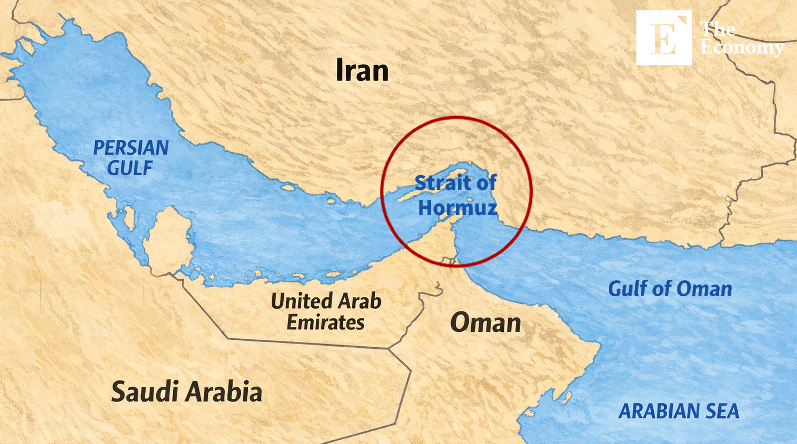
If the war drags on, the crisis is expected to intensify further. A paralysis of shipping routes near the Persian Gulf would likely deliver a massive shock to the global economy. Often referred to as the “heart of the world’s energy supply,” the Persian Gulf is a narrow inland sea located between the Arabian Peninsula and the Iranian Plateau and serves as a strategic waterway linking the Indian Ocean and the Arabian Sea. According to the Organization of the Petroleum Exporting Countries (OPEC), more than half of the world’s proven oil reserves are concentrated in the Persian Gulf. Roughly one-third of global oil production and more than 40% of oil exports originate from the region, where major producers—including Saudi Arabia, Iran, Iraq, Kuwait, the UAE, and Qatar—line the coastline. The region also holds around 40% of global natural gas reserves.
Within this area, the Strait of Hormuz stands out as a critical chokepoint for global energy security. The strait is only about 21 miles wide at its narrowest point, while the shipping lane through which very large tankers can pass measures barely two miles across. Most oil and gas export vessels from major Middle Eastern producers must transit this strait when heading toward the Indian Ocean. Approximately 20% of the world’s seaborne oil shipments pass through the Strait of Hormuz, and roughly 80% of that oil ultimately flows to Asia.
If the war continues, uncertainty surrounding the Persian Gulf and the Strait of Hormuz will intensify further. In practical terms, this suggests that international oil prices could continue rising steadily. Some analysts even warn that if the conflict does not end quickly, crude prices could surpass $100 per barrel. The Asahi Shimbun has also suggested that if the blockade of the Strait of Hormuz is resolved quickly, the economic impact would remain limited, but a prolonged disruption could trigger simultaneous inflation and economic slowdown across multiple countries. Persistent high oil prices would significantly heighten the risk of a global stagflation crisis—rising inflation coupled with economic stagnation.
As one of the youngest members of the team, Tyler Hansbrough is a rising star in financial journalism. His fresh perspective and analytical approach bring a modern edge to business reporting. Whether he’s covering stock market trends or dissecting corporate earnings, his sharp insights resonate with the new generation of investors.
Similar Post