[U.S.–Iran War] Prospects of Protracted Conflict as Washington and Tehran Maintain Hardline Stances Despite Mounting Costs, Both Sides Reject Negotiation

Authored On
Modified
Rising Burden on U.S. Military in a Prolonged War Scenario
Entrenched Resolve for a Long Fight as Iran Moves Toward Leadership Succession
Parallel Rejection of Diplomacy Raises Prospect of Attritional Conflict
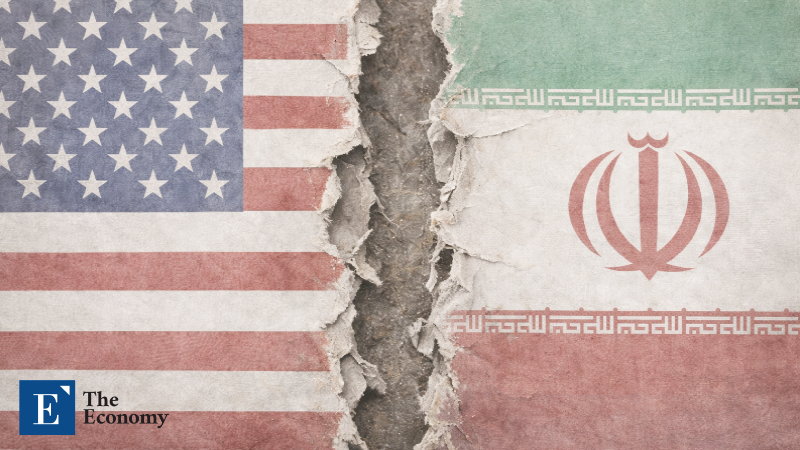
Analysts warn that a prolonged war between the United States and Iran could rapidly intensify military and fiscal risks for Washington. As the U.S. military faces mounting logistical constraints, including difficulties in sustaining aerial refueling operations, the costs of intercepting Iran’s expanding drone attacks are also escalating sharply. Despite these pressures, the United States has continued to signal readiness for an extended conflict, maintaining a hardline posture. Iran, for its part, has firmly dismissed emerging speculation about possible negotiations and is pressing ahead with a wartime footing.
U.S. Military Confronts Logistics and Cost Constraints
Breaking Defense, a defense and national security outlet, reported on the 3rd (local time) that U.S. forces conducting “Operation Epic Fury” in Iran have encountered logistical challenges exceeding initial expectations. The issue extends beyond simple ammunition stockpile concerns. According to the report, aerial refueling tanker assets—critical for ensuring the operational range of transport aircraft and fighter jets delivering supplies to the battlefield—are approaching capacity limits. At a recent event hosted by the Mitchell Institute, U.S. Air Force Central Command Major Claire Randolph reportedly stated that if forced to identify the top 100 urgent supply priorities, aerial refueling tankers would be unequivocally at the top of the list, underscoring that shortages in logistical assets represent one of the most significant vulnerabilities in modern warfare.
The financial burden borne by the U.S. military is also substantial. Türkiye’s state-run Anadolu Agency estimated that the military cost incurred during the first 24 hours after Washington launched attacks on Iran reached approximately $779.17 million (about $831 million). This amount represents roughly 0.1% of the United States’ 2026 defense budget of about $1 trillion. According to U.S. Central Command (CENTCOM), which oversees operations in the Middle East, the campaign has deployed a broad array of key air assets, including B-2 stealth bombers, F-22, F-35 and F-16 fighter jets, A-10 attack aircraft, and EA-18G electronic warfare planes. The operation has also utilized MQ-9 Reaper drones, nuclear-powered aircraft carriers, guided-missile destroyers, and missile defense systems such as Patriot and the Terminal High Altitude Area Defense (THAAD) system.
The conflict has since evolved into a form of attritional warfare centered on drones and interception missiles. Iran has in recent days launched domestically produced Shahed-136 one-way attack drones and small cruise missiles targeting U.S. bases, oil infrastructure, and civilian facilities across the Middle East. The United States is intercepting more than 90% of Iranian drones and ballistic missiles using Patriot air defense systems. Questions remain, however, over how sustainable this strategy may prove. A Shahed-136 drone costs roughly $20,000 per unit, while the interceptor missiles used by the United States cost close to $4 million each.
U.S. President Donald Trump has nonetheless rejected concerns about these operational constraints. In a post on the social media platform Truth Social on the 3rd, Trump wrote that a Wall Street Journal (WSJ) report was “wrong and disgraceful.” The WSJ had reported on the 2nd that the United States could face difficulties sustaining a prolonged conflict due to ammunition stockpile shortages. Trump responded that U.S. intermediate- and high-grade ammunition reserves have never been stronger, adding that the country can effectively supply such weapons without limitation. He emphasized that existing stockpiles alone would allow the United States to wage the war indefinitely and with great success.
Selection of Mojtaba as Successor in Iran
Iran has likewise shown no sign of retreating from its long-term war posture. According to Iran’s state news agency IRNA, Reza Talaei-Nik, spokesperson for Iran’s Ministry of Defense, stated at a press briefing on the 3rd that Iran has the capability to resist longer than its adversaries anticipate and to continue an offensive defense in what he described as an imposed war. He added that Iran has no intention of deploying all of its advanced weapons and equipment within the first few days of fighting. Ali Larijani, secretary of Iran’s Supreme National Security Council overseeing the country’s military and security sectors, also stated on the 1st that Iran has been preparing for a prolonged conflict.
Reports have also emerged that Mojtaba Khamenei, the second son of Supreme Leader Ali Khamenei who was killed in a U.S. airstrike, has been selected as the next supreme leader. Iran International, an opposition-aligned media outlet, reported on the 2nd citing anonymous sources that the Assembly of Experts—the constitutional body responsible for appointing Iran’s supreme leader—has chosen Mojtaba Khamenei as the successor. Iran’s state media have not reported the development, and Iranian authorities have made no official announcement. According to the New York Times (NYT), some members of the Assembly of Experts fear that publicly declaring Mojtaba as the successor could make him a direct target for the United States or Israel.
Mojtaba has long aligned with Iran’s hardline conservative establishment, much like his late father. He has supported policies aimed at suppressing domestic opposition and responding forcefully to external adversaries. He is also known to maintain close ties with the Islamic Revolutionary Guard Corps (IRGC) and is believed to have exercised considerable influence over Iran’s military and security apparatus. According to reports, the IRGC strongly advocated for his appointment, arguing that Mojtaba possesses the leadership credentials necessary to guide Iran through the current crisis.
Mutual Rejection of Negotiation
Iran’s continued hardline stance is also underpinned by its substantial weapons stockpiles. On the 2nd, the IRGC released footage through state media showing a vast underground weapons tunnel. The video displayed rows of triangular-shaped drones lined up in a single direction, believed to be Shahed-136 drones, a core component of Iran’s strike capability. Numerous missiles positioned in a ready state were also visible within the tunnel. Iran maintains a diverse missile arsenal, including the Shahab-1 with a range of approximately 300 kilometers and the Soumar cruise missile capable of striking targets up to 2,500 kilometers away. Iran is estimated to possess between 2,000 and 3,000 medium-range ballistic missiles, while roughly 40,000 U.S. troops stationed across the Middle East remain within range of Iranian missile systems.
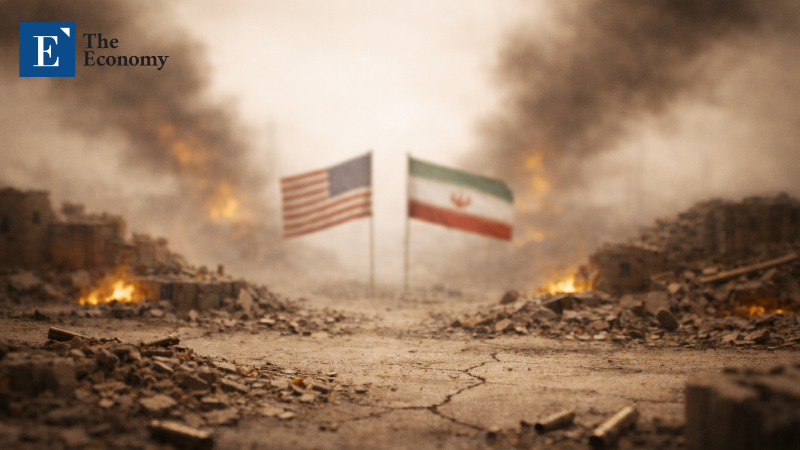
With both sides showing little willingness to compromise, the prospect of a prolonged conflict raises the likelihood of significant casualties and economic damage. Some analysts suggest that Iran may still be exploring back-channel diplomatic options even while maintaining open hostilities. On the 4th, the New York Times reported, citing officials from Western and Middle Eastern countries, that Iranian intelligence operatives contacted the U.S. Central Intelligence Agency (CIA) indirectly through a third-country intelligence service the day after the attacks began, proposing discussions on conditions to end the conflict. The identity of the third country’s intelligence service was not disclosed.
Washington, however, appears unwilling to consider such overtures. Trump wrote on Truth Social on the 3rd that Iran’s air defenses, air force, navy, and leadership have already been eliminated, adding that while Iran may now seek dialogue, it is already too late. Iranian officials have also denied the existence of negotiations. Tasnim News Agency, a semi-official Iranian outlet, cited a source within Iran’s intelligence ministry describing the NYT report as a complete fabrication and psychological warfare conducted in the midst of conflict. Mohammad Mokhber, a close associate of Khamenei, also stated on Iranian state television on the 4th that there will be no negotiations with the United States.
Similar Post