"From Mine Development to Permanent Magnet Production" Europe Accelerates Rare Earth Supply Chain Autonomy, Indigenous and Environmental Conflicts Loom as Risks

Authored On
Modified
Rare earth mine development gaining momentum in European countries including Norway and Sweden
Estonia permanent magnet plant expands foundations for supply chain autonomy
Indigenous conflicts and environmental concerns emerge as factors delaying projects
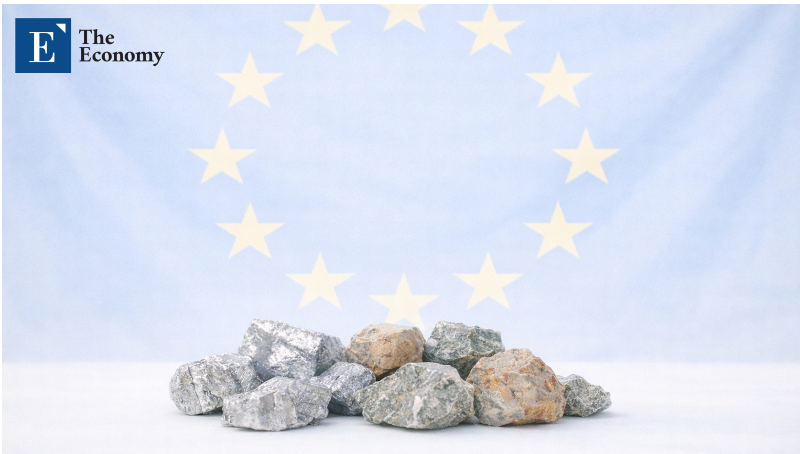
Europe is accelerating efforts to diversify its rare earth supply chain. Countries such as Norway and Sweden are moving forward with the development of rare earth deposits, while partnerships with Canadian firms to establish production hubs in Estonia signal a gradual reduction in dependence on Chinese rare earth supplies. However, conflicts with indigenous communities and local resistance driven by the “Not in My Back Yard” (NIMBY) phenomenon are emerging as constraints that could delay these ambitions.
Emerging Presence of European Rare Earth Mines
According to Nordic media outlet ScandAsia on March 5 (local time), the estimated reserves of rare earth oxides at Norway’s Fensfeltet mine in southern Norway have recently been revised upward to 15.9 million tons, approximately 80% higher than earlier estimates. The deposit is the largest recorded rare earth resource in Europe and is considered sufficient to supply essential rare earth materials used in electric vehicle batteries, wind turbines, smartphones and advanced defense systems. The mine is particularly notable for containing significant quantities of high-value byproducts such as niobium and thorium, alongside critical permanent magnet elements including neodymium and praseodymium, further enhancing its economic value.
Norway is not the only European country investing heavily in rare earth mine development. Sweden’s state-owned mining company LKAB is pushing forward with development of a rare earth deposit known as the Per Geijer deposit, which is connected to an existing iron ore mine in Kiruna, Sweden’s northernmost region. Named after a Swedish geologist from a century ago, the Per Geijer deposit is a magnetite-hematite-phosphate formation believed to contain substantial quantities of rare earth elements including neodymium and praseodymium.
LKAB is investing $87 million to build a separation pilot facility in the nearby city of Luleå and has secured a stake in Norwegian rare earth technology firm REEtec, advancing the development of environmentally friendly extraction technologies. Because the Per Geijer deposit contains rare earth concentrations roughly ten times higher than conventional iron mines and includes significant phosphate minerals that could potentially contaminate water sources, the project aims to establish a circular industrial complex capable of jointly extracting and processing phosphorus, rare earth elements and fluorine in order to minimize environmental impact. In March of last year, the European Commission designated the Per Geijer deposit as a “strategic project” and pledged institutional support by applying a fast-track approval process that would shorten permitting procedures to within 27 months.
Establishing Permanent Magnet Manufacturing Hubs Within Europe
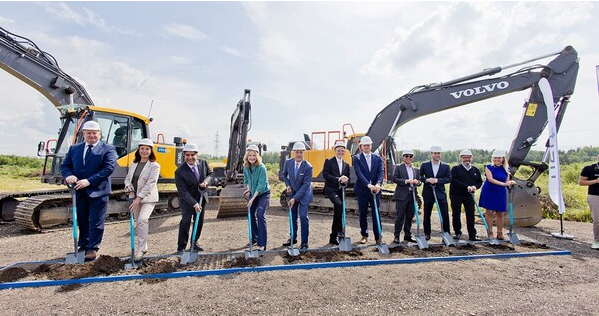
Europe’s increasingly assertive push for supply chain autonomy reflects the region’s substantial rare earth resource potential. Foreign companies have even partnered with the European Union to establish facilities within European countries. One example is the continent’s largest rare earth permanent magnet plant built by Canada’s Neo Performance Materials in Narva, Estonia, which began full operations in December last year. Neo Performance Materials is one of the Western world’s key rare earth companies, covering nearly the entire value chain—from rare earth separation and processing to magnet manufacturing—excluding mining.
Narva, where the plant is located, is a border city separated from Russia by the Narva River and is considered a region of elevated geopolitical tension. Russian President Vladimir Putin even described Narva as “historically Russian territory” shortly after the invasion of Ukraine in February 2022. Despite these risks, Neo Performance Materials invested $82 million and completed the plant within 500 days. Of this amount, $16 million was supported by the European Union’s Just Transition Fund (JTF).
Rahim Suleman, chief executive officer of Neo Performance Materials, said in an interview with CNBC last year that the company plans to produce 2,000 tons of rare earth magnets in 2025 and expand output to more than 5,000 tons in the future. Annual production of 5,000 tons would meet roughly 10% of Europe’s annual rare earth demand. For Europe, which has historically sourced more than 90% of its permanent magnets from China, the facility effectively opens a new pathway for supply chain diversification. Neo Performance Materials has already signed initial supply agreements with German engineering and technology company Bosch and German automotive parts manufacturer Schaeffler and plans to expand its supply network to include German automakers within the year.
Rising Friction Across Local Communities
However, as Europe’s efforts to restructure its rare earth supply chain accelerate, resistance is also increasing in some regions. The Per Geijer deposit project, for example, has triggered conflict with the indigenous Sami people. Development of the deposit has blocked and fragmented traditional reindeer migration routes used by Sami communities. This poses a severe challenge for Sami herders, who increasingly require broader and more flexible migration ranges as Arctic climate change alters grazing patterns. Sami communities manage herds of 2,000 to 3,000 reindeer, and approximately 150 residents rely entirely on this livelihood.
Under the Sami Consultation Act enacted in 2022, the Swedish government is required to consult Sami communities before making decisions on issues of particular significance to them. However, Sami representatives argue that the sharp rise in consultation requests has overwhelmed their limited time and resources, making meaningful participation difficult. The law stipulates that the government, administrative bodies and regional and local authorities must consult Sami representatives before deciding on matters of special importance to the indigenous population.
Further complicating the situation is the fact that the level of indigenous rights protection in Sweden still falls short of international standards. Sweden has not ratified the International Labour Organization (ILO) Convention No. 169—one of the most significant international agreements protecting indigenous rights—and the Sami Parliament also holds limited authority. LKAB, which is leading the development project, has stated that it is making every effort to engage in dialogue and seek solutions with Sami communities, yet concerns within local society continue to intensify.
The Norra Kärr mine in southern Sweden has also experienced prolonged development delays due to opposition from local residents and civic and environmental organizations. Development plans for the site were first established in 2009 when Canadian mining company Leading Edge Materials (then Tasman Metals) began rare earth exploration. The project gained momentum in 2013 when Sweden’s mining supervisory authority approved mining rights. However, residents and environmental groups raised strong objections over potential damage to nearby drinking water sources such as Lake Vättern, launching lawsuits and protest campaigns. In 2016, Sweden’s Supreme Administrative Court ultimately revoked the mining license, citing insufficient environmental impact assessment. Leading Edge Materials has since revised its development plans and prepared additional environmental evaluations in an attempt to restart the approval process, but the project has yet to break ground.
Similar Post