“Anti-War Sentiment Boils Over” — Trump Weighs Ground War Using Kurds as Proxy, Prolonged Conflict Could Amplify Global Economic Shock

As one of the youngest members of the team, Tyler Hansbrough is a rising star in financial journalism. His fresh perspective and analytical approach bring a modern edge to business reporting. Whether he’s covering stock market trends or dissecting corporate earnings, his sharp insights resonate with the new generation of investors.
Authored On
Modified
Trump Considers Arming Kurdish Forces Despite Growing Opposition to Airstrikes
Closure of Strait of Hormuz Sends Maritime Freight Rates Soaring, Global Economy Faces “Disruption”
Kurdish Ground Deployment Becoming a Foregone Conclusion, Risk of Prolonged War Rising
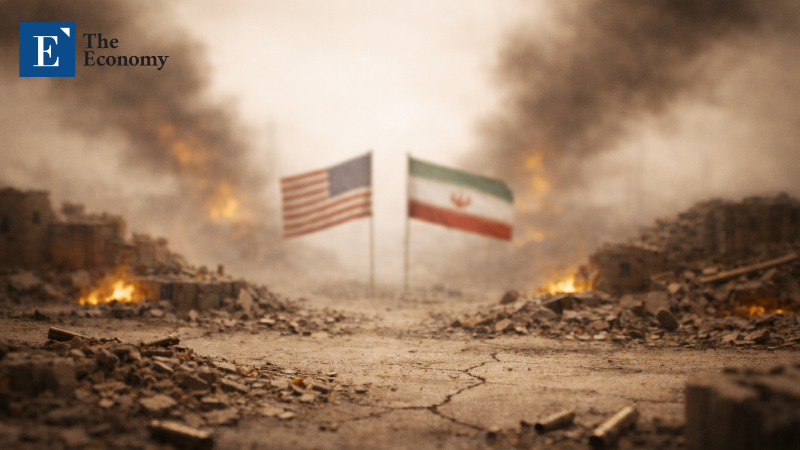
The administration of U.S. President Donald Trump is reportedly reviewing a plan to provide military assistance to Kurdish forces. The move suggests the president remains reluctant to abandon the possibility of deploying ground forces despite mounting domestic backlash against his airstrikes on Iran. Experts warn that if Washington ultimately engages Iran in a ground war using Kurdish fighters as a proxy force, the confrontation could drag on and inflict severe shocks on the global economy.
U.S. Mulls Kurdish Support Card
According to a report by NBC News on the 4th (local time), citing sources familiar with the matter and Kurdish authorities in Iraq, the U.S. government recently contacted Kurdish leaders in northern Iraq and northwestern Iran to discuss the possibility of providing military support to Kurdish forces. White House press secretary Karoline Leavitt addressed the issue by saying, “President Trump has been in contact with various partners and leaders in the Middle East,” adding that “the discussions with Kurdish counterparts concerned matters related to U.S. military bases in northern Iraq.” The Kurds are regarded as one of the most organized opposition forces within Iran. The Iranian-origin ethnic minority numbers roughly 30 million to 40 million people dispersed across several countries without an independent state.
While President Trump is seeking additional instruments of military pressure against Iran, opposition to the airstrikes is building inside the United States. One notable example is a Democratic initiative to limit the president’s war powers. The proposed legislation stipulates that the U.S. government must obtain congressional approval before deploying additional military force against Iran. The measure is widely seen as a check on President Trump, who ordered airstrikes against Venezuela and Iran without congressional deliberation.
Democrats argue that the U.S. Constitution grants the power to declare war to Congress rather than the president, and that Trump has drawn the United States into an unlawful conflict without a clear timeline or objective. California Governor Gavin Newsom sharply criticized the Iran airstrikes, calling them an “illegal and dangerous war.” He further asserted that conducting military operations without prior congressional authorization under the War Powers Act constituted “a violation of the Constitution and an authoritarian act.” Despite the Democrats’ strong condemnation, however, the bill was defeated on the 4th with 47 votes in favor and 53 against amid Republican opposition.
Public sentiment has also turned negative. According to snap polls conducted by major outlets including The Washington Post, roughly 52% of Americans oppose the airstrikes, while support stands at about 39%. Opposition among independent voters reportedly outnumbers support by a two-to-one margin. A separate survey conducted by CNN and polling firm SSRS between the 28th of last month and the 1st of this month produced similar results. Among respondents, 59% said they did not support President Trump’s decision to attack Iran, and 60% opposed deploying U.S. troops to the country.
Surging Maritime Freight Rates, Logistics Disruption Intensifies
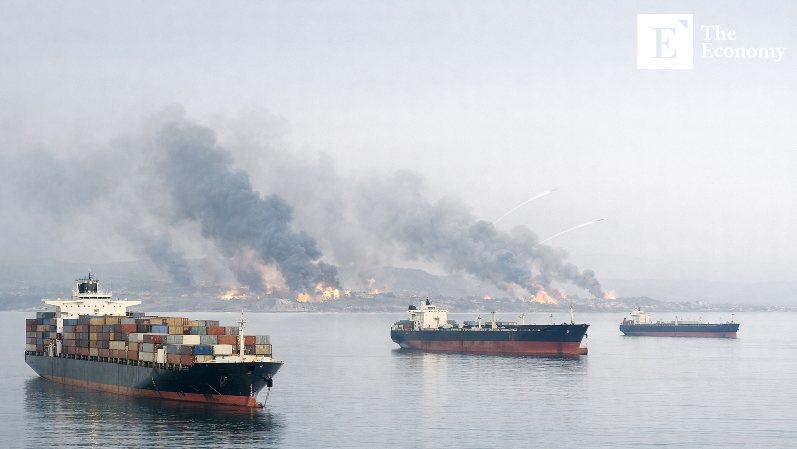
The turmoil triggered by the U.S. airstrikes is spreading beyond the United States and across the globe. The Strait of Hormuz, a critical corridor for Middle Eastern oil shipments, has effectively been closed for the first time in 46 years since the Iran-Iraq War of 1980, triggering what many describe as a global logistics disruption. Earlier, Iran’s elite Islamic Revolutionary Guard Corps warned immediately after the U.S. strikes that it would “set ablaze all vessels passing through the Strait of Hormuz.” On the 4th, the group also claimed it had attacked and burned more than ten tankers entering the strait with missiles.
President Trump has pledged that the U.S. Navy would escort oil tankers through the strait if necessary, but market anxiety has shown little sign of easing. According to the Financial Times, war-risk insurance premiums for vessels transiting the Strait of Hormuz—previously around 0.25% of a vessel’s value before the conflict—have recently surged to as high as 3%. Dylan Mortimer of U.S. insurance brokerage Marsh told the Financial Times that insurance premiums for ships operating in high-risk Middle Eastern waters currently stand at roughly 1–1.5% of vessel value, while vessels associated with the United States, the United Kingdom, or Israel may face premiums up to three times higher.
Oil tankers have also begun withdrawing from routes through the Gulf. Bloomberg reported on the 4th that very large crude carriers (VLCCs) that had departed from Asia and were scheduled to load crude in the Gulf had altered course toward the Atlantic region. The VLCC Plata Glory, which had been heading toward Middle Eastern ports, recently changed course toward the Cape of Good Hope in Africa, while another supertanker, Zhihof, abandoned its Middle Eastern route and set a course toward the United States.
In some cases, routes are being altered to accommodate attempts by Middle Eastern countries to supply oil by bypassing the Gulf. The VLCC Amantia is currently sailing south toward the Cape of Good Hope with Fujairah on the United Arab Emirates coast outside the Strait of Hormuz as its destination. Another tanker, Karan, also changed its route from the Ras Tanura offshore terminal in Saudi Arabia within the Gulf to Yanbu port on the Red Sea coast.
Higher insurance premiums and route diversions are key factors driving up maritime freight rates. The estimated average VLCC spot rate—the price paid for cargo loading within a short period after a contract is signed—surged to $350,000 per day as of the 3rd. Freight rates for tankers transporting crude from the Middle East to China also soared to about $420,000 per day as of the 4th, more than seventeen times higher than the roughly $28,700 recorded at the beginning of the year. When maritime freight costs spike in this way, most industrial sectors worldwide inevitably face difficulties securing raw materials, leading to rising costs and deteriorating profitability.
What Risks Could Kurdish Participation Bring?
The problem is that the war is increasingly likely to become prolonged as ground forces enter the conflict. On the 4th, multiple foreign media outlets reported that Kurdish forces had either participated in or were preparing to join ground assault operations targeting Iran alongside the United States and Israel. Although a final decision on U.S. weapons support has not yet been made, Kurdish participation in President Trump’s military campaign against Iran appears to be becoming a foregone conclusion. Trump’s strategy of pushing Kurdish fighters to the forefront of a ground campaign aims to dismantle Iran’s nuclear and missile development capabilities and ultimately replace the regime. However, Iran’s vast territory and complex mountainous terrain, combined with the presence of the Revolutionary Guard and a dense militia network, mean that any ground invasion would inevitably entail substantial casualties.
If Kurdish forces participate in the military campaign, there is also a significant risk that the conflict will evolve into a broader regional dispute. Barbara Leaf, former U.S. Assistant Secretary of State for Near Eastern Affairs, told The Guardian that if the U.S. government intervenes with or considers intervening through Kurdish forces, it could provoke strong backlash from Turkey, Iraq, and Syria, where large Kurdish populations reside. Some analysts also suggest that if other separatist groups join the war alongside the Kurds, Iranian citizens could instead rally around the current regime. As the dynamics of the conflict grow more complex, the likelihood of the war ending as a short-term campaign would decline exponentially.
Should the war drag on, the global economy is expected to suffer severe repercussions. Heightened uncertainty surrounding the Strait of Hormuz would prolong the ongoing logistics disruption and keep international oil prices on an upward trajectory. Some analysts warn that if the war is not resolved quickly, global oil prices could surpass $100 per barrel. The Asahi Shimbun reported that while the economic impact may remain limited if the Strait of Hormuz blockade is resolved quickly, a prolonged crisis could trigger simultaneous inflation and economic recession across multiple countries.
As one of the youngest members of the team, Tyler Hansbrough is a rising star in financial journalism. His fresh perspective and analytical approach bring a modern edge to business reporting. Whether he’s covering stock market trends or dissecting corporate earnings, his sharp insights resonate with the new generation of investors.
Similar Post