China Repeats “Support for Iran’s Sovereignty,” Avoids Answer on Military Aid and Draws a Strategic Line

Stefan Schneider brings a dynamic energy to The Economy’s tech desk. With a background in data science, he covers AI, blockchain, and emerging technologies with a skeptical yet open mind. His investigative pieces expose the reality behind tech hype, making him a must-read for business leaders navigating the digital landscape.
Authored On
Modified
Repeats General Position on Military Intervention
Strategy Prioritizes Energy Stability and Diplomatic Balance
U.S. Also Avoids Ground War Burden, Limited Conflict Seen Likely
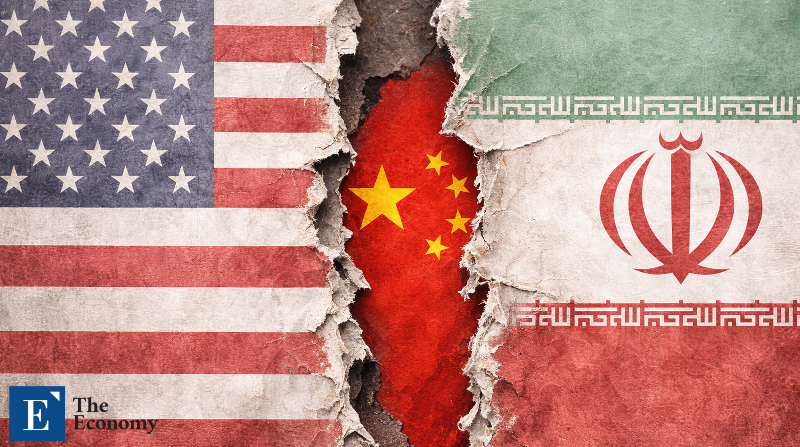
As military clashes between the United States and Iran continue, China’s response has emerged as a key variable in international politics. Beijing has repeatedly used diplomatic language emphasizing its “support for Iran’s sovereignty,” yet it has avoided giving any concrete answer regarding possible military assistance. The stance has reinforced the interpretation that the China–Iran relationship is essentially a pragmatic trade partnership rather than a formal alliance structure. At the same time, the United States has signaled caution over the possibility of deploying ground forces, lowering expectations of a full-scale war and drawing attention to the strategic calculations behind that position.
No Verified Cases of Direct Support
According to China’s state-run Xinhua News Agency, Chinese Foreign Ministry spokesperson Mao Ning responded to reporters’ questions during a regular briefing on the 6th regarding potential military support for Iran by stating that “we oppose the United States and Israel violating international law and carrying out military attacks on Iran.” Mao reiterated the long-standing position that “maintaining security and stability in the Middle East is in the common interest of the international community,” while avoiding any specific response to questions about direct assistance to Iran. The response is widely interpreted as a deliberate attempt to express diplomatic support for Iran’s sovereignty while avoiding statements that could be interpreted as a commitment to military intervention.
Such caution appears unusual given the depth of China’s economic ties with Iran. Despite international sanctions led by the United States, China has remained the largest buyer of Iranian crude oil, purchasing roughly 90 percent of Iran’s exports. That level of trade indicates that a significant portion of Iran’s economy depends on energy transactions with China. Yet despite this economic linkage, no comparable military support has been observed. Diplomatic analysts therefore interpret Beijing’s posture as an attempt to preserve energy cooperation with Iran while avoiding military involvement that could trigger direct confrontation with the United States.
Recent developments illustrate the ambiguity of China’s approach. The Washington Post reported on the 7th that two cargo vessels belonging to Iran’s state shipping company IRISL—the Shabdis and the Barzin—departed from Gaolan Port in Zhuhai, Guangdong Province, heading toward Iran. Satellite imagery and vessel tracking data indicated that both ships sat deeper in the water when departing than when they had arrived at the port. The report suggested that IRISL had loaded sodium perchlorate, a precursor used in solid rocket fuel, at the port, raising speculation that China may be indirectly assisting Iran by allowing the shipment.
Even so, such indirect involvement has not translated into official military support from the Chinese government. Grant Rumley, a senior fellow at the Washington Institute for Near East Policy, noted that “if China were to openly provide military support to Iran, it would likely cause serious damage to its economic relationships with Gulf Cooperation Council countries such as Saudi Arabia.” He added that for Beijing, overt military involvement on behalf of one side would inevitably create pressure on both its regional energy supply chain and its broader diplomatic strategy in the Middle East. Diplomatic observers therefore broadly conclude that the likelihood of China providing direct weapons assistance or entering into a military alliance with Iran remains low.
Consistent Caution Despite “Support Allegations”
In this context, China’s stance toward Iran is widely described as a strategy of “strategic distancing.” The approach contrasts sharply with the way the North Atlantic Treaty Organization supported Ukraine during the war with Russia, when NATO members provided large-scale military equipment and financial assistance that directly strengthened Ukraine’s ability to sustain the war. NATO countries continuously supplied key weapons such as tanks, long-range missiles, and air-defense systems while also mobilizing tens of billions of dollars in financial aid. By contrast, China’s response has largely been limited to political messaging and diplomatic statements, with no confirmed support capable of materially altering the balance of military power.
Russia has adopted a similarly limited form of involvement. Reuters reported earlier this month, citing multiple sources familiar with U.S. intelligence assessments, that Russia may have shared information with Iran regarding the locations and movements of U.S. troops, naval vessels, and aircraft. The information was believed to have been obtained through Russia’s military satellite network. However, whether that intelligence was actually used in attacks remains unclear. Suspicion intensified after a drone strike on temporary U.S. military housing in Kuwait killed six American soldiers, but no evidence has confirmed direct Russian involvement.
The asymmetrical economic structure of China–Iran relations also helps explain Beijing’s cautious position. According to the Center for Strategic and International Studies (CSIS), China accounts for roughly one-third of Iran’s total trade, making it Tehran’s largest trading partner. In contrast, Iran represents less than 1 percent of China’s overall trade. In energy transactions, Iran relies on China for roughly 80 percent of its exports, while China’s dependence on Iranian energy stands at about 13 percent. CSIS therefore concluded that “the relationship between the two countries is far more asymmetrical than often assumed and is closer to a pragmatic trade partnership.”
A similar pattern appears in the history of military cooperation between the two countries. China supplied Iran with aircraft, missile systems, and artillery equipment until the early 2000s but officially halted all arms sales in 2005. Some observers have speculated that the recent Middle East conflict could revive the possibility of Chinese air-defense systems or missile technology transfers. However, no confirmed cases of Chinese-made weapons appearing on the battlefield have been reported. Xie Gangzheng, a professor of international relations at Tsinghua University, stated that “military support is not an option China can realistically pursue in the Middle East,” adding that relations with Iran will likely continue through channels separate from military involvement.
Ground Troop Deployment Would Increase U.S. Military and Fiscal Burden
Meanwhile, the United States has shown significant caution regarding the possibility of a full-scale war with Iran. On the 7th, President Donald Trump avoided giving a direct answer when asked about the potential deployment of ground troops during a press interaction following a ceremony honoring the return of U.S. soldiers’ remains at Dover Air Force Base in Delaware. “That question is not appropriate,” Trump said, adding that while “the possibility exists, it would require a very strong justification.” The statement underscored that the conditions for deploying ground forces would be extremely limited. It is also interpreted as a signal that Washington is carefully calculating the consequences of expanding the conflict into a full-scale ground war.
Trump also declined to provide a definitive outlook on the duration of the war. Asked how long the conflict might last, he replied that it would continue “as long as necessary,” adding that “the only thing certain is that we are winning the war by a lot.” The combination of emphasizing military success while maintaining caution over ground troop deployment suggests a gap between the current military situation and the likelihood of full escalation. When asked whether U.S. forces might be deployed to secure Iran’s enriched uranium stockpiles, Trump dismissed the possibility for now, stating that “it’s too early to discuss that,” and that while it could occur in the future, “it’s not something being considered at this moment.”
The military and political burden associated with deploying ground troops is also substantial. Trump addressed speculation about possible involvement by Kurdish forces, saying, “We do not want them involved,” adding that although the United States maintains good relations with the Kurdish side, “we do not want to make the war more complicated than it already is.” He added that “we do not want to see them hurt or killed.” The remarks reflect concern that expanding the conflict could transform it into a complex regional war involving multiple Middle Eastern factions simultaneously.
Iran has also taken a hard line on the possibility of ground troop involvement. Iranian Foreign Minister Abbas Araghchi stated in a video interview with NBC that “we have never requested a ceasefire from the United States,” emphasizing that “we see no reason to negotiate.” He added that Iran is prepared for “any scenario, including a ground invasion,” warning that such a move “would be a major disaster for them.” The statement underscores the risk that the conflict could evolve beyond the current stage of limited clashes into a prolonged and comprehensive war.
Stefan Schneider brings a dynamic energy to The Economy’s tech desk. With a background in data science, he covers AI, blockchain, and emerging technologies with a skeptical yet open mind. His investigative pieces expose the reality behind tech hype, making him a must-read for business leaders navigating the digital landscape.
Similar Post