"Power Constraints and Political Pressure" Strain U.S. AI Infrastructure Market, Stargate Scraps Texas Data Center Expansion Plan

Anne-Marie Nicholson is a fearless reporter covering international markets and global economic shifts. With a background in international relations, she provides a nuanced perspective on trade policies, foreign investments, and macroeconomic developments. Quick-witted and always on the move, she delivers hard-hitting stories that connect the dots in an ever-changing global economy.
Authored On
Modified
Stargate’s core Abilene data center halts expansion plan
Power grid shortages and regulatory pressure dampen data center investment
OpenAI increases reliance on externally sourced computing capacity rather than building its own infrastructure
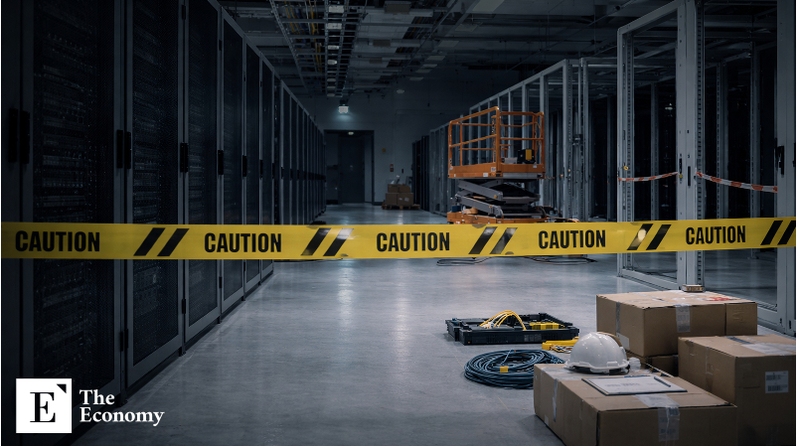
The expansion of facilities under the $500 billion artificial intelligence (AI) infrastructure initiative known as “Stargate” in the United States has stalled. Mounting challenges—including power grid limitations and intensifying political scrutiny—have elevated investment risks at a time when partnerships among participating companies remain unstable. Amid these uncertainties, OpenAI, a key participant in the Stargate project and a leading force in the AI industry, has increasingly focused on securing computing resources through external capital and infrastructure rather than expanding its own facilities.
Stargate Project Showing Signs of Strain
Bloomberg reported on the 7th (local time) that Oracle and OpenAI have formally withdrawn their plan to expand the capacity of a data center in Abilene, Texas. The Abilene facility is widely regarded as a cornerstone of the Stargate project announced last year at the White House by OpenAI, Oracle, and SoftBank, among others. Since mid-last year, the companies had been evaluating a plan to expand the existing 1.2-gigawatt (GW) facility to 2.0GW in partnership with Crusoe, a cloud company specializing in AI infrastructure.
The collapse of the expansion plan is largely attributed to unstable partnerships among the project participants. Oracle, OpenAI, and Crusoe reportedly failed to reach agreement on how to share the astronomical costs associated with building and operating the data center. Complicating matters further, OpenAI’s repeated revisions to its required computing capacity undermined partner confidence. While Oracle and Crusoe had publicly maintained that the partnership remained “robust,” the withdrawal of the expansion plan effectively confirmed that internal tensions had been substantial.
Insufficient power infrastructure also appears to have been a major obstacle. According to the Lawrence Berkeley National Laboratory (LBNL) under the U.S. Department of Energy, electricity demand from U.S. data centers has surged dramatically over the past decade. Data center electricity consumption is projected to climb from 176 terawatt-hours (TWh) in 2023 to between 325TWh and 580TWh by 2028. However, the U.S. power grid lacks the transmission capacity to absorb such demand, with approximately 2,300GW of generation capacity currently waiting indefinitely for grid interconnection.
These constraints have begun to cool investment momentum across the broader data center market. According to CBRE Group’s “2025 U.S. Data Center Annual Market Report,” the total capacity of data centers under construction in the United States stood at 5.99GW as of the end of 2025. This represents a decline of about 5.7% from 6.35GW at the end of 2024, marking the first contraction since 2020, when the effects of the COVID-19 pandemic had yet to fully dissipate. During the same period, project starts in Northern Virginia—long regarded as the traditional hub of the data center industry—plunged 29%. Investment activity also weakened notably in Hillsboro, Oregon (-15%) and Silicon Valley (-14%).
Political Scrutiny of Data Centers and Big Tech Intensifies
Market observers increasingly expect the barriers to data center investment in the United States to rise further as political pressure on the sector intensifies. Lawmakers from both the Democratic and Republican parties have recently voiced concerns about the side effects of data center expansion. Senator Bernie Sanders of the Democratic Party has called for a nationwide halt to new data center construction, while Florida Governor Ron DeSantis, a Republican, has criticized data centers for potentially driving up electricity costs.
Several states have also been thrown into policy turmoil. Georgia, Vermont, and Virginia are considering suspending new data center construction, while lawmakers in New York introduced a bill last month proposing a minimum three-year moratorium on permits related to the construction and operation of new data centers. Illinois Governor JB Pritzker is pushing to withdraw incentives previously granted to data centers in an effort to curb soaring electricity prices. In New Mexico, local residents concerned about environmental damage have launched protests against Oracle’s data center construction project. In Northern Virginia, some residents have even begun relocating due to intolerable noise and landscape disruption, giving rise to a phenomenon described as “data center refugees.”
More recently, the administration of U.S. President Donald Trump has begun assigning direct responsibility to Big Tech companies—major drivers of grid overload. Under the “Ratepayer Protection Pledge” signed on the 4th by the president and executives of major technology companies, firms must build, lease, or purchase their own power supply facilities whenever constructing new data centers. Companies are encouraged to operate dedicated power plants where possible, and the government has pledged to shorten permitting timelines to two to four weeks for such projects. In addition, companies will be required to bear the costs of upgrading existing transmission and distribution infrastructure needed to support data center operations. The policy significantly increases the investment burden associated with AI infrastructure. Companies participating in the pledge include Google, Meta, Microsoft (MS), OpenAI, Amazon, Oracle, and xAI.
OpenAI’s Stopgap Strategy
As power constraints and regulatory hurdles impede data center construction, OpenAI has recently secured computing resources by leasing external infrastructure. This move represents less of a sudden pivot than a continuation of the “indirect procurement” strategy the company has pursued since last year. In March last year, OpenAI signed a five-year cloud computing agreement worth $11.9 billion with GPU cloud provider CoreWeave. Two months later, the company concluded an additional capacity deal valued at $4 billion. In November of the same year, OpenAI further expanded its external GPU infrastructure supply chain by finalizing a seven-year agreement with Amazon Web Services (AWS) worth $38 billion.
At the same time, OpenAI has stepped back from a strategy centered on directly owning and constructing infrastructure, focusing instead on more pragmatic compromise solutions. From the outset, the Stargate project experienced considerable confusion due to the absence of clear leadership and coordination among participating companies. OpenAI had considered leasing or partially owning large-scale data center campuses as a workaround, but difficulties in securing financing prevented meaningful progress. The alternative that emerged from the complex Stargate joint venture structure was a series of bilateral agreements centered on OpenAI. In July last year, OpenAI and Oracle announced a deal to jointly develop data centers with a total capacity of 4.5GW across multiple sites in the United States. The arrangement allows both parties to share losses in the event of construction delays or cost overruns while distributing savings if costs are reduced, effectively spreading the economic risk.
SoftBank has also established a bilateral cooperation framework with OpenAI. A 1GW data center campus in Milam County, Texas, was initially selected by OpenAI as the site of its first self-built data center, but disagreements with SoftBank over development and ownership stalled the project. Following negotiations between OpenAI Chief Executive Officer Sam Altman and SoftBank Chairman Masayoshi Son, the companies reportedly reached a compromise in January under which OpenAI will serve as the long-term tenant with control over design, while SoftBank assumes responsibility for development and ownership.
Anne-Marie Nicholson is a fearless reporter covering international markets and global economic shifts. With a background in international relations, she provides a nuanced perspective on trade policies, foreign investments, and macroeconomic developments. Quick-witted and always on the move, she delivers hard-hitting stories that connect the dots in an ever-changing global economy.
Similar Post