Trump Unsheathes Section 301 After ‘Tariffs Invalidated’ Ruling — Does He Still Have a Path to Strategic Victory?

Authored On
Modified
Direct punitive measures targeting specific countries and industries
Broad scope for sanctions, including additional tariffs and import restrictions
A foreshadowed next step after reciprocal tariffs were struck down, aimed at reimposing extra duties
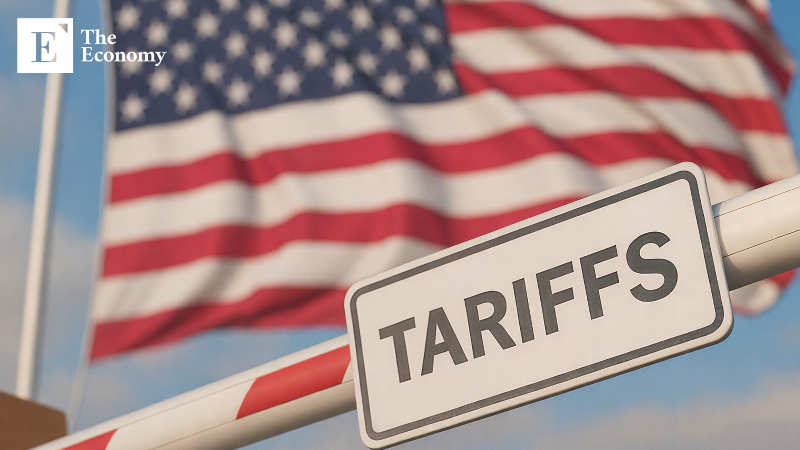
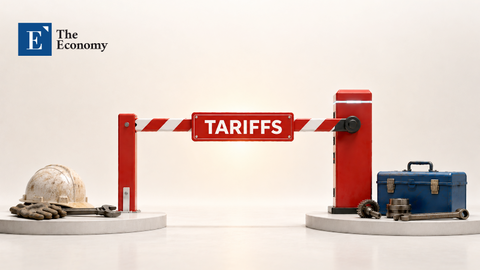
The administration of U.S. President Donald Trump has abruptly launched investigations under Section 301 of the Trade Act against 16 major economic actors, including South Korea, China, Japan and the European Union. The move marks a dramatic escalation that comes less than a month after the U.S. Supreme Court ruled reciprocal tariffs imposed under the International Emergency Economic Powers Act (IEEPA) unlawful. The step is widely seen as preliminary groundwork to effectively restore existing tariff barriers and move further toward even harsher trade pressure.
“Overproduction Threatens the United States” — Stringent Scrutiny to Revive Manufacturing
On March 11 local time, U.S. Trade Representative Jamieson Greer said at a media briefing that the United States must “protect American jobs and ensure fair trade with partner countries,” formally announcing the launch of Section 301 investigations into major U.S. trading partners. Greer said the probe would examine “acts, policies and practices related to structural overproduction in the manufacturing sectors of certain economies,” adding that he expected the investigation to expose a broad range of unfair trade practices tied to overproduction.
The Section 301 inquiry covers 16 trading partners, including South Korea, China, the European Union, Singapore, Switzerland, Norway, Indonesia, Malaysia, Cambodia, Thailand, Vietnam, Taiwan, Bangladesh, Mexico, Japan and India. USTR plans to focus on whether overproduction is detached from actual market demand, while also reviewing the full spectrum of policies that support export expansion, including subsidies, low-wage structures and state-owned enterprise activity. It may also include a review of various trade barriers that restrict market access for imports, inadequate environmental and labor protections, subsidized lending, financial repression policies and exchange-rate management practices.
In connection with the investigation, the window for written submissions and requests to appear at a public hearing is expected to open around March 17 Eastern Time, with the deadline for comments and requests set for April 15. The hearing is expected to be held around May 5. Greer said interested parties would also be allowed to submit rebuttal comments during the seven days following the conclusion of the hearing. Once those procedures are completed, USTR will draw conclusions based on the findings and consider responsive actions.
The U.S. government is aiming to complete the probe in July, before the period during which a “global tariff” of 10% may be applied under Section 122 of the Trade Act expires. Greer stressed that “we are aware of the 150-day period” tied to Section 122 tariff authority and that the goal is to complete the investigation before the Section 122 tariffs lapse. USTR also left the door open to additional Section 301 investigations into issues long raised by U.S. industry, including digital services taxes, pharmaceutical pricing policies, market access for seafood and rice, and environmental issues such as marine pollution. Greer said he expected “more investigations” related to additional Section 301 actions.
Trump Defies Supreme Court Setback, Invokes Section 301 to Assert ‘Legal Justification’
Section 301 of the Trade Act grants the executive branch authority to respond when foreign governments adopt unfair, unreasonable or discriminatory policies and practices that restrict or disadvantage U.S. trade. The provision provides the legal basis for a range of retaliatory trade measures, including tariff hikes. Although commonly referred to as “Section 301,” the term in practice broadly refers to Sections 301 through 309 of the Trade Act of 1974. Formally, it is framed as a mechanism for addressing unfair foreign trade practices, but in actual operation it has often served as a policy instrument allowing the executive branch to exert tariff pressure based on its own judgment.
In particular, this latest investigation had been signaled as a step toward imposing additional tariffs after the invalidation of country-specific reciprocal tariffs under IEEPA and the so-called “fentanyl tariffs,” which had been imposed on the grounds that certain countries failed to cooperate in blocking fentanyl smuggling into the United States. After the Supreme Court ruled on Feb. 20 that tariff collection under IEEPA was unlawful, Trump held a press conference the same day and said, “Under Section 122 of the Trade Act, we will impose 10% tariffs on all trading partners worldwide, and we will begin a Section 301 investigation.”
The intent, ultimately, is to use global tariffs as a temporary stopgap for up to 150 days to fill the vacuum left by reciprocal tariffs, while completing the Section 301 investigation during that period so that tariff measures against major trading partners can continue. Even as the war with Iran is under way, the Trump administration is signaling that its tariff strategy, a core pillar of its economic agenda, will proceed on schedule. In a background media briefing on March 11, Greer said that while the policy tools applied may shift depending on court rulings or changing circumstances, the basic direction of policy remains unchanged. The remark laid bare the extent to which the Section 301 investigation is intended to compensate for the void created by the Supreme Court ruling that stripped reciprocal tariffs of legal force.
Indeed, according to the U.S. Treasury Department’s monthly budget statement for February released on March 11, U.S. tariff revenue for the month totaled $26.59 billion, down by more than $1 billion from $27.74 billion in January. Monthly tariff revenue peaked at $31.35 billion in October last year and has continued to decline for four consecutive months since partial tariff-relief measures introduced in November. The figures reflect the fallout from the Supreme Court’s decision to put the brakes on most of Trump’s sweeping tariff agenda.

Section 301, Washington’s Signature Trade Weapon
The United States has long used Section 301 primarily in trade wars with China. During the first Trump administration in 2018, Washington launched a Section 301 investigation on the grounds of Chinese intellectual property infringement and used it as the basis for imposing tariffs of as high as 25% on Chinese goods. As a result, 75% of Chinese imports entering the United States became subject to tariffs. The subsequent Joe Biden administration also relied on the same legal framework to sustain pressure on China, applying tariffs of 100% on Chinese electric vehicles and 50% on products such as solar cells. In the 1980s, Washington also imposed Section 301-based tariffs on Japanese electronics and auto parts in response to Japan’s rapidly expanding economic and industrial power.
South Korea, too, carries painful memories of being repeatedly targeted under Section 301 from the mid-1980s through the mid-1990s, when it was forced into sweeping market-opening measures and tax-system revisions. In 1985, the United States invoked Section 301 over South Korea’s insurance and film industries, and in 1989 it took additional action targeting three sectors: agricultural policy, industrial localization policy and restrictions on foreign investment. In 1995, at the request of the American Automobile Manufacturers Association, a Section 301 investigation into South Korea’s auto market was launched, prompting Seoul to significantly overhaul automobile-related taxes.
In 1996, Washington designated South Korea a priority foreign country on the grounds that the Korean government was intervening in private-sector telecommunications equipment procurement, and just before the Asian financial crisis in 1997-1998, it also took issue with barriers to automobile imports. At the center of the dispute was South Korea’s tax structure, under which vehicles with larger engine displacement were subject to higher automobile taxes, a system Washington argued disadvantaged U.S. automakers that mainly exported large cars with engines above 2,000cc. More recently, the United States has wielded Section 301 like an all-purpose cudgel in digital regulation disputes, including those brought to the fore by the Coupang controversy.
That said, Section 301 is inherently political and retaliatory in nature, and therefore requires quasi-judicial procedures, including proof of unfair practices by the target country, consultation with companies, economic analysis and public hearings. When the first Trump administration imposed Section 301 tariffs on China, it took roughly 11 months from the formal launch of the investigation to the actual imposition of tariffs. The Section 301 probe into France’s digital services tax likewise took about five months before a report finding a violation was issued, and about a year before actual measures were announced. A Biden administration Section 301 investigation into China’s shipbuilding industry also took more than a year before final action. Given that even a probe into a single issue involving one country generally takes more than six months, experts say the notion of wrapping up procedures involving major trading partners across the globe in just four months lacks realism.
Moreover, even after losing at the Supreme Court, the Trump administration may still be able to cobble together various provisions of the Trade Act to keep collecting tariffs as a temporary expedient. Yet the momentum behind the tariff agenda that Trump has wielded as though it were an unchecked executive power since returning to office in January last year is expected to weaken materially. Ira Manak, a senior fellow at the Council on Foreign Relations, said, “Because there is no all-purpose instrument like IEEPA that can solve everything at once, President Trump will now have to rebuild tariff barriers through a patchwork approach.”
Similar Post