KKR Bets $1.3 Billion as Investment Boom Spreads to EdTech and Private Academies, Signaling an AI-Era Shift in the Education Market

Stefan Schneider brings a dynamic energy to The Economy’s tech desk. With a background in data science, he covers AI, blockchain, and emerging technologies with a skeptical yet open mind. His investigative pieces expose the reality behind tech hype, making him a must-read for business leaders navigating the digital landscape.
Authored On
Modified
Rising demand for elite education drives international school growth
Perception grows of schools as stable long-term investment assets
Signs emerge of weakening influence in mass public education systems
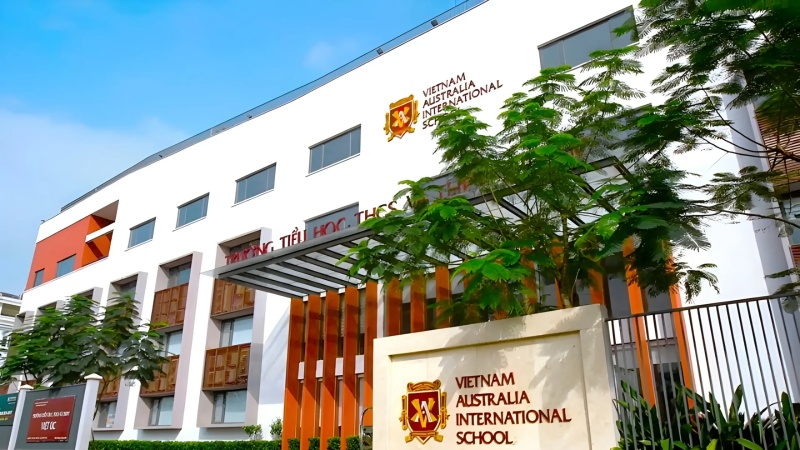
Global private equity firm Kohlberg Kravis Roberts (KKR) has injected a large amount of capital into the acquisition of a Southeast Asian international school chain, intensifying competition for investment in the education sector. International schools and private school platforms are increasingly viewed as assets combining stable cash flow with scalability, drawing growing attention from global capital. At the same time, private equity investment in education is expanding to include acquisitions of education technology companies and transactions involving domestic education firms. Observers say the direction of the education market is also shifting amid the spread of artificial intelligence and demographic changes.
Global Capital Flows Into Education
According to the investment banking industry, KKR recently signed a share purchase agreement to acquire a majority stake in XCL Education for $1.3 billion. The stake being acquired was held by Texas Pacific Group (TPG), and the bidding process reportedly drew competition from several global private equity firms, including Warburg Pincus, Blackstone, and EQT. KKR is currently seeking approximately $500 million in acquisition financing to complete the deal, with the financing structured over a five-year maturity.
XCL is a Singapore-based Southeast Asian education platform that operates international schools, private schools, kindergartens, and supplementary academic programs. Representative institutions include XCL World Academy in Singapore, the American School of Bangkok’s Sukhumvit campus, and the Australian International School in Vietnam, collectively educating about 20,000 students across Southeast Asia. Because it combines private schools with kindergartens and supplementary academic programs, the platform is regarded as having secured both scale and brand recognition within the region’s international school market.
Investment by global private equity firms in international school platforms has increased rapidly in recent years. In October 2024, for example, UK-based private equity firm CVC Capital acquired a 20% stake in the private school chain International Schools Partnership (ISP). The transaction valued ISP at about $8 billion, roughly 3.6 times higher than the $2.2 billion valuation recognized when the Ontario Teachers’ Pension Plan of Canada invested a minority stake in 2021.
Large global private equity firms are focusing on strategies that expand school networks through education platforms because tuition-based revenue structures generate stable cash flow while enabling scale expansion by adding schools to the platform. ISP, for instance, presented a growth strategy centered on adding schools in regions with strong demand when it sold its stake to CVC Capital. The overall market itself is expanding rapidly. According to international school data provider ISC Research, annual tuition revenue in the global international school market reached $67.3 billion as of January last year.
Expansion Into Infrastructure Investment
KKR also acquired the U.S. education technology company Instructure in November 2024. In that transaction, KKR used an investment fund managed with Dragoneer to acquire Instructure shares in an all-cash deal priced at $23.60 per share. Following the acquisition, KKR set a target of reaching $1 billion in revenue by 2028. Such transactions indicate that private equity firms increasingly view the education sector not merely as a tutoring or academy business but as an investment asset spanning global education infrastructure and digital learning platforms.
Similar deals have also appeared in South Korea. In February, Nautic Investment acquired Time Education, one of the country’s largest offline college preparatory academy operators, for about $61 million. Time Education previously entered a corporate restructuring program in 2013 after performance deteriorated sharply due to tighter regulation of private education and the rapid spread of online lectures. However, after becoming part of Intermediate Capital Group (ICG), the company shifted toward a content-focused business structure. As a result, Time Education recorded consolidated revenue of $103 million and operating profit before depreciation and amortization of $8.8 million in 2024, achieving its strongest performance since its founding and exiting ICG’s portfolio, where it had initially been acquired in the form of a nonperforming loan investment.
Investor interest in large education platforms has also extended to potential control transactions involving listed companies. South Korea’s online education platform MegaStudyEdu has begun reviewing the sale of approximately 32.45% of its controlling stake, including shares held by founder Chairman Sohn Joo-eun and CEO Sohn Sung-eun. MegaStudyEdu began as a college preparatory academy in Seoul’s Gangnam district in 1997 and later expanded aggressively into new business areas, including the adult education market in 2011. That diversified structure has helped sustain performance despite the shrinking student population and contraction of the college entrance market. MegaStudyEdu reported revenue of $468 million and operating profit of $76 million on a cumulative basis through the third quarter of last year.

Rising Importance of “AI-Native” Talent
Industry observers say these trends could reinforce elite education while weakening public education systems. As artificial intelligence and digital technologies reshape the learning environment, the meaning of education itself is changing. In many classrooms, simply transmitting knowledge is no longer sufficient to define competitiveness. Instead, the ability to critically evaluate and apply outputs generated by generative AI is emerging as a new benchmark. Digital literacy, once viewed as a supplementary skill, is now increasingly regarded as a core capability comparable to language proficiency or quantitative ability.
Signs of change are appearing across education settings. In one middle school Korean language class, students used AI tools to create literary works and then expanded on the results with their own ideas. The key element of the exercise lies not in the use of AI itself but in the process of reviewing and refining the output. Teachers emphasize that students must not accept AI-generated information uncritically, stressing the importance of distinguishing fake news, respecting copyright, and understanding that AI can sometimes produce hallucinated information. If public education systems fail to absorb such processes effectively, concerns are growing that the gap between schools that integrate AI into instruction and career planning and those that do not will inevitably widen.
Demand for AI education also appears stronger among middle-aged learners than among younger digital-native generations. According to statistics from online education content provider Day1 Company, the largest share of visitors to AI-related courses—25%—came from people aged 45 to 54. Analysts interpret this as evidence that AI is increasingly viewed not merely as a subject of curiosity but as an essential tool for survival in the workplace. Educational programs are also becoming more specialized by profession. Institutions including the Korea AI Education Promotion Association, Korea Cyber University, and the Korea Productivity Center have rapidly introduced practice-oriented programs, reflecting a shift in which access to education is increasingly tied to professional resilience.
In the global education market, these disparities appear poised to expand further as they are reinforced by larger pools of capital and infrastructure. Late last year, Google announced plans to invest $1 billion in AI education and talent development. The initiative aims to provide career certifications and practical AI training to all U.S. college students while offering free AI plans including Gemini 2.5 Pro and Deep Research tools. More than 100 public universities—including Texas A&M University, the University of North Carolina, the University of Michigan, and Ohio State University—have joined the initiative. The trend suggests that rather than lifting the overall average of mass education systems, educational benefits may increasingly concentrate among groups with access to resources and networks capable of absorbing advanced forms of education.
Stefan Schneider brings a dynamic energy to The Economy’s tech desk. With a background in data science, he covers AI, blockchain, and emerging technologies with a skeptical yet open mind. His investigative pieces expose the reality behind tech hype, making him a must-read for business leaders navigating the digital landscape.
- Previous [AI Bubble] “Few Paying Subscribers and Weak Retention” Concerns Over an AI Bubble Spread as Companies Seek Breakthroughs While Maintaining Optimism
- Next “Data Centers Powered by Brain Cells” — Bio-Computing Commercialization Gains Momentum as Technological Rivalry Intensifies, Though Skepticism Persists
Similar Post