"Ultimately, the Core Issue Is Nuclear Weapons" U.S. Blocks Iranian Ports After Ceasefire Talks Collapse, Iran Maintains Nuclear Ambitions

Aoife Brennan is a contributing writer for The Economy, with a focus on education, youth, and societal change. Based in Limerick, she holds a degree in political communication from Queen’s University Belfast. Aoife’s work draws connections between cultural narratives and public discourse in Europe and Asia.
Authored On
Modified
U.S. Declares Blockade of Iranian Ports, “Do Not Pay Transit Fees to Iran”
Marathon Talks Fail to Yield Agreement, Nuclear Program Emerges as Key Issue
Iran Frames Nuclear Development as Sovereign Right, Deep-Rooted Distrust Tests Prospects for Agreement
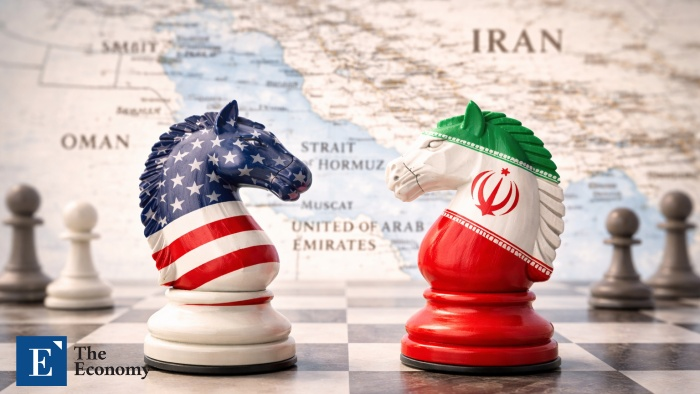
U.S. President Donald Trump has declared a blockade of Iranian ports. With negotiations between the two sides collapsing over differences related to nuclear weapons, Washington is moving to curb Iran’s attempt to effectively turn the Strait of Hormuz into a “toll gate,” thereby intensifying economic pressure. Experts assess that as Iran regards its nuclear program as a matter directly tied to sovereignty, easing tensions between the two countries will prove difficult.
U.S. Begins Intervention in the Strait of Hormuz
On the 12th (local time), U.S. Central Command (CENTCOM) announced that it would initiate a blockade of all maritime traffic entering and exiting Iranian ports starting at 10 a.m. Eastern Time on the 13th. According to CENTCOM, the measure applies equally to vessels of all nations accessing Iranian ports and coastal areas across the Persian Gulf and the Gulf of Oman. However, ships merely transiting nearby waters without Iranian ports as their origin or destination will not have their freedom of navigation impeded.
The move is understood to strongly reflect President Trump’s intent. Prior to the announcement, Trump stated on his social media platform Truth Social on the 12th, “The U.S. Navy will immediately begin blockade operations on all vessels entering or leaving the Strait of Hormuz,” adding, “Anyone who pays illegal transit fees to Iran will not be allowed safe passage on the high seas.” According to a recent report by blockchain analytics firm Chainalysis, Iran’s Islamic Revolutionary Guard Corps (IRGC) has recently been demanding transit fees of approximately $1 per barrel of crude oil from shipping operators under the pretext of ensuring security in the Strait of Hormuz. This effectively turns a critical energy transit route—through which roughly 20% of global crude oil and liquefied natural gas (LNG) flows—into an Iranian-controlled toll system.
The United States and the broader international community have strongly opposed Iran’s control of the Strait of Hormuz, calling it a clear violation of international law. While the narrowest part of the strait lies within the territorial waters of Iran and Oman, it is classified under international law as an international waterway guaranteeing passage for commercial vessels. U.S. Secretary of State Marco Rubio remarked on the 30th of last month that Iran’s move to impose transit fees was “unacceptable not only to us but to the entire world,” warning that it could lead to individual states claiming control over international waters. Experts also warn that continued attempts by Iran to levy transit fees could trigger profound shifts across global energy markets and the international trade order.
Ceasefire Talks End Without Results
The collapse of negotiations serves as the backdrop for Washington’s hardline stance on the Strait of Hormuz. The two sides recently held a 21-hour “marathon” meeting in Islamabad, the capital of Pakistan, but failed to produce meaningful outcomes. U.S. Vice President J.D. Vance told reporters on the 12th, “We have engaged in multiple substantive discussions with Iran, but we are returning to the United States without reaching an agreement,” adding, “This is far worse news for Iran than for the United States.” Iran’s Foreign Ministry spokesperson Esmaeil Baghaei similarly stated that “the two sides reached mutual understanding on several issues, but disagreements remained on two to three major points, resulting in the failure to reach an agreement.”
The central issue was nuclear weapons. Vice President Vance explained, “Simply put, we must confirm a clear commitment from Iran that it will not pursue nuclear weapons and will not seek the means to rapidly acquire them,” adding, “This was the core objective President Trump sought to achieve through these negotiations, and we have yet to see such willingness.” He further emphasized, “Iran’s nuclear program and its previously held uranium enrichment facilities have already been destroyed,” noting that “the key question is whether Iran demonstrates a fundamental commitment not to develop nuclear weapons—not just in the immediate term or in two years, but over the long term.”
The United States aims to prevent nuclear proliferation in Iran as part of a broader strategy to contain an arms race in the Middle East. Should Iran acquire nuclear weapons, neighboring countries such as Saudi Arabia would likely pursue their own nuclear capabilities, while direct threats to Israel would escalate, sharply increasing regional instability. U.S. military actions since last year have been primarily focused on dismantling Iran’s nuclear capabilities. During airstrikes in June of last year, the United States used Tomahawk missiles to destroy nuclear facilities in Fordow, Natanz, and Isfahan. Isfahan, in particular, was identified by the International Atomic Energy Agency (IAEA) as a site storing 20% to 60% of Iran’s enriched uranium.
Since the outbreak of war in late February this year, the United States has concentrated on targeting Iran’s conventional military assets. This approach is interpreted as an effort to minimize collateral damage in potential future strikes on Iran’s nuclear program. In addition, Iranian research facilities used for nuclear weapons development have been destroyed during the conflict, and production sites for “yellowcake,” the raw material for enriched uranium, have also sustained damage. However, it remains unclear whether Iran’s existing stockpile of approximately 1,000 pounds (around 450 kilograms) of enriched uranium has been significantly reduced. President Trump had previously considered deploying ground forces to seize Iran’s enriched uranium reserves but ultimately abandoned the plan due to the high operational risks.
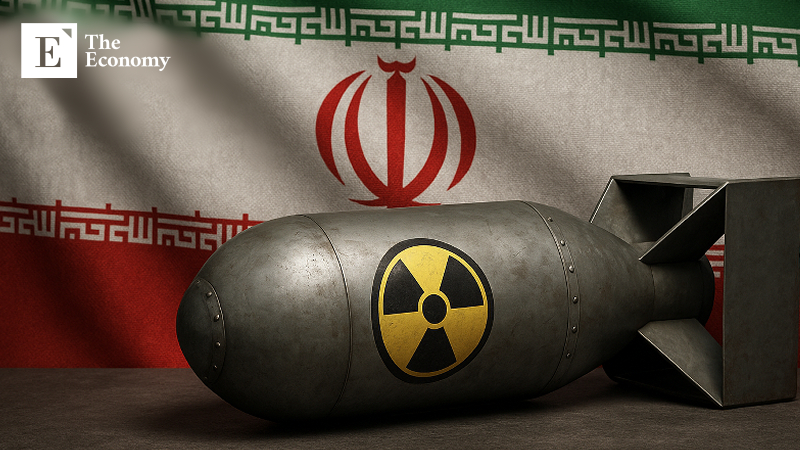
“Nuclear Development Is Non-Negotiable” Iran’s Hardline Stance
Iran’s continued pursuit of nuclear development despite mounting pressure stems from its perception of the issue as a matter of sovereignty. Tehran has long viewed the fates of countries such as Iraq and Libya—whose regimes collapsed after relinquishing military capabilities—as cautionary examples. This reflects a firmly held belief that sufficient military power, including nuclear capabilities, is essential to deter U.S. and Israeli pressure. Iranian Foreign Minister Abbas Araghchi stated in April last year, “The capability to enrich uranium is not subject to negotiation,” and reiterated in May that “enrichment is a sovereign right and not negotiable.” Even after U.S. military actions in July, he maintained, “Iran cannot abandon uranium enrichment.”
Some analysts attribute Iran’s hardline posture to deep-seated distrust toward the United States. In July 2015, Iran signed the Joint Comprehensive Plan of Action (JCPOA) with the United States and other powers, agreeing to limit its nuclear activities in exchange for sanctions relief. However, in May 2018, Washington unilaterally withdrew from the agreement and reinstated sanctions, severely undermining confidence in the durability of any deal. Although negotiations to revive the agreement resumed in 2021, they have remained deadlocked without substantive progress. This has reinforced the perception within Iran that even if an agreement is reached, shifting political dynamics could easily overturn its outcomes.
The precedent of U.S.-North Korea denuclearization talks is also cited as influencing Iran’s negotiating stance. During the first Trump administration in 2018–2019, Washington held two summit meetings with North Korean leader Kim Jong Un. However, the two sides failed to bridge differences over sanctions relief and the scope of nuclear dismantlement, resulting in no agreement. While North Korea gained little in terms of tangible benefits despite engaging in unprecedented summits, it retained its nuclear arsenal, limiting its strategic losses. From Iran’s perspective, this case signals that maintaining nuclear capabilities ensures a minimum level of bargaining power, while relinquishing them may not guarantee commensurate returns.
Aoife Brennan is a contributing writer for The Economy, with a focus on education, youth, and societal change. Based in Limerick, she holds a degree in political communication from Queen’s University Belfast. Aoife’s work draws connections between cultural narratives and public discourse in Europe and Asia.
- Previous “Department Stores Alone Reap the Rewards of the High Jewelry Boom” As K-Shaped Polarization Reshapes Consumer Spending, Strategic Focus Shifts Toward the Affluent
- Next “Even Corporations Are Joining Forces” Japan Mounts an All-Out Push on Physical AI Amid Labor Strains, Testing the Limits of Its Global Full-Stack Competitiveness
Similar Post