[U.S.-Iran War] The U.S. and Iran Return to the Negotiating Table Under Economic Duress, but Divergence Over Nuclear Concessions and Trump’s ‘Top-Down Diplomacy’ Remain Variables

Oliver Griffin is a policy and tech reporter at The Economy, focusing on the intersection of artificial intelligence, government regulation, and macroeconomic strategy. Based in Dublin, Oliver has reported extensively on European Union policy shifts and their ripple effects across global markets. Prior to joining The Economy, he covered technology policy for an international think tank, producing research cited by major institutions, including the OECD and IMF. Oliver studied political economy at Trinity College Dublin and later completed a master’s in data journalism at Columbia University. His reporting blends field interviews with rigorous statistical analysis, offering readers a nuanced understanding of how policy decisions shape industries and everyday lives. Beyond his newsroom work, Oliver contributes op-eds on ethics in AI and has been a guest commentator on BBC World and CNBC Europe.
Authored On
Modified
The door to a diplomatic resolution between the U.S. and Iran remains open
The U.S. has already absorbed massive economic losses, while Iran’s oil exports also face the risk of suspension
Deep differences remain over core issues, and Trump-style top-down diplomacy also poses risks
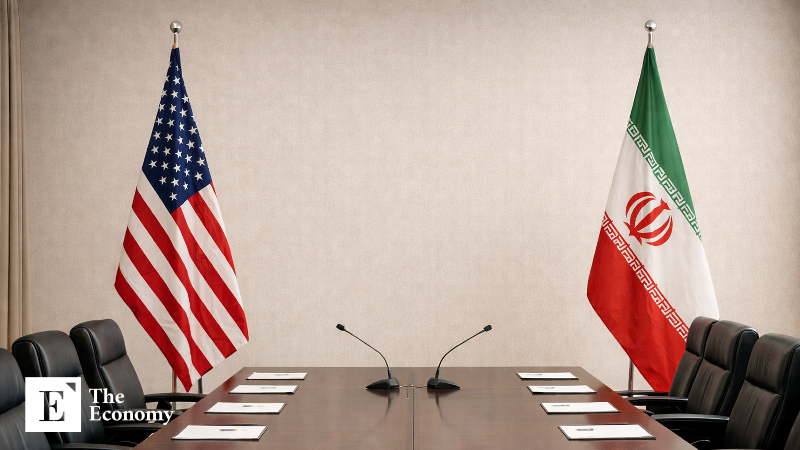
The United States and Iran are signaling a resumption of ceasefire negotiations. With the military confrontation dragging on and both countries bearing enormous economic costs, efforts to seek a diplomatic solution are once again gaining momentum. Still, given the wide gap between the conditions set forth by each side, it remains uncertain whether future discussions can proceed smoothly. Some observers have also raised concerns that U.S. President Donald Trump’s characteristic Top-Down diplomatic strategy could adversely affect negotiations with Iran.
Visible Signs of Renewed U.S.-Iran Negotiations
On April 14 local time, President Trump said in an interview with the New York Post, “A second round of talks could be held in Islamabad, Pakistan, within the next two days.” In an interview with Fox Business the same day, he also expressed confidence, saying, “I think the war is almost over, and Iran is desperate to reach a deal.” CNN reported that if talks between the two countries do take place, Vice President J.D. Vance is likely to again serve as the U.S. representative, while Middle East envoy Steve Witkoff and Trump’s son-in-law Jared Kushner are also expected to participate in the discussions. They are said to have remained in contact with Iran and the mediators even after the first round of talks in Islamabad collapsed on April 11.
Vice President Vance likewise indicated the possibility of further discussions with Iran that same day. Speaking at an event hosted by the right-wing group Turning Point USA in Georgia, he said, “President Trump wants to forge a grand bargain.” He added, “What President Trump is offering Iran is very simple. If you are willing to behave like a normal country, then we are willing to treat you economically like a normal country.” The remark signaled that if Iran abandons nuclear weapons, Washington would in return consider easing sanctions on Tehran.
Iran has also expressed willingness to engage in additional negotiations. According to Iran’s state-run IRNA, Iranian President Masoud Pezeshkian said in a phone call with French President Emmanuel Macron on April 13, “Iran regards diplomacy as the most desirable path for resolving disputes so long as the country’s dignity and authority can be preserved, and it is prepared for dialogue within a legal framework.” Even Esmail Kosari, a hardliner and member of the Iranian parliament’s foreign policy committee, told IRNA, “Iran is participating in negotiations to make the truth known to the world,” adding, “We do not trust the United States, but we do not reject negotiations.”
The Economic Burden Facing Both Countries
The fact that both countries are not ruling out a diplomatic resolution reflects the immense burden they would face if the war were to drag on further. The United States, first of all, has already absorbed substantial economic losses. According to a CNBC report on April 14, the U.S. Department of Defense told Congress in a submitted report that $11.3 billion was spent during the first six days after the start of military operations against Iran on Feb. 28. After reporting this, CNBC introduced the view of Harvard Kennedy School public policy expert Linda Bilmes, who said the Iran war likely required expenditures far exceeding the Pentagon’s official figure.
Professor Bilmes estimated that during the 40-day period of actual conflict, short-term initial costs likely averaged $2 billion per day. That figure includes damage-related costs tied to military assets such as munitions, troop deployments, and fighter aircraft. She also noted that if the Pentagon based its calculations on the historical inventory value of assets rather than the actual replacement cost, the short-term cost could be higher than the documented figure. Taking those factors into account, the Pentagon’s reported cost for the initial six days is in reality closer to $16 billion than $11.3 billion. Once reconstruction costs, compensation for deployed troops, and the broader trajectory of higher defense spending are added, the total cost is projected to approach $1 trillion.
Iran is equally cornered. The United States began a maritime blockade against Iran on the morning of April 13. Behnam Ben Taleblu of the Washington-based think tank Foundation for Defense of Democracies estimated that the U.S. blockade could inflict losses of $435 million per day on Iran. The Financial Times also projected that if the current situation persists, Iran could be forced to cut oil production within roughly two weeks.
According to data from satellite analytics firm Kayrros, Iran’s oil storage tanks are currently about 50% full. Given that current export volumes stand at roughly 1.8 million barrels per day, Iran can store only an additional 16 days’ worth of crude at most. Beyond that point, the country would exceed the record high storage level of 92 million barrels set during the COVID-19 pandemic in 2020. Markets, however, largely expect Iran to begin cutting production even before storage tanks are completely filled. An early production cut is seen as more advantageous than a total shutdown of oil fields because it helps prevent long-term damage to underground reservoirs.
The Limits of Trump-Style Diplomatic Strategy
The key question going forward is whether either side can choose “concession” during the negotiating process. Before the first round of talks, Iran had placed 10 demands at the forefront, including retaining control over the Strait of Hormuz and recognition of its right to enrich uranium. The United States, by contrast, presented a list of demands calling for the dismantlement of Iran’s nuclear capabilities, a ban on uranium enrichment on Iranian territory, and the reopening of the Strait of Hormuz. On this point, one diplomatic expert said, “Iran views its nuclear program as a matter of regime survival and sovereignty, which is why it cannot easily give it up,” adding, “But the United States sees it as an issue tied to Middle East security and the international order, making it difficult to accept Iran’s position.”
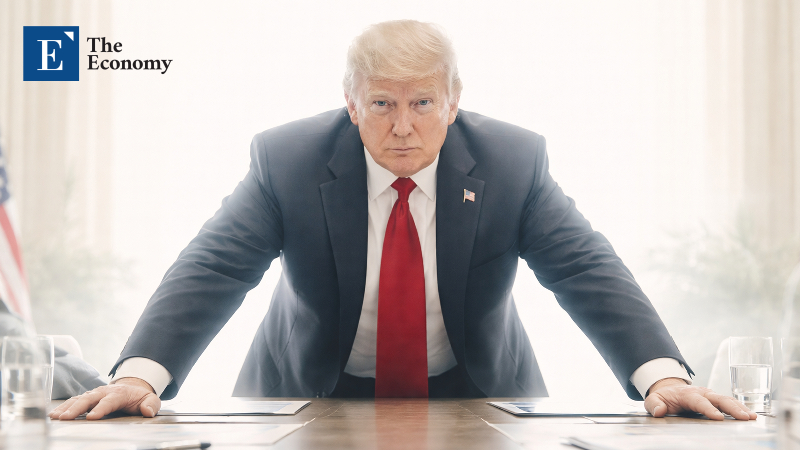
There is also a risk that President Trump’s preferred top-down diplomatic strategy could become an obstacle to negotiations. The top-down strategy is a method in which a head of state steps to the fore to lead negotiations and transmits that momentum downward, and in diplomatic practice it is rarely used. Trump, however, showed a preference for summit-level diplomacy from his first administration onward. The most representative example was his nuclear diplomacy with North Korea. From the first U.S.-North Korea summit in June 2018 through September 2019, he met North Korean leader Kim Jong Un four times. During that period, the two leaders are known to have exchanged at least 10 letters that were publicly disclosed.
In that process, some of the advantages of Trump-style top-down diplomacy were indeed confirmed. Diplomatic decision-making proceeded far more swiftly and boldly than under conventional methods. The first U.S.-North Korea summit, in fact, was initially proposed in March 2018 through a South Korean special delegation visiting the White House, and the meeting took place roughly three months later. There was also analysis at the time that negotiations between Washington and Pyongyang continued despite North Korea’s hardline posture toward the United States because of the rapport formed between the two leaders through top-down diplomacy.
However, the risks of top-down diplomacy were also laid bare during the course of those discussions. The second Hanoi summit in February 2019 collapsed without an agreement. The Hanoi summit was conducted in a quintessential top-down fashion, with the decision to hold the meeting made at the leadership level before working-level officials had reached prior consensus. Yet the two leaders failed to narrow differences over core issues including denuclearization measures and sanctions relief, and the summit ended without results. At the time, Reuters and other foreign media outlets underscored that the second summit took place during congressional hearings involving Michael Cohen, Trump’s former personal lawyer, and analyzed that Trump had approached the summit with domestic political considerations in mind. There was also an assessment that Kim had overestimated the political pressure Trump was facing and therefore put forward excessive demands. The episode exposed the diplomatic limitations of national leaders, who must remain mindful of their domestic electorates at all times.
Once summit-level diplomacy collapses in this way, it becomes difficult to devise follow-up measures at the working level. In fact, the United States and North Korea were able to regain momentum for renegotiation only after Trump and Kim met again at Panmunjom four months later. Even so, the two sides failed thereafter to find a substantive alternative on denuclearization and the improvement of U.S.-North Korea relations. Working-level talks resumed once more in Stockholm in October 2019, but the two sides ended discussions after only a few hours, merely reaffirming their differences. Negotiations between the two countries have effectively remained suspended ever since.
Oliver Griffin is a policy and tech reporter at The Economy, focusing on the intersection of artificial intelligence, government regulation, and macroeconomic strategy. Based in Dublin, Oliver has reported extensively on European Union policy shifts and their ripple effects across global markets. Prior to joining The Economy, he covered technology policy for an international think tank, producing research cited by major institutions, including the OECD and IMF. Oliver studied political economy at Trinity College Dublin and later completed a master’s in data journalism at Columbia University. His reporting blends field interviews with rigorous statistical analysis, offering readers a nuanced understanding of how policy decisions shape industries and everyday lives. Beyond his newsroom work, Oliver contributes op-eds on ethics in AI and has been a guest commentator on BBC World and CNBC Europe.
- Previous "Too Early to Catch Up with TSMC and Samsung Electronics" — China’s Struggling Advanced Semiconductor Yields Signal Need to Build Fundamentals in Mature Nodes
- Next “Designing With a Single Prompt” From a Technology Race to an Applications Race, the AI-Driven Reshaping of the Design Tools Market
Similar Post