“A Tragedy Born of National Supremacism and Strategic Myopia Toward Others” Trump Mired in the ‘Iran Quagmire,’ No Visible Exit

Siobhán Delaney is a Dublin-based writer for The Economy, focusing on culture, education, and international affairs. With a background in media and communication from University College Dublin, she contributes to cross-regional coverage and translation-based commentary. Her work emphasizes clarity and balance, especially in contexts shaped by cultural difference and policy translation.
Authored On
Modified
Self-Entrapment of the Trump Administration
Obsession With Elastic ‘Victory’ in Absence of a Clear Exit Strategy
Entrenchment of a Protracted Conflict That Only Hardens Iran’s Resistance
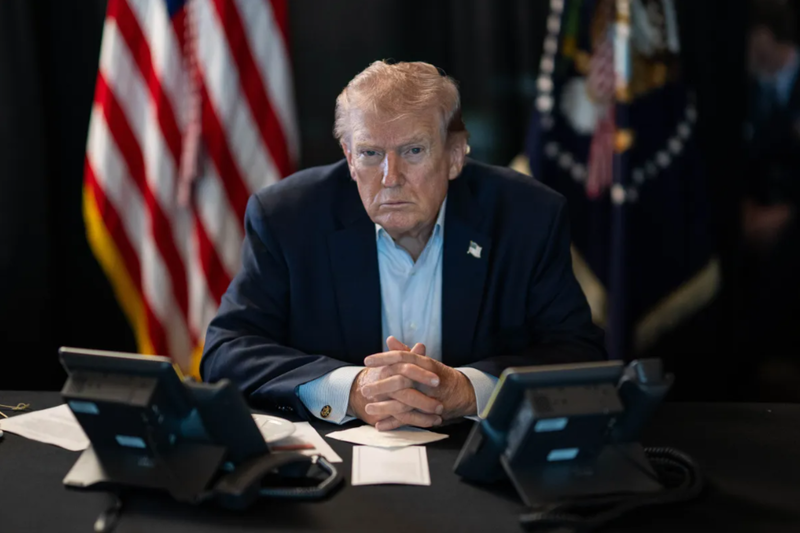
President Donald Trump’s military strategy toward Iran is sinking into a protracted war of attrition, having lost the framework of the short, decisive campaign initially envisioned. The scenario of regime collapse through decapitation strikes against top leadership has failed to materialize in the face of Iran’s diffuse power structure, while war objectives have devolved into a reactive patchwork of post hoc justifications. The dual-track approach of negotiation pressure alongside military offensives is instead provoking Tehran’s hardline response, eroding strategic efficiency.
Ideologically Entrenched Iranian Political Elite, Decapitation Strategy Fails to Penetrate
On the 22nd (local time), Brian Clark, director of the Center for Defense Concepts and Technology at the conservative U.S. think tank Hudson Institute, sharply criticized Washington’s Iran policy in an interview with Al Jazeera’s diplomatic editor James Bays, calling it “a recipe for protraction.” Clark noted that “U.S. military authorities initially believed a decapitation strike against Iran’s leadership would trigger immediate regime change, but as that scenario failed to materialize, military planners fell into significant disarray.” He added, “After failing to achieve initial objectives, the military began hastily fabricating new ones,” pointing out that “the recent expansion of war goals reflects a desire to claim success on any front, preserve face, and withdraw.”
Trump has, in fact, drawn comparisons between the Iran campaign and Venezuela. During a meeting at the White House on the 4th of last month with German Chancellor Friedrich Merz, he remarked, “It was remarkable in Venezuela that we struck while maintaining the government structure,” emphasizing that bilateral relations improved following the arrest of former Venezuelan President Nicolás Maduro. In an interview with The New York Times (NYT) on the 1st of last month, he stated, “What we did in Venezuela was a perfect, truly perfect scenario.” These remarks suggest a strategy aimed at selectively removing a hostile supreme leader, as in Venezuela, while preserving existing governmental and bureaucratic systems and transitioning to a pro-U.S. regime. In Venezuela’s case, Vice President Delcy Rodríguez initially vowed resistance but later adopted a cooperative stance toward Washington, leading the U.S. to reopen Venezuela’s oil export channels.
However, Iran’s theocratic and ideologically grounded regime differs fundamentally from Venezuela’s Maduro-centric government. Since the 1979 Islamic Revolution ousted the U.S.-backed Pahlavi monarchy, Iran has maintained a system of clerical rule. Under its constitution, the Supreme Leader wields expansive authority, including the power to approve or dismiss the president, control all appointments, and make final decisions on both domestic and foreign policy. Unlike Venezuela, Iran’s system originated as a theocracy and has effectively evolved into an authoritarian regime. Many Iranian officials, security forces, and diplomats hold deeply hardline ideological positions, and the suppression of dissent in Iran extends beyond political opposition to encompass religious divergence, modern reform, and women’s rights.
Moreover, while Ayatollah Mojtaba Khamenei holds ultimate authority, power within Iran is highly dispersed across military institutions, religious leadership, and various political bodies. This diffusion reduces the effectiveness of leader-targeted elimination strategies. Israel has claimed that it killed 40 senior Iranian military commanders in its initial strikes, yet Iran’s system and retaliatory apparatus remain operational. Iran has even escalated indiscriminate retaliatory attacks into neighboring regions, drawing more than a dozen countries into the conflict’s sphere of impact. Unlike Venezuela, where a cooperative figure like Rodríguez quickly emerged after U.S. strikes, Iran lacks any political actor willing to collaborate with the Trump administration. Compounding this, the Islamic Revolutionary Guard Corps (IRGC), a pillar of the theocratic regime, exerts formidable influence, making any Venezuela-style pivot highly improbable.
Iran Undeterred, Public Opposition Mounts in the U.S., Exit Path Obscured
The United States’ hallmark coercive strategy is proving ineffective against Iran. In the early stages of the conflict, the U.S. and Israel launched an unprecedented barrage, eliminating Supreme Leader Ali Khamenei and multiple senior figures while neutralizing roughly 1,000 key targets within 24 hours. U.S. Central Command (CENTCOM) has consistently released footage on social media showing Iranian fighter jets, naval vessels, missiles, and drones being destroyed in airstrikes. Iran’s fleet of F-14 fighters—featured in the film “Top Gun”—has been effectively wiped out, and its ballistic missile capabilities have suffered significant degradation.
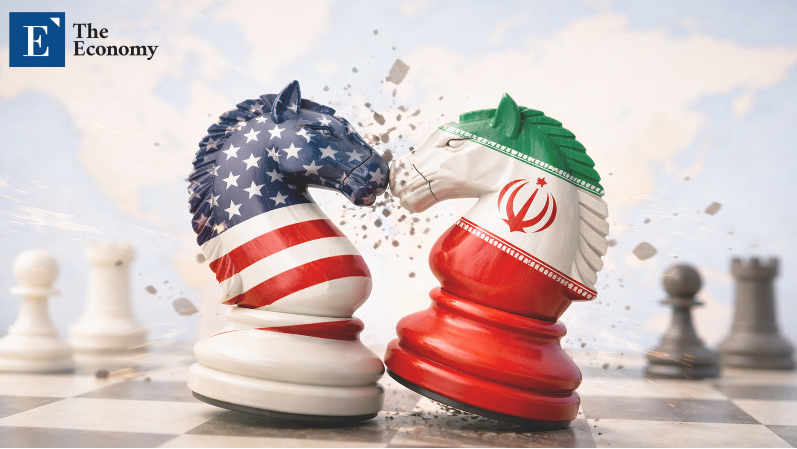
Yet Iran has not collapsed and has instead declared a blockade of the Strait of Hormuz. In response, the U.S. imposed a maritime blockade to cut off Iran’s primary revenue source—oil exports—aiming to force production cuts as storage capacity reaches its limits. Iran, however, has continued its provocations, including firing on a container ship in the strait and damaging its hull. These developments underscore both the power and the limitations of advanced military technology in the Iran conflict.
As a result, Trump has struggled to identify a viable exit from the war. His unilateral declaration of a ceasefire on the 21st—despite earlier threats to devastate Iran if negotiations failed—signals a lingering desire for resolution. The move is interpreted as an attempt to bring Iran to the negotiating table through economic pressure via maritime blockade rather than escalation. However, Iran has maintained its hardline stance, seizing three vessels in the Strait of Hormuz on the 22nd and rejecting U.S. demands to halt uranium enrichment and transfer its stockpile of highly enriched uranium.
Iran’s distrust of Trump runs deep. In 2018, during his first term, Trump unilaterally withdrew from the 2015 Joint Comprehensive Plan of Action (JCPOA) negotiated under the Barack Obama administration. Subsequent operations, including the precision strike on Iranian nuclear facilities dubbed “Midnight Hammer” last June and the “Epic Fury” campaign launched on February 28, were carried out abruptly amid ongoing nuclear negotiations, further deepening Iranian mistrust. Should Iran’s hardliners choose to endure economic hardship and prolong resistance, Trump—facing midterm elections in November—will find himself increasingly constrained by time.
Domestic sentiment in the U.S. is also deteriorating. A poll conducted between the 16th and 20th by the Associated Press and the University of Chicago’s National Opinion Research Center (NORC), surveying 2,596 American adults, showed Trump’s approval rating at 33%, down five percentage points from the previous month and marking the lowest level of his second term. Relations with allies have also frayed. After NATO rejected Trump’s request to dispatch naval forces to the Strait of Hormuz, he derided the alliance as a “paper tiger” and suggested the possibility of withdrawal. Tensions have since widened, straining ties not only with UK Prime Minister Keir Starmer and French President Emmanuel Macron but also with Italian Prime Minister Giorgia Meloni, once considered pro-Trump. Even core figures within Trump’s traditional MAGA base have begun to turn away.
Bluster Masking Strategic Anxiety
The label “TACO” (Trump Always Chickens Out) has resurfaced. With threats losing their deterrent effect and ceasefire gambits failing to draw Iran into negotiations, analysts argue that Trump has lost the initiative and is trapped in a conflict he cannot easily exit. Some foreign media outlets and market observers have derisively remarked that “whether tariffs or Iran, Trump’s crises invariably end in TACO.”
Signals of shifting momentum are evident on the battlefield. The full reopening of the Strait of Hormuz—one of the ceasefire conditions—has not occurred, and Iran-linked tankers have reportedly circumvented the U.S. naval blockade, with at least 34 vessels successfully rerouting. Meanwhile, Trump’s impatience and anxiety are eroding Washington’s leverage. According to accounts from close aides, his confidence quickly dissipated as Iran moved faster than expected to blockade the strait and extend attacks to neighboring Arab states, triggering a surge in global energy prices. He reportedly vacillated, urging economic caution to Energy Secretary Chris Wright and Treasury Secretary Scott Bessent while simultaneously insisting on continuing the war.
Trump began exploring an exit from the conflict as early as late March. According to sources familiar with Iran negotiations, he instructed his negotiating team to find a pathway to initiate talks. His unease became starkly apparent on the 3rd, when two U.S. pilots went missing after their aircraft was shot down. Upon receiving the news, he reportedly shouted at aides for hours. Unable to calm him, staff ultimately escorted him out of the meeting room, judging that his agitation would hinder crisis management. Instead, aides connected him to the operations center overseeing the rescue mission, providing near real-time updates, while Vice President JD Vance and White House Chief of Staff Susie Wiles joined remotely. Trump himself did not participate directly, receiving only key updates by phone. According to The Telegraph, he has grown increasingly irritable and is sleeping less.
Military and security experts identify the absence of a clearly defined end-state in the conflict with Iran as the central risk. The repeated recalibration of operational objectives to manufacture short-term success undermines allied trust and risks pushing Middle Eastern geopolitical instability beyond manageable thresholds. Analysts widely contend that the administration’s erratic strategy is strengthening Iran’s resolve while dragging the United States deeper into an open-ended conflict. Without a clearly defined exit strategy, fixation on shifting definitions of victory risks ensnaring the U.S. in a self-created trap—prolonging a costly and unwinnable entanglement in the region.
Siobhán Delaney is a Dublin-based writer for The Economy, focusing on culture, education, and international affairs. With a background in media and communication from University College Dublin, she contributes to cross-regional coverage and translation-based commentary. Her work emphasizes clarity and balance, especially in contexts shaped by cultural difference and policy translation.
Similar Post
















