“Core Disputes Persist” as U.S.-Iran War-End Talks Stall, Washington ‘Smiles’ Amid International Turmoil

As one of the youngest members of the team, Tyler Hansbrough is a rising star in financial journalism. His fresh perspective and analytical approach bring a modern edge to business reporting. Whether he’s covering stock market trends or dissecting corporate earnings, his sharp insights resonate with the new generation of investors.
Authored On
Modified
“Call Us If They Want Talks”: U.S.-Iran Islamabad Peace Meeting Collapses
U.S. Maritime Blockade Continues as Iran Returns to Hard Line After Seeking Compromise
Prolonged Deadlock Delivers Economic and Diplomatic Gains to U.S.
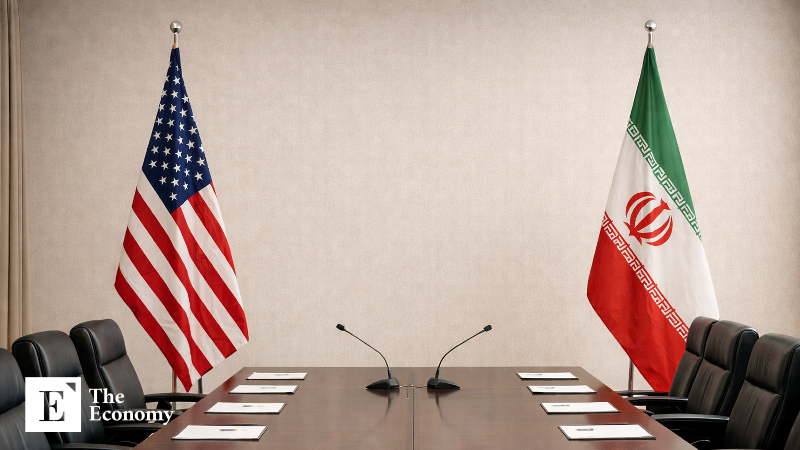
U.S.-Iran negotiations to end the war are showing little sign of progress. With differences over core issues such as the dismantling of Iran’s nuclear program and the reopening of the Strait of Hormuz remaining unresolved, even a planned high-level peace meeting in Islamabad, Pakistan has effectively collapsed, deepening the stalemate. Against this backdrop, U.S. President Donald Trump is maintaining a hard line, using the blockade near the Strait of Hormuz as a lever to expand energy exports and pressure allies.
Persistent U.S.-Iranian Clashes
On the 26th (local time), Trump said in a phone interview with Fox News regarding negotiations with Iran, “If they want, they can call us,” adding, “We’re not going to make people [the U.S. negotiating delegation] travel 18 hours.” The U.S. had initially planned to send a negotiating team to Islamabad over the weekend, timed to coincide with Iranian Foreign Minister Abbas Araghchi’s visits to Pakistan and Oman, which began on the 24th. However, Araghchi shared Iran’s position with Pakistan in writing before immediately departing for Oman, and the U.S. plan to dispatch its delegation also fell through. Trump also reiterated that Iran must not be allowed to possess nuclear weapons. His argument was that there is little reason to meet Iran unless Tehran abandons its nuclear program.
As the U.S. has shown little willingness to retreat from its existing position, Iran has likewise continued to demand an end to hostile actions, including the lifting of the U.S. maritime blockade. Araghchi, who had traveled to Oman, changed his itinerary and returned to Islamabad after just one day, presenting Iran’s position to Pakistan. Iran’s semi-official Tasnim News Agency reported that after revisiting Islamabad, Araghchi conveyed specific conditions for war-end negotiations, including the implementation of a new legal regime for the Strait of Hormuz, receipt of compensation for war damage, guarantees against renewed aggression by the belligerents, and the lifting of the maritime blockade against Iran.
The U.S. previously launched its maritime blockade against Iran at 10 a.m. on the 13th. At the time, U.S. Central Command warned that vessels entering or leaving the blockade zone without U.S. military approval would be subject to interception, forced return, or seizure. U.S. Treasury Secretary Scott Bessent also expressed confidence on X, formerly Twitter, on the 21st that the counter-blockade effect would emerge quickly, saying, “Within days, the storage facilities on Kharg Island [Iran’s largest oil terminal] will be full, and Iran’s fragile wells will have no choice but to shut down.” According to The Wall Street Journal, U.S. officials currently claim they have turned back more than 30 vessels since implementing the counter-blockade.
U.S. Maritime Blockade Held Firm
Discussions between the two countries over lifting the maritime blockade continue to go in circles. On the 17th, Araghchi wrote on X, “In accordance with the Lebanon ceasefire agreement, all vessels passing through the Strait of Hormuz will be fully allowed to navigate for the remainder of the ceasefire period,” adding that they must use “the agreed routes announced by Iran’s Ports and Maritime Organization.” Until now, Iran had blocked the Strait of Hormuz and allowed only vessels authorized by Tehran to use safe routes. The statement indicated that Iran would open those routes to third-country vessels as well. The safe route passes alongside Iran’s Larak Island, rather than the existing route near Oman’s Musandam Peninsula.
The problem was that even after Iran signaled a willingness to compromise, the U.S. did not soften its hard line. About 20 minutes after Araghchi’s announcement, Trump wrote on his social media platform Truth Social, “Iran has just announced that the Strait of Hormuz is fully open and passable, and we thank them for that.” He added, “The maritime blockade against Iran will remain fully in place until negotiations are 100% complete,” stressing that “because most issues have already been agreed, this process will move very quickly.”
Iran reversed its position just one day after declaring freedom of navigation. On the 18th, Iran’s Islamic Revolutionary Guard Corps (IRGC) said control of the Strait of Hormuz had returned to its “previous state.” On the same day, Iran’s Joint Military Command also warned, “Until the U.S. removes restrictions on the complete freedom of navigation for Iranian vessels, the situation in the Strait of Hormuz will remain strictly controlled and unchanged.” Iran’s navy is also maintaining its position that the closure will remain in place until the U.S. lifts its blockade on Iranian ships and ports.
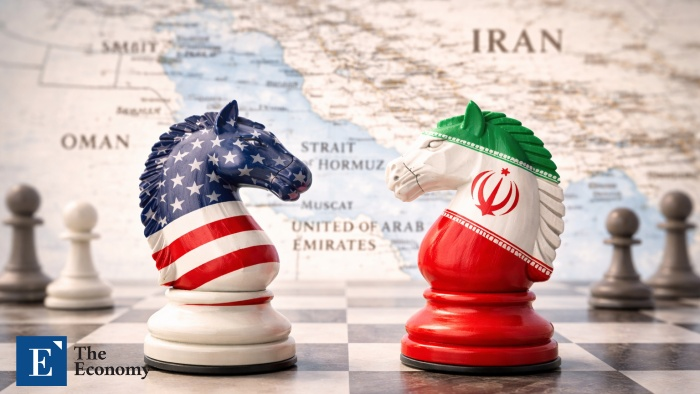
Deadlock as a Strategic Card
This stalemate is delivering a certain degree of benefit to the U.S. economy. After the Strait of Hormuz was blocked, U.S. energy exports surged to record highs. This was the result of Asia and Europe, now struggling to import Middle Eastern energy, purchasing large volumes of U.S. crude oil and liquefied natural gas (LNG). According to the U.S. Energy Information Administration (EIA), U.S. exports of crude oil and petroleum products averaged nearly 12.9 million barrels per day from the 11th to the 17th of this month. Shipping data firm Kpler analyzed that U.S. crude oil and LNG exports to Asia from last month to this month increased by about 30% from a year earlier.
In addition, the U.S. is using the Strait of Hormuz as a pressure tool against NATO and Asian allies. At a Pentagon briefing on the 24th, U.S. Secretary of War (Defense Secretary) Pete Hegseth said, “Keeping the [Hormuz] Strait open should not be America’s responsibility,” adding, “Europe and Asia have benefited under our protection for decades, but the free ride is over.” The remark was a demand for allies to expand their defense role. He continued, “America and the free world deserve allies that have capability and loyalty, and understand that alliances are not a one-way street.”
The remark appears to reflect the fact that Europe and Asia have suffered significant damage since the blockade of the Strait of Hormuz. European leaders have even brought out the option of easing sanctions on Iran to overcome the energy crisis triggered by the Iran war. According to Reuters, German Chancellor Friedrich Merz said at a press conference in Cyprus on the 24th, “If Iran is willing to make concessions, the European Union [EU] could ease sanctions.” Earlier, in January, the EU designated the IRGC as a terrorist organization, citing its leading role in the brutal crackdown on Iranian anti-government protesters, and last month approved 19 Iranian officials and entities as new sanctions targets. Those subject to sanctions are banned from traveling to the EU and have their assets in the bloc frozen. However, European Council President António Costa and European Commission President Ursula von der Leyen took a cautious stance at a joint press conference, saying, “It is still too early to discuss easing sanctions on Iran.”
Although opinions diverged over calibrating the sanctions regime, most countries in the region agreed on the need for the full reopening of the Strait of Hormuz. Costa stressed, “The Strait of Hormuz must be opened immediately without any restrictions or tolls,” adding, “This is essential for the entire world.” Kaja Kallas, the EU’s High Representative for Foreign Affairs and Security Policy, also proposed that the EU expand the missions of already deployed naval forces, including Aspides, to reopen the Strait of Hormuz. “The fastest way to form a coalition of countries is to expand existing missions and reinforce them with the necessary ships, equipment, and capabilities,” she argued.
As one of the youngest members of the team, Tyler Hansbrough is a rising star in financial journalism. His fresh perspective and analytical approach bring a modern edge to business reporting. Whether he’s covering stock market trends or dissecting corporate earnings, his sharp insights resonate with the new generation of investors.
Similar Post