From Quantitative Expansion to Qualitative Survival: China’s Robot Industry Enters Real-World Validation Phase Beyond Technology Showcases

Authored On
Modified
China Prioritizes Speed Over Technological Sophistication
Subsidy-Driven ‘China Speed’ Accelerates Technology Acquisition
Post-Mass Production Era Ushers in Profitability Stress Test
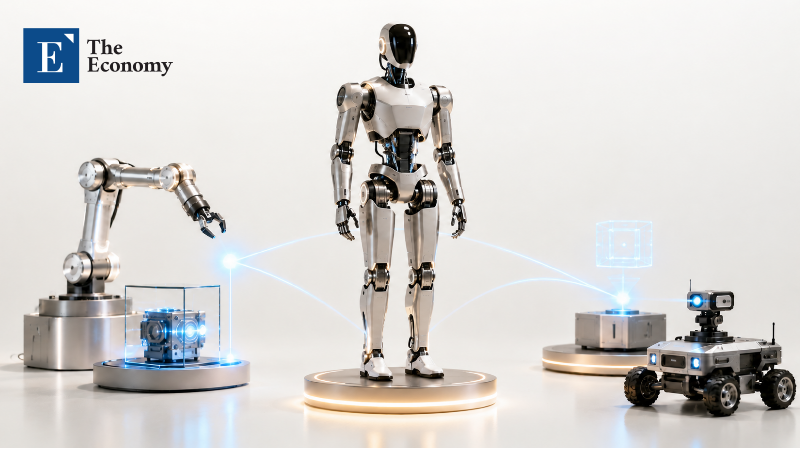
China’s humanoid robotics industry is confronting a reality check over profitability despite an unprecedented influx of capital. Investment continues to pour into the sector, yet skepticism surrounding the sustainability of business models and the industry’s capacity to generate tangible earnings is intensifying, deepening concerns across the market. Even so, analysts argue it would be premature to frame the situation as a crisis for China’s robotics sector. Instead, the industry — rapidly inflated through massive subsidies and aggressive mass-production competition — is now entering a painful maturation phase in which real-world commercialization efficiency, on-site productivity, and sustainable profit structures are being rigorously tested.
$4.2 Billion Floods Into China’s Robotics Market
According to the South China Morning Post (SCMP) and Chinese corporate data platform Qichacha on Wednesday, investment enthusiasm surrounding China’s robotics sector has reached unprecedented levels this year. Major companies including Robotera, X Square Robot, Galbot, Engine AI, Galaxea, Spirit AI, Boundless Power, and TARS have consecutively secured large-scale funding rounds. Qichacha data showed that 137 financing transactions involving 112 brands have been completed so far this year, with disclosed investment volume surpassing $4.2 billion. Industry frontrunner Unitree has further heightened market expectations after unveiling plans to raise approximately $620 million through a listing on Shanghai’s STAR Market.
Production growth is also accelerating sharply. Market research firm TrendForce recently projected that China’s robot production volume would surge 94% year-over-year in 2026. The firm attributed the momentum to Chinese manufacturers rapidly establishing commercialization use cases while simultaneously building mass-production infrastructure. TrendForce forecast that Unitree and AgiBot alone would account for roughly 80% of total shipments this year on the back of substantial manufacturing expansion. Last year, Unitree shipped more than 5,500 units, capturing a global market share of 32.4%, while AgiBot recorded over 4,000 shipments with a 23.5% share.
Several robotics firms are also scrambling to establish genuine cash-flow generation channels. AgiBot operates a “Data Foundry” facility that gathers training data for robots and sells the resulting datasets for several dozen dollars per hour. Its leasing platform, Sharebot, is simultaneously attempting to standardize the fragmented rental market with the goal of securing more than 10,000 monthly leasing orders nationwide.
Another major player, UBTech, is accelerating its penetration into industrial settings. The company is deploying robots across electric vehicle and battery plants as well as logistics hubs to automate manufacturing processes traditionally handled by human workers, while presenting a concrete roadmap to achieve break-even within two years. Meanwhile, X SQUARE ROBOT announced plans to launch household-cleaning robots as early as this month through a partnership with on-demand services platform 58.com, simultaneously targeting both B2B and B2C markets.

Persistent Losses and Mounting Validation Challenges
Despite the aggressive expansion, however, profitability for most companies remains deeply uncertain. Sheng Zhong, head of China industrial research at Morgan Stanley, warned that “2026 will become a decisive year in which humanoid robotics companies must achieve commercialization and establish ecosystem competitiveness,” signaling looming industry-wide restructuring. Although revenue-generation channels are gradually broadening and China’s humanoid robot deliveries are projected to double year-over-year to 28,000 units this year, most businesses remain stuck in the “verification and testing” stage.
Even Unitree — one of the few firms in the sector currently posting profits — faces considerable structural challenges beneath the surface. The company generated approximately $250 million in revenue last year alongside adjusted net income of roughly $88 million. Shipments expanded more than thirteenfold year-over-year to 5,500 units, while gross margins reached 60%. Yet 73.6% of revenue still originated from research and educational clients. In response, Unitree recently opened its first offline retail store in Beijing in a bid to expand consumer-market exposure.
Hong Kong-listed UBTech also remains trapped in persistent losses. The company posted annual revenue of approximately $290 million last year, up 53.3% from a year earlier, but still recorded a net loss of roughly $113 million. Gross margins stood at 37.7%. While UBTech is attempting to carve out a foothold by deploying robots in EV and battery manufacturing facilities, current robot productivity — priced at roughly $104,000 per unit — remains only about 30% as efficient as human labor. The company aims to deploy 10,000 robots this year and reach break-even within two years, though overcoming enormous R&D expenditures and the limitations of still-experimental order demand remains a critical hurdle.
Low Product Maturity and Limited Industrial Adoption
Over the past several years, China’s robotics industry maintained explosive growth momentum through heavy government subsidies and the country’s strategic push to cultivate advanced industries. Seeking to close the technological gap with the United States, Beijing adopted a strategy of forcing even immature technologies into commercialization stages as quickly as possible. As a result, the number of collaborative robot and humanoid robot companies expanded rapidly, while regions across China simultaneously competed to expand production lines and build robotics industrial clusters. By lowering regulatory barriers, mobilizing large-scale funding, and tolerating repeated failures among technology firms, the Chinese government accelerated the commercialization process at remarkable speed.
Yet while manufacturing capacity expanded rapidly, the industry’s ability to design sustainable profit-generation structures lagged significantly behind. The market largely treated the construction of massive manufacturing systems as proof of growth, while concerns over how companies would establish recurring cash-flow models in real industrial settings remained secondary priorities. Commercialization progressed rapidly, but real-world deployment efficiency still remains limited. According to a survey conducted by analytics firm SAS Institute, 83% of Chinese companies said they were using AI models in business operations, surpassing the United States at 65%. However, only 19% of Chinese firms had established effective application systems, trailing the United States, where the figure stood at 24%.
Experts identify weak intelligence capabilities as the biggest structural weakness of Chinese robots. While China has become arguably the global leader in showcasing sophisticated movements through remote-control demonstrations, the robots’ autonomous decision-making capabilities remain comparatively underdeveloped. Unitree’s G1 model, for instance, delivered stunning performances during demonstrations, but most of the movements were the result of meticulously preprogrammed sequences. Some industry observers have even remarked that “Unitree robots possess Olympic-level athleticism, but elementary-school-level intelligence.”
This reality also explains why capital markets have recently begun raising deeper questions about the persistent loss structures and commercial effectiveness of Chinese robotics firms. Investors are no longer responding merely to flashy technical demonstrations. The market is now focusing on whether robots can be repeatedly utilized in real industrial settings and whether operational efficiency can justify maintenance costs. The Chinese government also appears increasingly aware of this shift. As excessive competition among robotics startups intensifies, discussions have even emerged around establishing market-exit mechanisms aimed at eliminating weaker players.
Industry experts view the development as part of a broader restructuring process following a period of oversupply. In essence, an industry initially built on massive subsidies is now beginning to reorganize itself around actual business sustainability. Some analysts believe the competitive landscape of China’s robotics sector could be fundamentally reshaped depending on the success or failure of the large-scale commercialization projects currently being launched this year. One industry specialist noted that “competition based purely on hardware performance has already approached its ceiling,” adding that “software optimization capabilities and maintenance efficiency are rapidly emerging as the decisive factors determining product value. Companies that successfully establish commercialization efficiency and maintenance infrastructures could rapidly expand their dominance in the global market, while firms that remain dependent on technological showmanship and subsidy-driven growth face mounting risks of severe restructuring pressure.”
- Previous “Safety Voids Exposed by the Race for Speed” — China Halts Autonomous Driving Licenses After Robotaxi Failures, Putting AI Credibility on Trial
- Next “Countdown to a Bilateral Military Alliance” India and Russia Open Military Bases to Each Other, Building an ‘Energy-Security Complex’ to Contain China’s Expansion
Similar Post